
(This article by Eric Bryan originally appeared in the September 2026 issue of Military Officer magazine.)
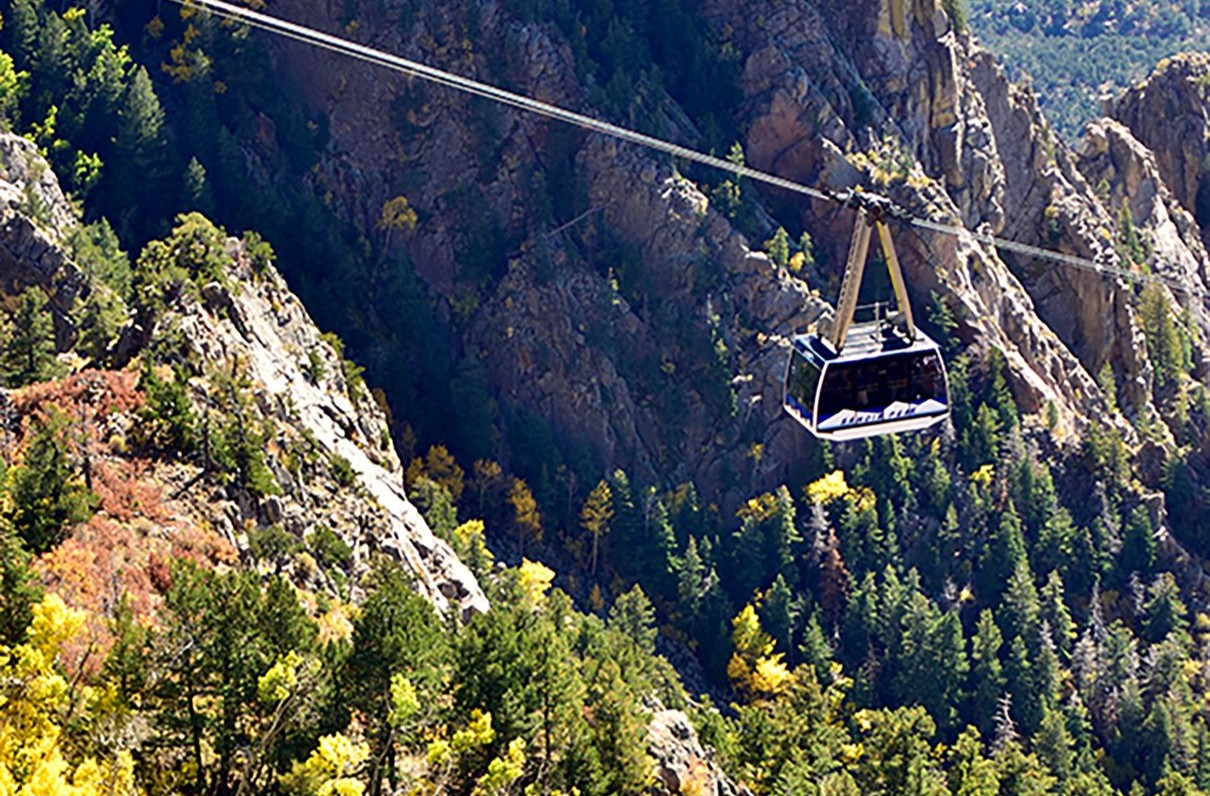
Rising above Albuquerque, N.M., is the longest aerial tramway in the U.S. The Sandia Peak Tramway, a cable car system in Bernalillo County, runs from the northeast edge of Albuquerque to the crest of the Sandia Mountains.
After riding on mountain cable car systems in Europe, Robert Nordhaus (who, with Ben Abruzzo, founded the Sandia Peak Ski Co.) decided to build an aerial tramway on the western side of the Sandia Mountains to provide access to Sandia Peak’s ski areas. Switzerland’s Bell Engineering designed and constructed the tramway.
Construction took two years — including five months to run the cables up the mountainside — followed by 60 days of testing. The tramway opened May 7, 1966.
[MORE TRAVEL: Discover Southeastern Pennsylvania’s Critical Connection to Wartime]
Riders board one of two 50- to 55-passenger cable cars, which travel at an average speed of 13.6 mph. The 2.7-mile tramway climbs 3,819 feet from the bottom station (at 6,559 feet above sea level) to the top terminus (at 10,378 feet).
A one-way journey to the top or bottom takes about 15 minutes. The system’s cable cars were replaced in 1986 and 2016, and new track cables were installed in 1997.
From the cable car, visitors can see Albuquerque and roughly 11,000 square miles of the surrounding countryside. From the upper terminus, wintertime visitors can enjoy the skiing area on the east side of the mountain. During warmer seasons, visitors can hike on paths in the Cibola National Forest. Adjacent to the mountain terminal is the Ten 3 restaurant, open for fine dining each evening except on Tuesdays and Wednesdays.
[MORE TRAVEL: This Colorado National Park Offers More Than Just Epic Views]
Museums and Militaria
While in Albuquerque, you can trace the history of the Atomic Age at the National Museum of Nuclear Science & History. Its diverse exhibits present the applications of nuclear science from its origins, through the decades to the present day.
Dubbed Heritage Park, its outdoor 9-acre exhibit features a collection of nuclear-age aircraft, missiles, and rockets. Perhaps the centerpiece of this vast display is the B-52B Stratofortress, which deployed for atomic tests in the Pacific region during Operation Redwing in 1956 and Operation Dominic in 1962. This particular aircraft is the last existing B-52 that dropped an atomic bomb during tests.
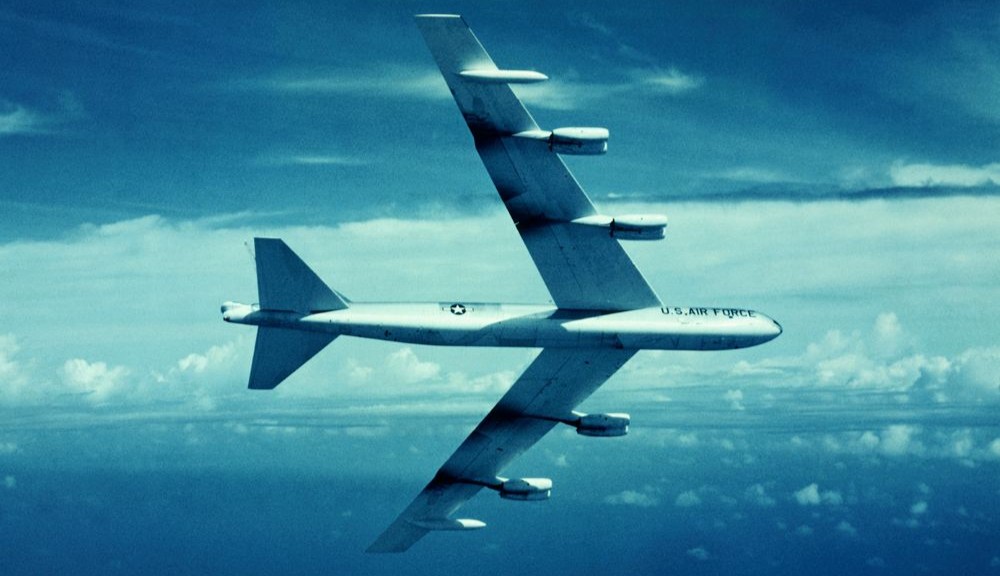
The B-52 that dropped the “Cherokee” thermonuclear device during Operation Redwing of 1956 flies over the Pacific Proving Grounds. (Bettman/Getty Images)
The B-52 was the flagship strategic bomber of the U.S. Air Force during the Cold War, and the more recent versions of the aircraft are in service today.
Naval warfare is also represented in the landlocked state. USS New Mexico (BB-40), commissioned in May 1918, saw action in the Pacific campaigns of World War II, including the 1945 invasion of Okinawa, Japan. Two of the battleship’s hefty bells are preserved: One weighing 800 pounds is on display near the Zimmerman Library at the University of New Mexico; the other, at a massive 1,100 pounds, is exhibited at the New Mexico History Museum in Santa Fe.
Eric Bryan is a writer from Burlingame Hills, Calif.
See the World (and Save!) With MOAA Vacations
Book your next big trip, or check out an upcoming MOAA Signature Cruise today!