
(This article by Ken Perrotte originally appeared in the July 2026 issue of Military Officer, a magazine available to all MOAA Premium and Life members who can log in to access our digital version and archive. Basic members can save on a membership upgrade and access the magazine.)
If you’re looking to explore American history from the days when the American Revolution was on the brink of collapse through the sacrifices and successes of World War II, you’ll find a gemstone of an opportunity in southeast Pennsylvania.
Philadelphia merits particular attention as the political heart of a nation at its birth, hosting the home of the Continental Congress and the signing of the Declaration of Independence.
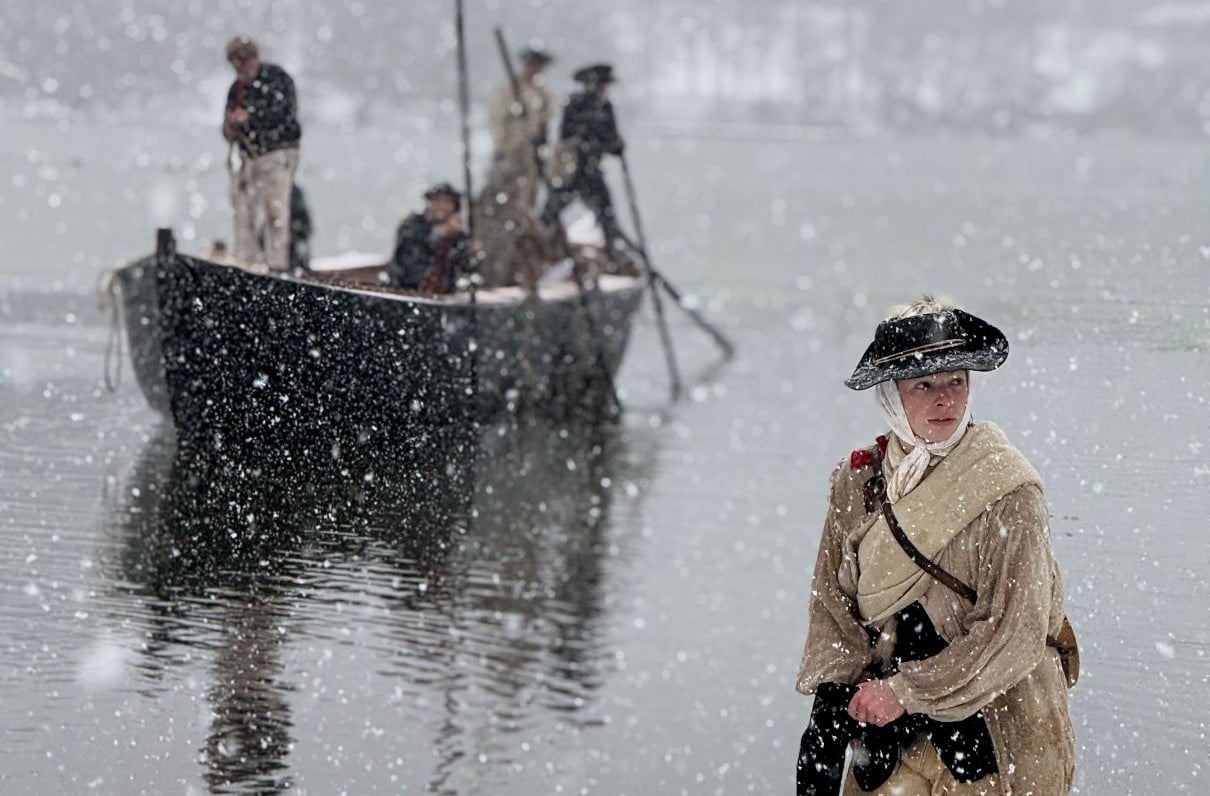
Just north, in Bucks County, is Washington Crossing Historic Park, 500 acres of history and beauty along the Delaware River. It was from here in the winter of 1776 that Gen. George Washington led troops across the water to then march to Trenton, N.J., executing a surprising, successful attack on Hessian forces supporting the British.
“A well-rounded visit might include touring the historic village and exhibits, watching the short orientation film in our visitor center, and climbing Bowman’s Hill Tower for panoramic views of the surrounding countryside,” said Michelle Flanagan, director of operations for the Friends of Washington Crossing Park.
The park offers living history on “Farmstead Fridays” at the Thompson-Neely House in which visitors can see demonstrations of civilian life during the Revolutionary War; “Soldier Saturdays” featuring the life of a soldier during the conflict; and tours of an 18th century garden at the Hibbs House Kitchen Garden. These events run through September, with some going into October.
The annual highlight is the December reenactment of Washington’s crossing of the Delaware River.
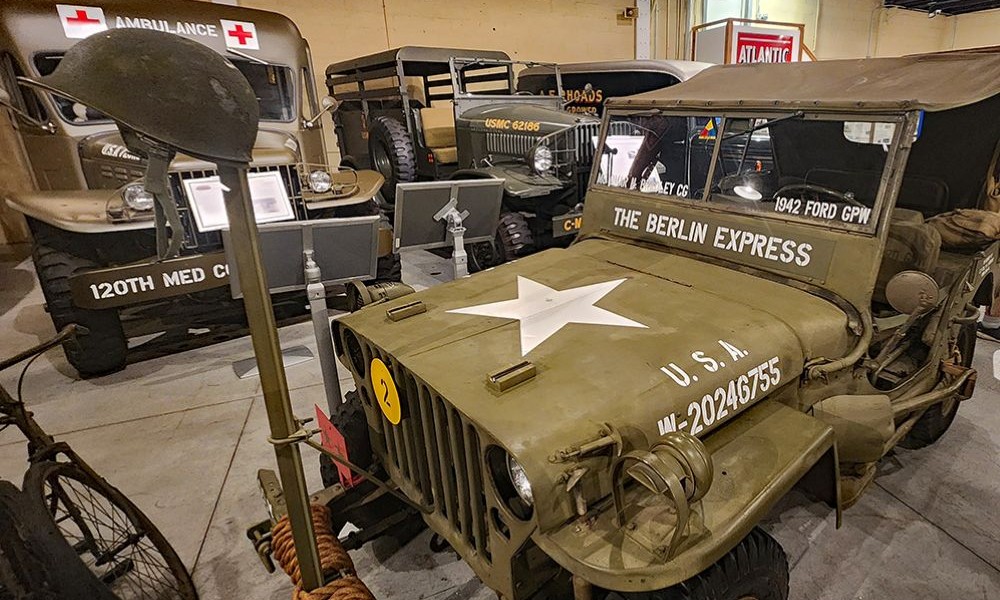
The Boyertown Museum of Historic Vehicles includes a collection of military hardware. (Photo by Ken Perrotte)
About 90 minutes west, in neighboring Berks County, take a trip through the industrial and gilded ages, into the Roaring ’20s and beyond, when the country was increasingly mobile. The Boyertown Museum of Historic Vehicles features about 100 vehicles, ranging from antique carriages and wagons to trucks and service vehicles, ornate roadsters, and luxury touring vehicles.
It also includes a restored 1921 gas station, a 1938 diner, and a 1930 tourist cabin.
Another experience in quaint Boyertown is the Colebrookdale Railroad, which offers seasonal trips into the neighboring countryside aboard luxury train cars. Depending on the parlor or themed dining car, food and drink opportunities range from simple to splendid.
The town is also home to the General Carl Spaatz National USAAF Museum. The museum is the culmination of a dream by its founder, Col. Keith Seiwell, USMC (Ret), who served for 30 years and retired in 2009.
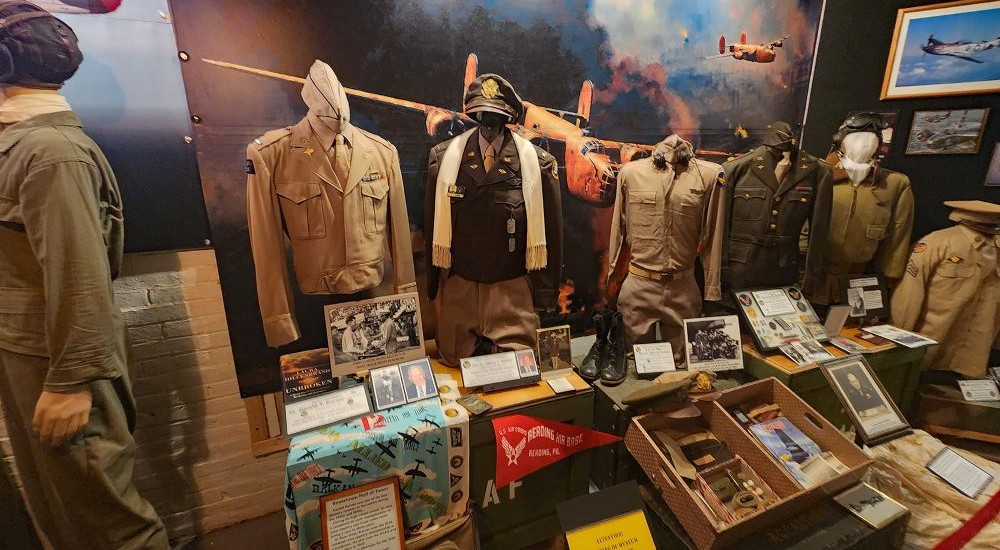
Military aviator memorabilia is on display at the General Carl Spaatz National USAAF Museum. (Photo by Ken Perrotte)
Spaatz is a hometown hero — a military aviator who led aircrews through both world wars and commanded U.S. Strategic Air Forces in Europe and in the Pacific. He became the first chief of staff of the Air Force in 1947. Exhibits chronicle his life alongside the interactive history of military aviation and the joint services.
The real fun comes when visitors form into flight crews and receive a mission briefing. From there, they gear up, wearing items used by bomber crews flying over Europe. Next, they load into a cockpit mock-up for the simulated mission. Expect to be shot down, rescued by resistance fighters, and evade capture.
Nearby, the city of Reading has the Mid Atlantic Air Museum, established 46 years ago at Reading Regional Airport, also known as Spaatz Field. The museum features more than 125 aircraft and related memorabilia. Among the aircraft is a rare, beautifully restored Northrop P-61 Black Widow fighter that crashed in the Cyclops Mountains of New Guinea in January 1945.
Other standouts include an immaculate B-25J-1-NC Mitchell bomber and a Grumman TBM-3 Avenger, the type of torpedo-bomber President George H.W. Bush primarily flew during 58 World War II naval aviator combat missions. Some of the old warbirds are flown on special occasions.
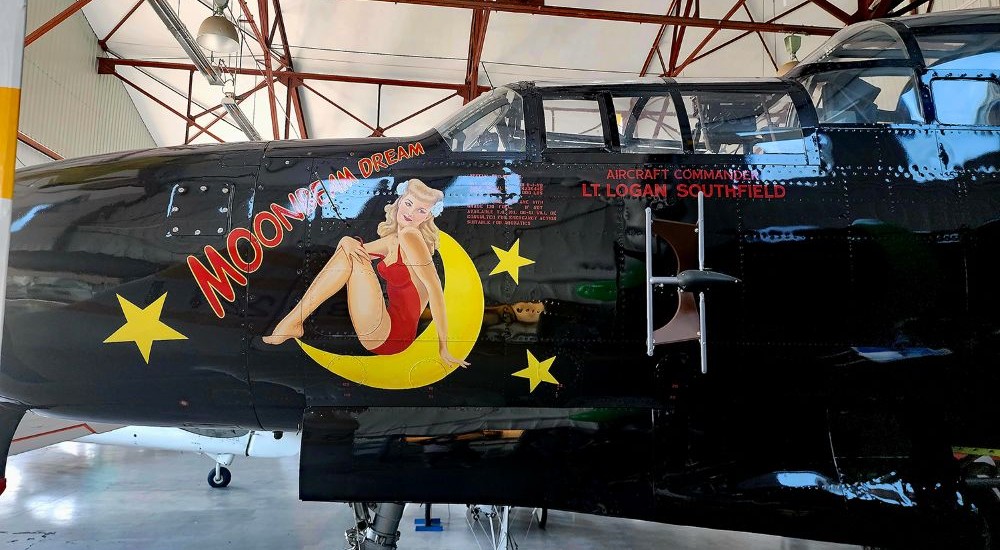
The Mid Atlantic Air Museum features a fully restored Northrop P-61 Black Widow that had crashed in New Guinea. (Photo by Ken Perrotte)
The museum’s signature event is an annual weekend dedicated to World War II. It’s an immersion experience with reenactments featuring authentic apparel, gear and vehicles, and musical performances, including swinging, big bands.
Ken Perrotte is an Air Force veteran and outdoors writer living in Virginia.
See the World (and Save!) With MOAA Vacations
Book your next big trip, or check out an upcoming MOAA Signature Cruise today!