
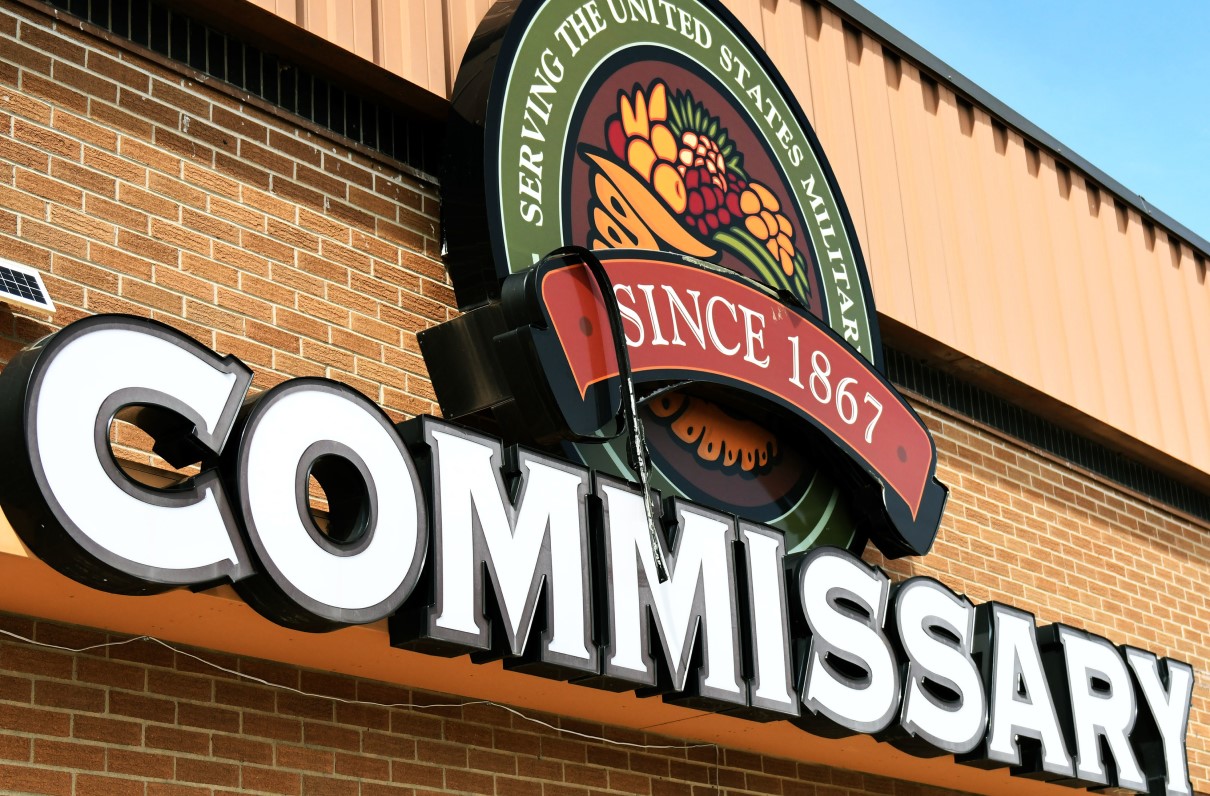
This article by Karen Jowers originally appeared on Military Times, the nation's largest independent newsroom dedicated to covering the military and veteran community.
Defense officials won’t be handing off the operation of commissaries to the private sector, DoD’s top personnel official said June 24.
“We learned and found that there was nobody interested in taking a 24% haircut right out of the gate,” in order to provide the 24% saving for military customers, said Anthony Tata, under secretary of defense for personnel and readiness. Tata spoke during a meeting on Capitol Hill of the American Logistics Association, a nonprofit trade association representing businesses supplying products and services to the military marketplace.
[RELATED: More Than 100 Commissaries to Add Delivery in Coming Months]
In September, the Pentagon issued a public request for information to find out whether any entities were interested in taking over the operation of the 178 commissaries in the United States.
The RFI was issued following DoD’s April 7, 2025, memorandum, directing that all functions that are not inherently governmental would be prioritized for privatization. The order specifically cited retail sales.
Prices are the determining factor that drive people to the commissary, Tata said. “Families go there because they know they’re going to save 24%-plus.”
That said, if commissaries aren’t providing a user-friendly benefit, people will go elsewhere, he said, and efforts are underway to use technology and other tools to help bring shoppers into the stores.
[RELATED: Commissaries Reverse Course, Stop Charging for Single-Use Bags]
In an April 3 letter, defense officials notified lawmakers they had decided not to pursue privatization of the military resale system, which includes commissaries, exchanges and other retail outlets. They said they had determined that “privatization would create an unacceptable risk to the readiness and well-being of service members and their families.”
Military family advocates applauded the decision.
“We’ve always questioned whether a private entity could operate the commissary system profitably while still delivering the savings that families rely on,” said Eileen Huck, director of government relations for the National Military Family Association. “The response to the administration’s outreach isn’t surprising. We’re pleased that the administration recognizes the importance of the commissary benefit to military families.”
In addition to the savings, Huck said, she’s spoken with families in remote areas who rely on commissaries for items like Kosher and Halal foods, as well as dietary items for family members with special needs.
[RELATED: Online ID Card Office Switches From DS Logon to New Verification Platform]
DoD’s analysis concluded that “the potential cost savings of privatization are unlikely to be realized without severely degrading the benefits these programs provide,” stated the letter, signed by Sean O’Keefe, deputy under secretary for defense for personnel and readiness.
In recent years, DoD’s efforts to privatize military housing and the process for household goods have resulted in problems for military families.
The Defense Commissary Agency operates 235 stores around the world with about $1.5 billion in taxpayer dollars annually.
DoD’s analysis confirmed that a for-profit operation can’t deliver “the tangible, non-negotiable benefits these programs provide, including vital savings for families, a sense of community and enhanced readiness.
“Performance data shows the current system delivers significant savings.”
[RELATED: Military Families Paying $1,000 Out of Pocket for Moves, Survey Shows]
The department also noted that a private entity “would face significant challenges operating profitably in remote, overseas, and strategically vital but low-volume locations, such as Naval vessels and forward deployed sites, without substantial government subsidies, that would negate potential savings to the taxpayer.”
These shipboard and forward-deployed retail activities are operated by the military exchanges.
In shifting to look at ways to improve efficiency in the commissary system, officials are addressing supply chain issues. But the supply chain initiative that the commissary agency is implementing threatens the viability of the benefit, said Tom Gordy, president of the Armed Forces Marketing Council, which represents more than 400 national brand manufacturers and firms that supply consumer products to military resale activities worldwide.
The commissary agency’s direct relationship with manufacturers allows them to deliver over 25% savings on an average market basket of groceries, and this initiative will not maintain that direct relationship, Gordy said. The plan hasn’t undergone an analysis to determine whether it will be able to continue to offer low prices, he said.
“There remain more questions than answers related to how the program will be implemented,” he said, and how the agency “will ensure mandated savings for military families if there are increases in cost of goods under the new model.”
Other articles by Military Times:
Is GPS reliance making troops less observant? Yearlong study aims to find out.
Army wants up to 100 drone boats to fill watercraft gap in Pacific
Army launches new branch for military space operations

Resources for Currently Serving Officers
MOAA can help you succeed in your military career and beyond.