
(This article by Kathie Rowell originally appeared in the November 2025 issue of Military Officer, a magazine available to all MOAA Premium and Life members who can log in to access our digital version and archive. Basic members can save on a membership upgrade and access the magazine.)
Col. Robert “Bob” Patrick, USA (Ret), would like to see the stories of all veterans saved for generations to come.
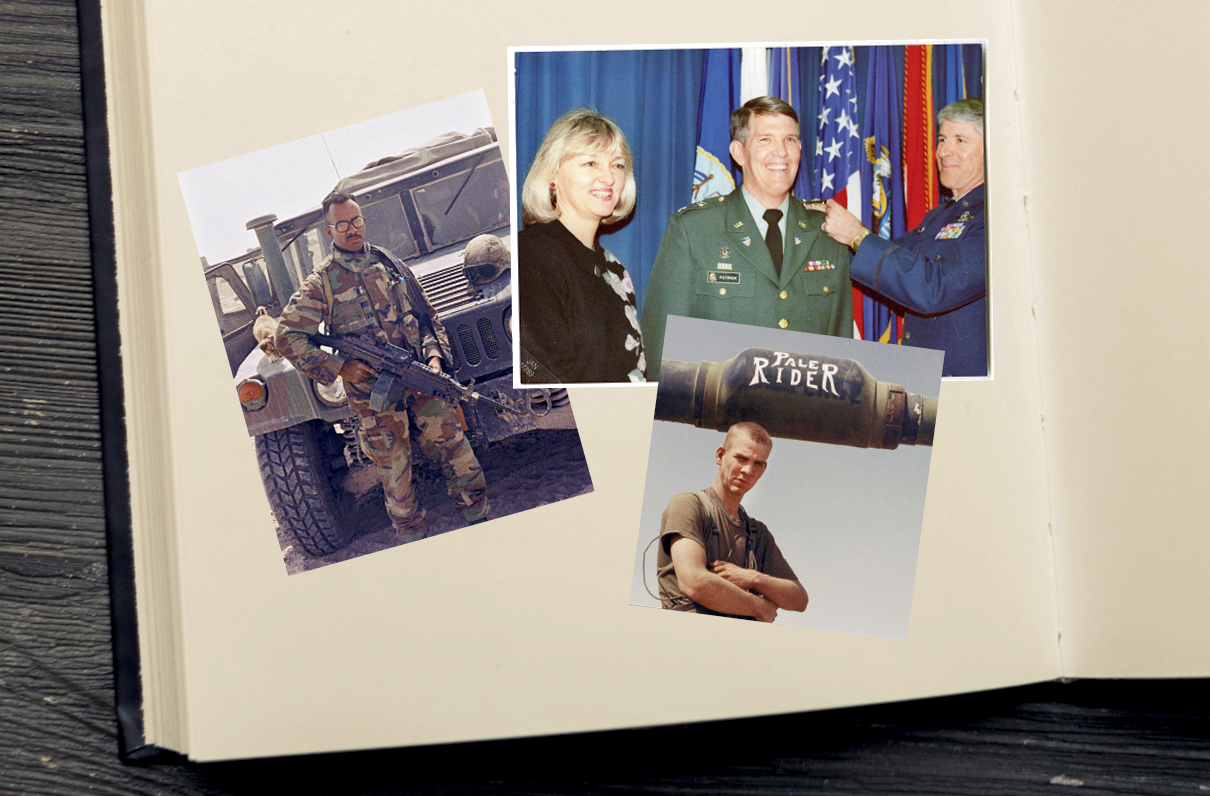
Patrick, a MOAA Life member who served as director of the Library of Congress’ Veterans History Project (VHP) from 2004 until 2016, submitted his own story, which consists of recorded interviews, photos, and documents encompassing his 28 years of service and his work as an Adjutant General’s Corps officer.
The VHP marked its 25th anniversary Oct. 27 by kicking off special exhibits and events that will last through the next year, while also setting a goal of adding to its database 4,000 new personal veteran histories. That would bring the total to 125,000.
With a history of military service in his family, a degree in history, and experience working on the World War II Memorial project, including directing the memorial’s dedication in 2004, Patrick knows the value of the VHP.
“It’s important on a lot of levels,” he said. “It’s the national library. It’s a library that will make these veterans’ interviews and whatever else they may have — letters, photographs, diaries — accessible to the public. On another level, it’s so important for the families of these veterans. I can’t tell you the number of times we talked to someone from their family after they’ve done the interview, and they said, ‘He’s never talked about that’ or ‘She’s never told us that before.’ It enlightens the families and, on the other side, it’s therapeutic for a lot of these veterans.”
[MOAA'S SURVIVING SPOUSE CORNER: Writing Your Legacy]
Patrick encourages all veterans to share their stories with the VHP.
“This isn’t about the grand and glorious things you see on movie screens or books are written about,” Patrick said. “It’s everyone’s story about their experience, and everything from the cockpit to the mess hall, from the foxhole to the post office. Everyone’s story is important.”
Gathering New Stories
Current VHP Director Monica Mohindra believes every veteran has an important story to share.
“We want them all,” she said. “With 121,000, we’re pleased with that number, but there are millions of veterans.”
[VHP: How to Volunteer]
The VHP was founded in 2000 through a unanimous vote in both chambers of Congress. At the time, the impetus was to collect the histories of the declining number of World War II veterans, resulting in 63,000 recorded. In addition, 450 World War I veterans have added their stories.
But the project was always designed to encompass veterans of all eras and roles. Indeed, the Library of Congress notes on its website that the VHP “collects, preserves and makes accessible the firsthand recollections of U.S. military veterans who served from World War I through more recent conflicts and peacekeeping missions.”
“The legislation was very clear,” Mohindra said. “We want the totality of U.S. veteran military experience, the human scale, so drone pilots to people who are doing logistics, military medical professionals to people who are stateside working on auditing and accounting. All of it tells the broader story of how the U.S. encounters and engages in times of conflict.”
Collections include first-person video and audio recordings, photographs, diaries, memoirs, letters, audio correspondence, and documents.
[VHP: Search the Collection]
“The idea is really to let the veteran share what they want to share about their human experience,” Mohindra said. “What did it sound like? What did it feel like? How did you keep in touch with loved ones? What did it all mean to you? Really big, broad narrative arcs, open-ended questions, so that the veteran remains the expert of their experience and is really gifting the rest of us with that.”
The collections are meant for public consumption, such as those conducting scholarly research, family members seeking information about loved ones, or curious individuals. Much of the material can be found online at the Library of Congress’ website. Researchers may also visit the collections at the American Folklife Center’s reading room in Washington, D.C.
Empowering the Next Generation
MOAA Life member Col. Edna Cummings, USA (Ret), intends to eventually share her own story with the VHP, but she’s been focused on ensuring the stories of the iconic 6888th Central Postal Directory Battalion are represented.
That 850-plus-strong unit — a mostly African American battalion under the Women’s Army Corps — served overseas in World War II and cleared a backlog of millions of pieces of mail, improving troop morale in the process.
For years Cummings has championed the battalion’s history, successfully supporting efforts to raise funds for a monument at Buffalo Soldier Military Park at Fort Leavenworth, Kan.; produce a documentary; and push through legislation to honor the group with a Congressional Gold Medal.
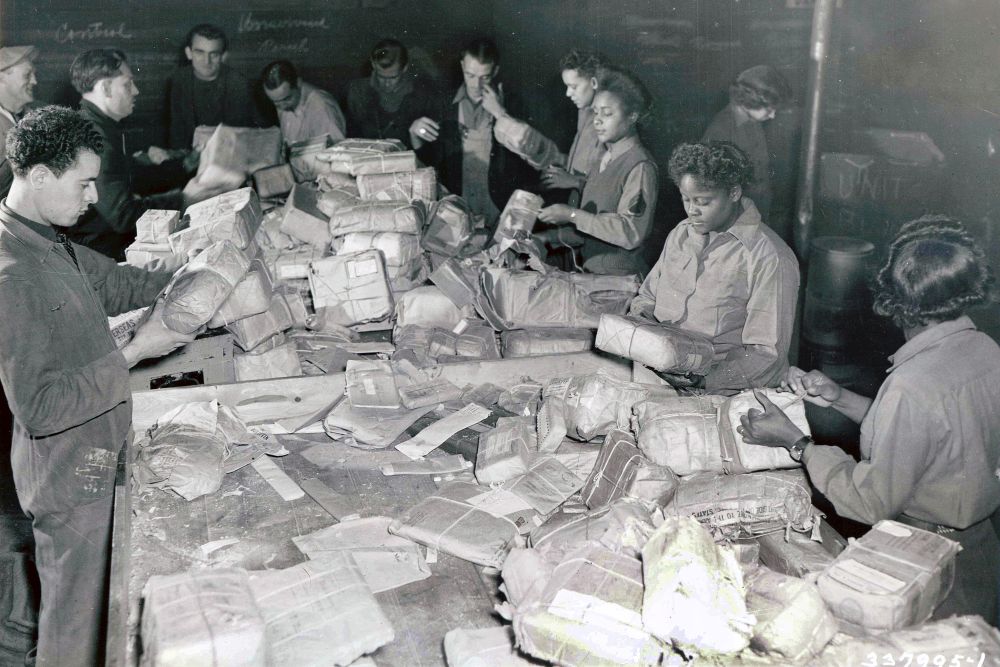
Members of the 6888th Central Postal Directory Battalion sort packages at the 17th Base Post Office in Paris on Nov. 7, 1945. (Army photo)
“The [6888th] and Black women who served in World War II were never seen, their contributions seldom talked about,” she said. “Listening to the stories of these veterans and realizing the impact that they made on our nation — I use the term ‘force multiplier’ for the Allied victory in World War II. It was such a huge impact, and I just felt it should be recognized.”
[MOAA CHANGEMAKER: Col. Edna Cummings, USA (Ret)]
Cummings worked with relatives of 6888th members and alongside VHP staff to collect stories and memorabilia.
“That really enriches history, and it establishes a foundation for future generations,” she said. “And hopefully it empowers the next generation into saying: ‘If the [6888th] and these other veterans could accomplish what they did with limited resources, in these constrained environments, with all the -isms [prejudice] of that era, maybe with the resources I have, I can do something as well.’”
Submitting Your Story
Mohindra said VHP staffers spend a lot of energy contacting loved ones and influencers of veterans to convince them to tell their stories.
That effort involves Andrew Huber, a VHP liaison specialist, whose job is to spread awareness of the project as well as encourage participation. He also teaches veterans how to record oral histories and organize their materials. In addition, he organizes in-person and virtual community interview days, where volunteers are trained to conduct oral history interviews and veterans are invited to attend.
But the vast majority of collections are submitted through the VHP website, which includes detailed instructions, including a field kit and 10-minute instructional video.
“I would say that the veteran experience is one of the most misunderstood aspects of American culture,” Huber said. “People have this idea of what it means to be a veteran, to be a soldier, a sailor, Marine; and a lot of the time, it’s not accurate. A lot of people don’t understand that [not all veterans] fire a weapon or see combat. A lot of people don’t understand how incredibly important those other roles are.
“We want every veteran to understand that their story is valuable and their story is wanted,” he added, “because we have over 3 million researchers a year accessing our collections, and they are not all looking for Medal of Honor, storming-the-beaches-of-Normandy, Saving Private Ryan stories.”
Kathie Rowell is a writer in Louisiana.
Military Officer Magazine
Discover more interesting stories in MOAA's award-winning magazine.