
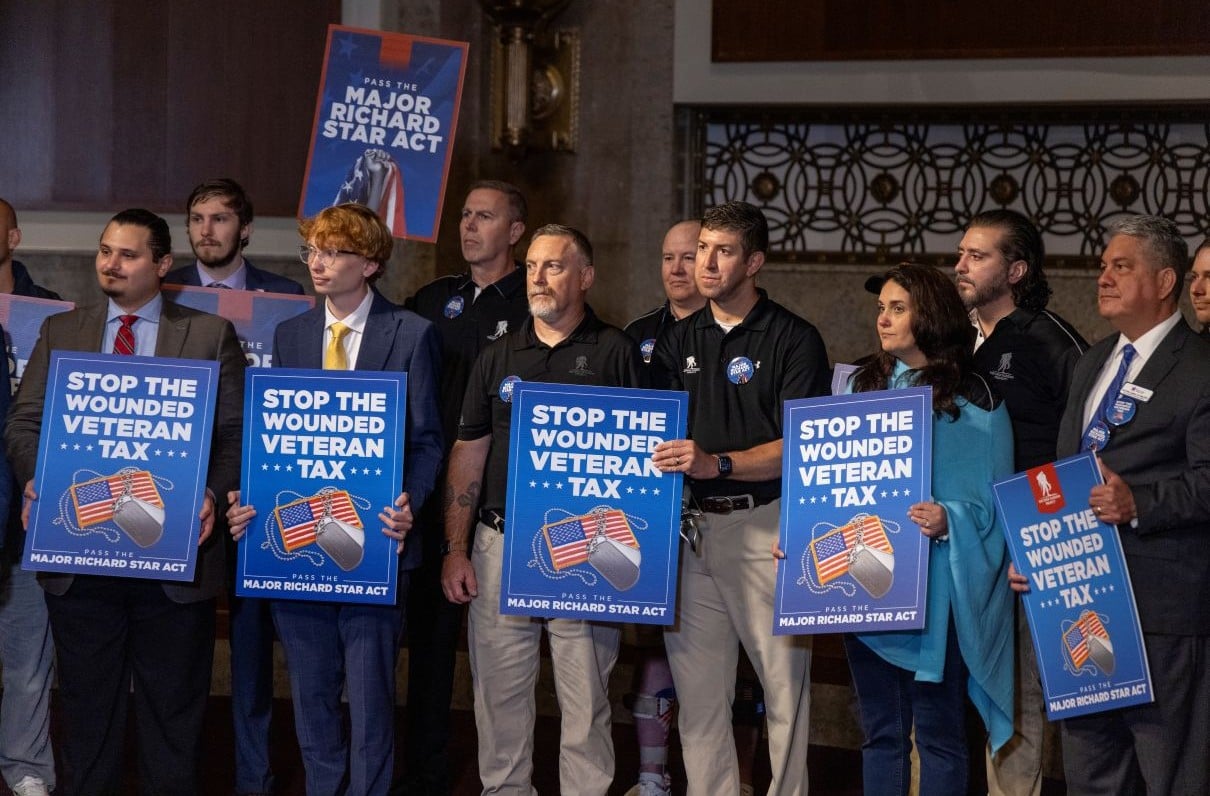
The most recent step in the long fight to overturn an unjust pay offset faced by combat-injured military retirees came July 22, as three senators announced plans to include the text of the Major Richard Star Act as an amendment to the must-pass FY 2026 National Defense Authorization Act (NDAA).
Backed by MOAA and dozens of other military, veteran, and survivor groups, the amendment would allow tens of thousands of veterans to receive both their DoD-provided retirement pay and their VA-provided disability pay. These veterans now face a dollar-for-dollar offset of that earned compensation – essentially a “wounded veteran tax.”
[TAKE ACTION: Ask Your Lawmakers to Support the Major Richard Star Act]
“The Major Richard Star Act would correct one of the deepest injustices in our present veterans’ disability system,” said Sen. Richard Blumenthal (D-Conn.), ranking member of the Senate Veterans’ Affairs Committee, who will introduce the amendment alongside Sens. Mike Crapo (R-Idaho) and Elizabeth Warren (D-Mass.).
The amendment had 31 sponsors as of July 22, according to a press release announcing its introduction. The act had 294 House cosponsors and 76 Senate cosponsors as of July 23 – more than enough to pass the legislation should it come to a floor vote.
The bill honors Maj. Richard Star, USAR, who lobbied for its passage while suffering from the effects of service-connected lung cancer. Star died in 2021.
“The support for this correction is clear,” Crapo said in the press release. “Though the namesake of our legislation is no longer with us, we must pass this fix on behalf of the more than 50,000 veterans, including hundreds in Idaho, who stand to benefit.”
Making a Difference During the NDAA Process
The Senate plans to begin considering the NDAA next week. The House will consider its version when its members return to Washington, D.C., in September.
The Major Richard Star Act was proposed as an amendment to the House version of the FY 2025 NDAA, but it was not found “in order” by the House Rules Committee. Neither FY 2025 NDAA draft included the legislation.
Should one or both versions of the FY 2026 bill include this long-overdue fix, it would become part of the bill’s conference process, where differences between the drafts are resolved before final votes in each chamber.
As a constituent, you can ensure this issue remains at the top of your lawmakers’ to-do list by engaging with them throughout the NDAA process and during their summer work period. MOAA will be offering more details on member outreach in the coming weeks through MOAA.org and via our new-look Legislative Action Center; until then, continue to message your lawmakers regarding this key priority.
When MOAA Speaks, Congress Listens
Learn more about MOAA’s key advocacy issues, and contact your elected officials using our messaging platform.