
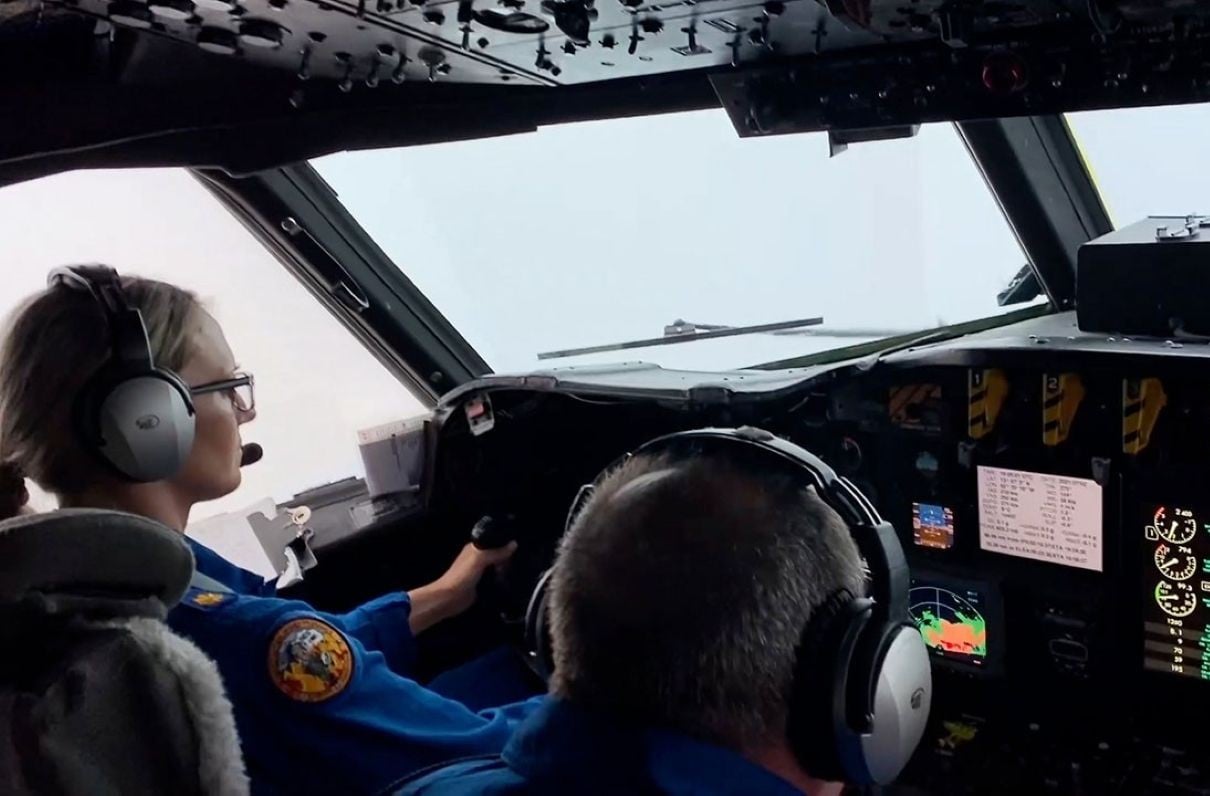
As Hurricane Melissa tore through the Caribbean with sustained winds near 185 miles per hour, NOAA aviators and scientists flew repeated reconnaissance missions into the storm, gathering critical data to protect lives and property. They did so without pay.
NOAA confirmed that none of its employees will receive checks during the ongoing government shutdown, which includes the NOAA Commissioned Corps members piloting and supporting these Hurricane Hunter aircraft. These uniformed officers, along with their counterparts in the U.S. Public Health Service Commissioned Corps, are exempt from furlough. They are required to report for duty, even without compensation.
While emergency measures have kept most of the armed services funded, those provisions do not extend to USPHS or NOAA. On Oct. 31, officers of both corps missed scheduled pay, along with their services’ retired officers and surviving spouses, with no clear timeline for resolution.
[LEAVE NO SERVICE BEHIND: Tell Your Lawmakers to Protect Pay for USPHS and NOAA Corps Officers, Retirees, and Survivors]
Growing Financial Strain
The ongoing shutdown brings mounting uncertainty across the services and among retirees and survivors. Those in uniform who’ve been covered by reprogrammed funds face questions about how long those stopgap measures will last. Retirees and survivors from the military services have greater protections, but they could see critical benefits like commissary access vanish and face issues with health care coverage as providers deal with stalled TRICARE payments.
MOAA Shutdown Resources
- WRITE YOUR LAWMAKERS: Support the Pay Our Troops Act | Protect retiree pay for all who served
- MORE MOAA ADVOCACY: Joining forces to support servicemembers and their families
- SHUTDOWN FAQ: Uniformed pay and retirement pay during the funding lapse
- SUPPORT FROM MOAA: The MOAA Foundation’s Crisis Relief Program is accepting applications from those impacted by the government shutdown. Learn who is eligible, and find out how to apply.
For USPHS and NOAA personnel, the effects are already real. Officers safeguarding our nation’s health and serving on the front lines of natural disasters are doing so without compensation. Those services’ retirees and surviving spouses, many living on fixed incomes, are forced to stretch savings or seek assistance to bridge the gap left by missing payments.
This hardship reaches beyond individual households. Unreliable pay weakens morale, strains families, and undermines our nation’s readiness in times of crisis.
[RELATED: Service Organizations Rally to End the Nation’s Longest Government Shutdown]
A Shared Mission
MOAA’s 350,000 members represent all eight uniformed services, united by a commitment to protect those who serve and have served. The funding lapse makes clear that no one in uniform is immune to uncertainty, and that our nation must provide consistent, reliable appropriations for every service branch.
MOAA continues to press lawmakers to secure immediate and sustained relief for those affected by the shutdown. Now more than ever, we need your voice and your support to urge Congress to ensure no servicemember, retiree, or surviving spouse is left behind.
When MOAA Speaks, Congress Listens
Learn more about MOAA’s key advocacy issues, and contact your elected officials using our messaging platform.