
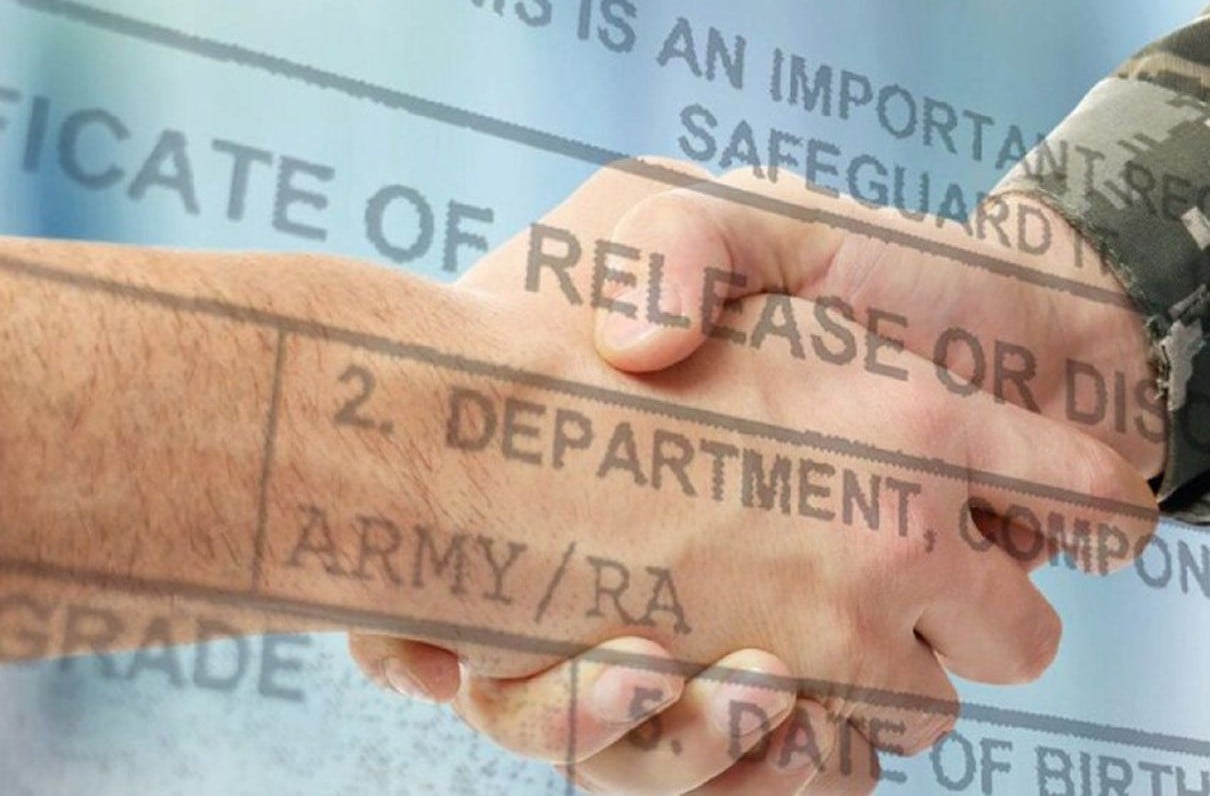
From the Expert: Before you start decluttering your old military paperwork, there are a few key documents you might consider stashing in your filing cabinet (and scanning to preserve digitally).
You’ll find details on each form below, including where you can obtain the form if you can’t locate (or did not receive) the original. While MOAA can assist with questions about the forms, you’ll need to contact the listed agency or personnel system directly to obtain the proper documents. Unsure where to start? Visit the National Archives online – if the records aren’t stored there, the site notes the agency that holds them.
Get Organized With Everplans
MOAA partners with Everplans, a digital estate planning tool offering discounted rates to all MOAA members. Find out more about their offerings, and how much you can save.
DD-214/DD-214-1/DD-215
What it is: DD Form 214, or Report of Separation, is military discharge paperwork which serves as proof of military service. All service branches use the same form. The form reflects when and where a servicemember served, rank at discharge, type of discharge, qualifications, licenses and certificates, and awards and medals.
DD Form 214-1 summarizes periods of active and inactive service and points earned for National Guard and Reserve members. It was first issued in 2024 and is now issued by all service branches.
Reservists will still get DD-214s for each period of active duty service, but going forward, they will receive a DD-214-1 as an addendum. DD-214-1s are not issued retroactively.
DD Form 215 is used to correct errors on a DD-214.
Why you need it: Your DD-214 is the key to unlocking many benefits, including VA home loans, civilian and federal employment preferences, burial benefits, veteran social services and medical care, education, and even veterans’ discounts.
For reservists, the DD-214-1 serves as a single record of all active and inactive service and helps determine periods of qualifying service for benefits like VA medical care and the Post-9/11 GI Bill.
Where to get it: Most veterans and their next of kin can get free copies of their DD-214 from the National Archives. This Military OneSource download (PDF) offers step-by-step instructions.
NGB-22
What it is: NGB Form 22 is the official Report of Separation and Record of Service for members of the Army or Air National Guard. It is the equivalent of the DD-214 for active duty servicemembers.
Why you need it: It acts as proof of service to access various benefits and services including VA home loans, employment preferences, state-specific benefits, and burial honors.
Where to get it: The National Archives retains copies of military service records. For Air Guard members separated after 2004, personnel records are maintained by the Air Reserve Personnel Center (ARPC). For Army National Guard, submit a Standard Form (SF) 180, Request About Military Records, to your state’s headquarters.
[FROM VA.GOV: Download SF-180]
DD-256
What it is: DD Form 256 is a certificate of honorable discharge issued to National Guard and Reserve members who complete their service, even if they have not been activated for 90 or more days.
Why you need it: It can act as proof of honorable service in a variety of circumstances, such as with lenders. It is important to note that in many instances the VA will not consider a servicemember a veteran for benefits purposes unless they have served a minimum amount of time on active duty.
[FROM VA.GOV: Eligibility for VA Health Care]
Where to get it: Copies of military service records can be requested from the National Archives.
Notification of Eligibility for Retired Pay (‘20 Year Letter’)
What it is: Once a reservist has completed 20 years of qualifying service and is eligible for retirement, their service branch’s personnel center will send them a Notification of Eligibility for Retired Pay at Age 60, commonly referred to as a “20 Year Letter.”
Why you need it: This letter not only confirms that a member has met all the requirements for retirement, but it is also the trigger for crucial decisions on the Reserve Component Survivor Benefit Plan.
[PREMIUM/LIFE MEMBER EXCLUSIVE: Your Guide to the Survivor Benefit Plan]
Where to get it: Request a copy through your service branch’s personnel or retirement portal.
Official Military Personnel File (OMPF)
What it is: Your OMPF is a full paper trail of an entire military career. It includes information like duty stations, performance reviews, certifications, awards, and assignments. Some OMPFs contain active duty health records, but the service branches discontinued this practice in the 1990s.
Why you need it: While the DD-214 is a snapshot of a servicemember’s career, the OMPF is the full story. Not only is it proof of service when it comes to benefits claims, it can also be used to identify and correct errors or omissions in the official record.
Where to get it: The National Archives has archival holdings of official military personnel files. It receives records 62 years after the servicemember separates from the military. Archival records are open to the public.
Newer records are maintained by the Federal Records Center program and are subject to restrictions. The veteran (or next of kin) can request records online with eVetRecs, or they can mail or fax an SF-180 to the National Personnel Records Center.
The Defense Manpower Data Center (DMDC) compiles a military service history for every armed forces veteran and servicemember. A copy can be requested via the Defense Personnel Records Information and Retrieval System (DPRIS) page in milConnect.
Coast Guard and NOAA Commissioned Officer Corps veterans will need to reach out to the National Archives. U.S. Public Health Service Commissioned Corps veterans will need to reach out to the Division of Commissioned Corps Officer Support.
Military Health Record
What it is: Medical documentation, records, and health care history, including lab results, allergy profile, medication profile, problem lists, and office visit information.
Why you need it: Not only do your medical records help with continuity of care, they also can help prove service connection for benefits claims.
Where to get it: If you get most care at military hospitals or clinics, you’ll have an electronic health record. For those who retired or separated after Jan. 1, 2014, medical records were digitized. They may be available in MHS Genesis, or you can request a complete copy of your health record by submitting an SF-180 to the proper agency (the form provides a comprehensive list). You may also make an in-person request at “your last home military hospital or clinic,” according to the TRICARE website.