
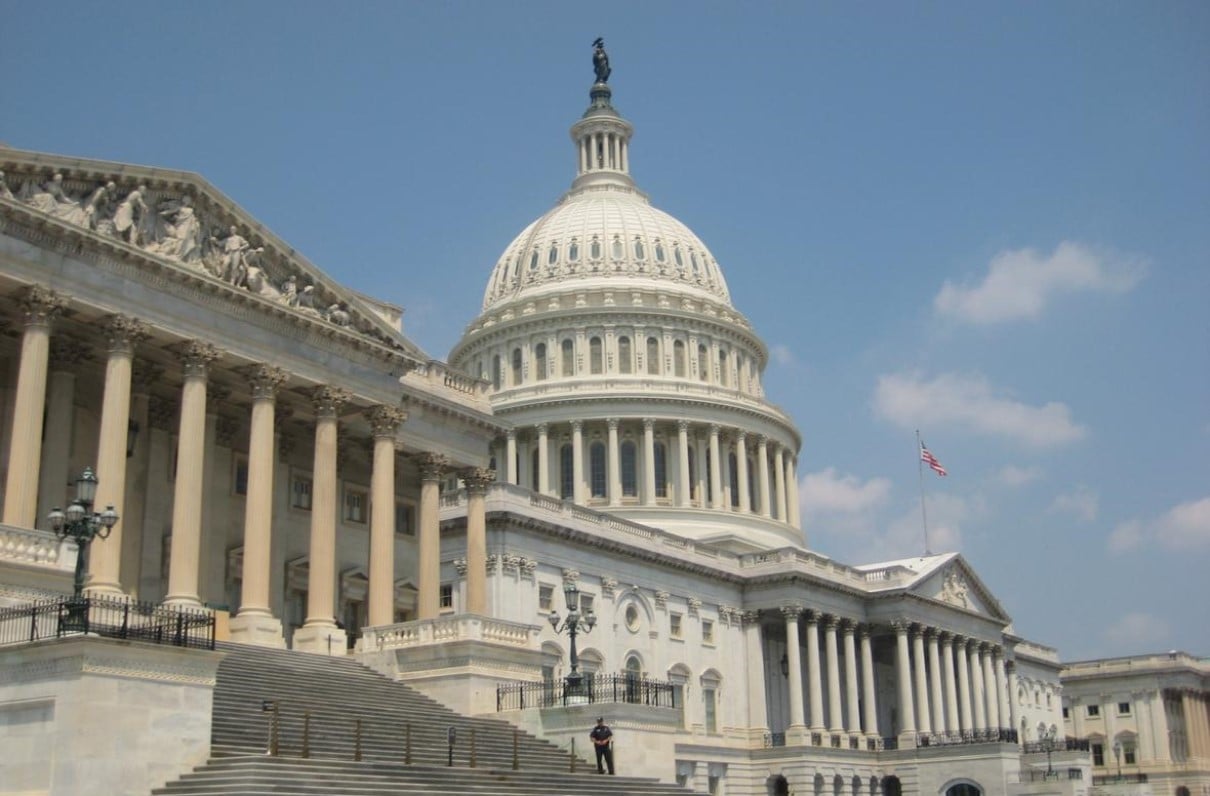
With lawmakers back at work for the second half of the 119th congressional session, attention has again turned to issues affecting our nation — including those impacting the all-volunteer force, veterans, and military families.
The new year brings both opportunity and challenge, especially when it comes to advancing legislation and protecting service-earned benefits. MOAA has been building and refining its advocacy strategy to hold the line in 2026.
Before addressing what’s to come this year, it’s important to take stock of what was accomplished in 2025.
Delivering Wins for the Uniformed Services Community
In December, MOAA was recognized by The Hill as a Top Lobbyist for the 19th year in a row. Our grassroots advocacy helped advance a targeted pay raise for junior enlisted servicemembers, defend protections for student-veterans against fraud, and expand TRICARE coverage for an Alzheimer’s medication.
[READ MORE: MOAA Again Recognized as a ‘Top Lobbyist’ by The Hill]
MOAA’s advocacy also helped secure several additional policy wins in 2025 that directly affect quality of life: The Fairness for Servicemembers and Their Families Act became law, for example, protecting VA insurance programs from inflation. And MOAA’s advocacy on unaccompanied housing and housing allowances contributed to their inclusions in a broad reconciliation package passed in July.
The FY 2026 National Defense Authorization Act, which became law late last year, also included key MOAA-supported quality-of-life provisions, such as:
- Protections against future medical billet cuts and harmful restructuring of military treatment facilities.
- Expanded child care fee assistance.
- Increased Family Separation Allowance.
- Improved Pentagon-VA collaboration on toxic exposures.
- New reporting requirements on unreimbursed PCS costs.
- Enhanced oversight of the TRICARE contract transition.
These outcomes reflect MOAA’s commitment to protecting service-earned benefits and addressing challenges faced by today’s military families.
[RELATED: MOAA Shares 2026 Legislative Priorities at Congressional Reception]
Powered by Grassroots Advocacy
MOAA’s success is driven not only by policy expertise, but by the strength of its members.
We are privileged to represent more than 350,000 members advocating on behalf of all servicemembers, veterans, surviving spouses, and families.
In 2025, MOAA members sent more than 105,000 messages to Congress through our Legislative Action Center in support of key initiatives. By year’s end, MOAA’s advocacy community included more than 32,000 registered advocates, with council and chapter members serving as key grassroots leaders. Their work mobilizing local chapters, engaging lawmakers, and leading advocacy on state-specific issues is essential.
Before supporting legislation, lawmakers want to hear directly from their constituents. Grassroots voices make clear that these issues matter not just in Washington, but in their home districts.
[RELATED: MOAA.org/Chapters]
Looking Ahead to 2026
The second half of the 119th Congress will be pivotal for MOAA’s advocacy mission.
Building support and awareness is central to the legislative process. Many bills introduced in the first year of a congressional session do not gain momentum or move toward passage until the second year. Several of MOAA’s highest-priority bills, which were introduced during the first year of the 119th Congress, must advance this year or face a steeper path to be reintroduced.
As always, your engagement will be essential as we continue to advocate for MOAA’s priorities in 2026.
[RELATED: New Coalition Forms to End Unfair Pay Offset Facing Combat-Injured Veterans]
How You Can Get Involved
- Sign up for alerts in MOAA’s Legislative Action Center. Timely engagement can make a difference when key votes approach.
- Connect with your local council or chapter. Grassroots leaders will play a central role in MOAA’s upcoming Advocacy in Action campaign.
- Stay engaged with MOAA. Bookmark our advocacy news page and follow us on your favorite social media channels: Facebook | Instagram | LinkedIn | YouTube | TikTok | X (Twitter).
Thank you for your support and engagement in 2025. Please rest assured: MOAA will continue to hold the line for service-earned benefits in 2026.
When MOAA Speaks, Congress Listens
Learn more about MOAA’s key advocacy issues, and contact your elected officials using our messaging platform.