Submitted by the Northwest Arkansas Chapter
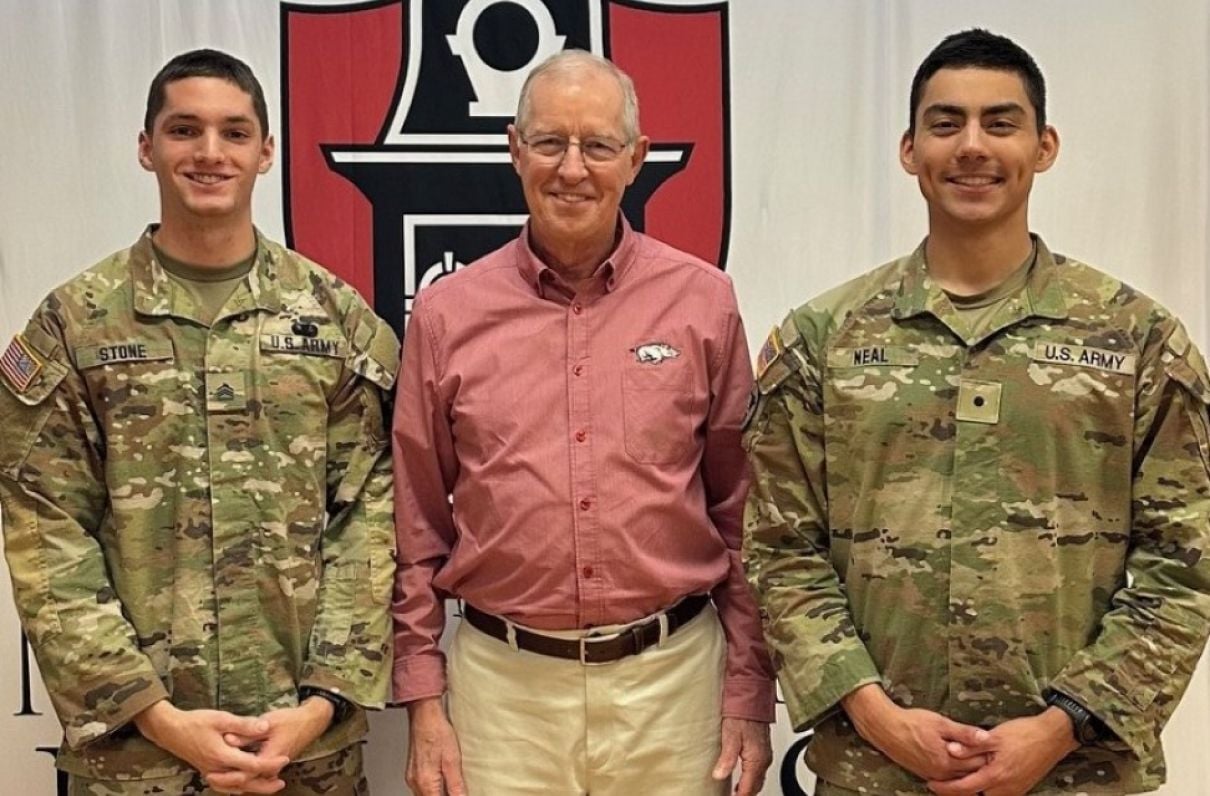
In 2019, the Northwest Arkansas Chapter started a mentorship program with Air Force and Army ROTC cadets at the University of Arkansas in Fayetteville. Since then, the program has grown into a wide-ranging project with most cadets volunteering to participate and many chapter members serving as mentors. The chapter has continued the program every year except for one due to the COVID-19 pandemic.
Col. Bob Crawford, USA (Ret), chapter ROTC liaison officer, said his chapter started the program to fill a gap.
“Their ROTC curriculum provided outstanding information and education,” he said. “Similarly, cadre were teaching superbly while providing examples of their own personal experiences, but we thought our chapter could provide additional professional development that would augment what cadets were receiving at the university.”
[RELATED: New Officers Meet MOAA at Graduation Events Across the Nation]
The plan: The chapter’s mature, experienced officers could mentor cadets by sharing their knowledge and personal journeys in the military.
When Crawford asked for volunteer mentors from the chapter, the response “was amazing.”
“Many Army and Air Force officers — active, former, and retired — in the chapter wanted to participate,” he said.
Crawford then met with the Army ROTC professor of military science and the Air Force ROTC professor of aerospace studies to describe the program, gain their support, and request permission to meet with the senior cadets in their classrooms.
“The ROTC commanders were tremendously supportive,” he said.
[RELATED: 52 Affiliates Receive Grants From MOAA Charities]
The cadets who decided to participate selected their mentors based on branch specialty, experiences, and other information provided in the mentors’ bios.
Mentors and mentees meet at least once a month at local restaurants to share a meal at the mentors’ expense and discuss myriad topics, ranging from branch assignments to military culture to personal finances to VA benefits. Mentors also share best practices and useful documents with other mentors to improve the overall program.
Crawford said all activities are free for cadets because “that’s how important the mentorship program is to the chapter and mentors.
[RELATED: More MOAA Members in the Spotlight]
For the past five years, the chapter has received a Community Outreach Grant from MOAA Charities to support the effort.
In 2024, the chapter expanded the mentorship program to include junior cadets.
“Our chapter had experienced amazing growth — 60 members in 2020 to 187 members today — which provided us with many more volunteer mentors and many mentors wanted a longer-term opportunity to work with cadets than just one year,” Crawford said.
Benefits of the program for cadets include getting a distinct and independent perspective from their mentor on all things military, gaining another role model and member of their network, and gaining a long-term professional relationship with their mentor, someone to help them develop their philosophy of leadership and better preparing for military service.
Benefits for mentors, Crawford said, are exemplifying MOAA’s motto of "Never Stop Serving," staying engaged with the next generation of military leaders, keeping focused and active, and personifying leadership and professionalism. He added that oftentimes mentors are asked to commission their mentees.
“The program is a win-win-win-win — for cadets, volunteer mentors from the chapter, MOAA, and the military services,” Crawford said.
Want to Help Servicemembers in Your Community?
Learn how you can make a difference with your local chapter.