By Kristin Davis
Several years ago, retired Army Lt. Col. Robert Brown heard a story he couldn’t shake: A veteran in a mental health crisis was sitting in a vehicle on the side of the road when police surrounded him. The encounter ended in tragedy.
At the time, Brown was also learning about Maryland’s Governor’s Challenge to Prevent Suicide Among Service Members, Veterans and Families, a statewide effort focused on reducing suicides among veterans and military families.
“What do you do?” he remembered thinking. “How do you help before somebody gets to that point?”
In Maryland, veterans with a 100% service-connected disability rating receive a specialized disabled veteran license plate at no cost. Brown wondered what would happen if the state expanded eligibility for those plates to veterans with disability ratings between 50% and 99% without automatically granting handicap parking privileges.
Brown traveled to Annapolis, where legislative staff walked him through turning an idea into policy — from research and fiscal considerations to navigating committees and building support among lawmakers. He also turned to MOAA, which he joined in 1991.
[GET INVOLVED: Find a MOAA Chapter | MOAA Virtual Chapters]
Today, Brown serves as legislative liaison for the Susquehanna (Md.) Chapter of MOAA, a role he has held for the past three years. He provides updates on MOAA’s federal legislative priorities and encourages veterans to engage lawmakers through MOAA’s Legislative Action Center.
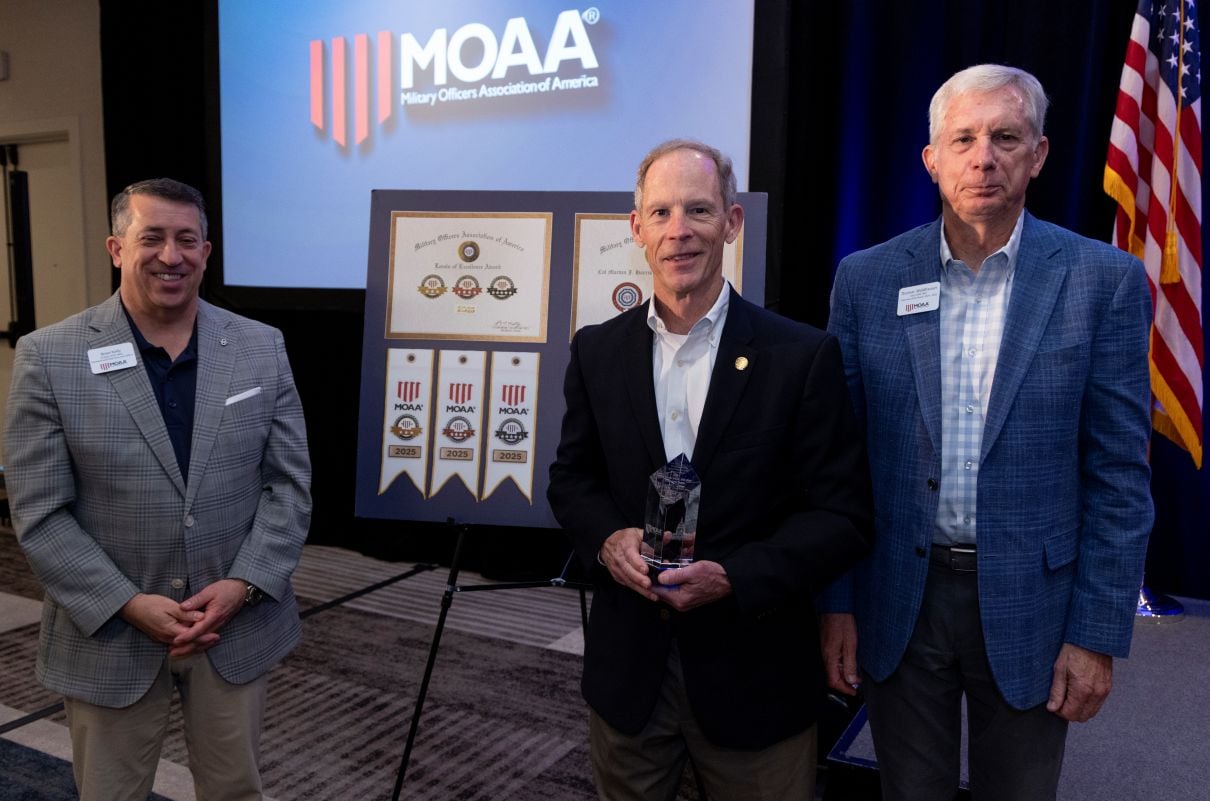
For his efforts, Brown recently was named MOAA’s 2025 chapter-level recipient of the Col. Steve Strobridge Legislative Chair/Liaison Award.
In 2024, Brown’s effort to expand eligibility for disabled veterans to receive license plates in Maryland became law.
“When you talk to legislators and you’re a member of MOAA, they listen,” Brown said.
Brown, who grew up in a pro-military family, joined ROTC near the end of the Vietnam War to attend college. He spent 23 years in the Army, serving in artillery, leadership, and operations roles, including overseas assignments.
When a battalion commander once asked why he stayed in the military so long, Brown replied: “I was so busy I never had time to get out.”
Brown credits his wife, Lisa, also a veteran, for supporting both his military career and his continued advocacy work after retirement.
[MORE HONOREES: Arizona Chapter Leader Finds ‘Shared Purpose’ Through Advocacy]
The Army exposed him to new experiences, cultures, and perspectives around the world. Brown said he often encourages young people to consider military service, describing it as an opportunity to grow, collaborate, and build relationships with people they otherwise might never meet.
“I can’t think of any other place where you would get these opportunities,” Brown said.
One lesson followed Brown throughout his military career and continues to shape his advocacy work today: Listen first.
“As a young lieutenant, you learn pretty quickly to listen to your NCOs and hear what’s really on people’s minds,” he said. “Sometimes being that ear is all it takes to help somebody.”
That philosophy continues to guide Brown’s work with veterans and military families.
One of his latest efforts involved supporting legislation to help Gold Star families retain property tax relief in Maryland. The issue came to his attention after a Gold Star mother told him she was struggling financially after missing a narrow eligibility window under state law.
Brown helped rally support through Maryland’s veterans’ community and MOAA network. The legislation passed both chambers this year and was recently signed by the governor.
[FROM REUTERS: Maryland Extends Property Tax Incentives]
“If not us, then who?” said Brown of his efforts.
Kristin Davis is a writer in Virginia.
Want to Help Servicemembers in Your Community?
Learn how you can make a difference with your local chapter.