
(This article by Capt. Edward Lundquist, USN (Ret), originally appeared in the February 2026 issue of Military Officer, a magazine available to all MOAA Premium and Life members who can log in to access our digital version and archive. Basic members can save on a membership upgrade and access the magazine.)
With the Vietnam War having ended more than five decades ago, many living Vietnamese grew up after the fall of Saigon, and Americans are made to feel especially welcome today.
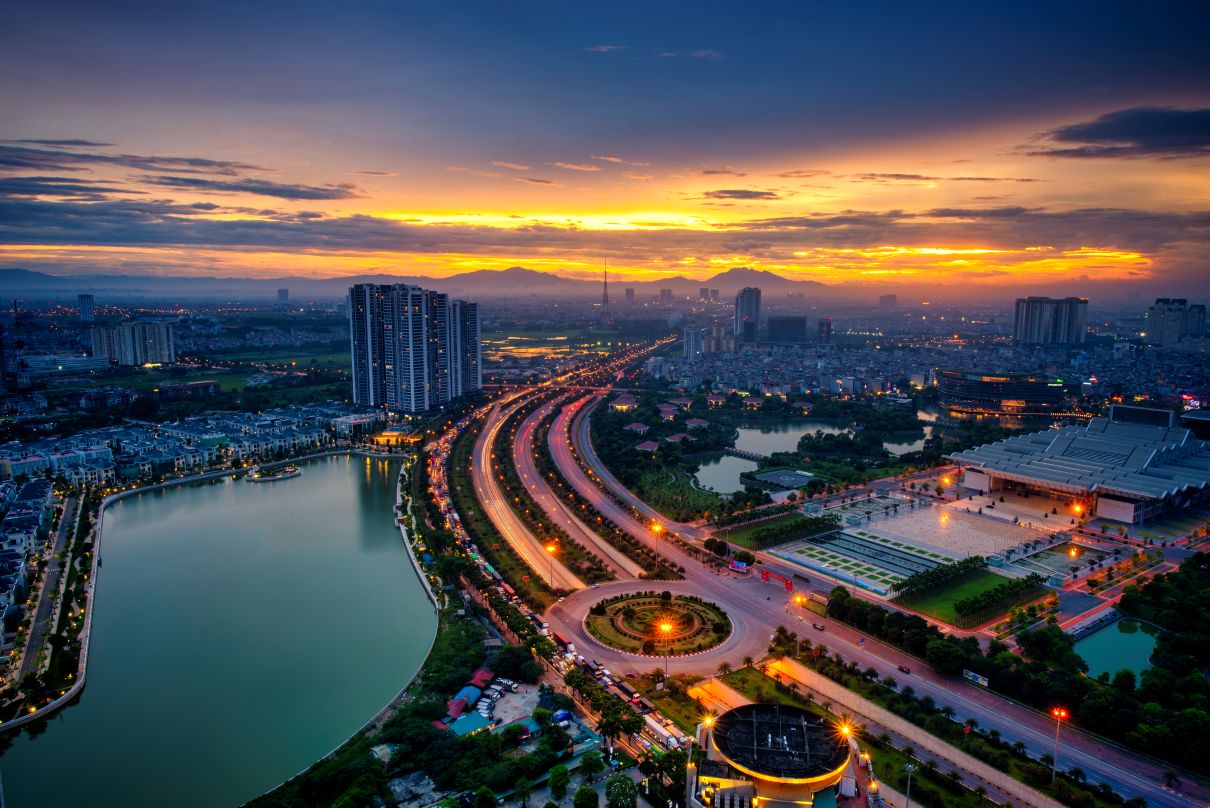
There’s plenty to do in this country of more than 100 million people. Vietnam’s two largest cities are Ho Chi Minh City (formerly Saigon) in the south and the capital of Hanoi in the north. It’s about 1,000 miles by road between the two cities, which are connected by a major national highway, railways, and several airlines that fly nonstop.
The national language is Vietnamese, but many speak English in the hospitality sector.
[RELATED: MOAA Vacations]
Remembering the War
The legacy of Ho Chi Minh, the leader of North Vietnam, is widespread, especially at the huge mausoleum where he is entombed. About 15,000 people visit the mausoleum weekly; the visitor count rises around the holidays of Tet and National Day.
There are also military cemeteries where Vietnam honors its dead, including those killed during conflict with neighboring Cambodia in the 1970s and ’80s.
Veterans who served in Vietnam might be particularly interested in the museums, which feature wartime artifacts and relics. Visitors may also check out the Vinh Moc tunnel complex in Quang Tri, which allowed Communist forces to travel under the demilitarized zone separating North and South Vietnam.
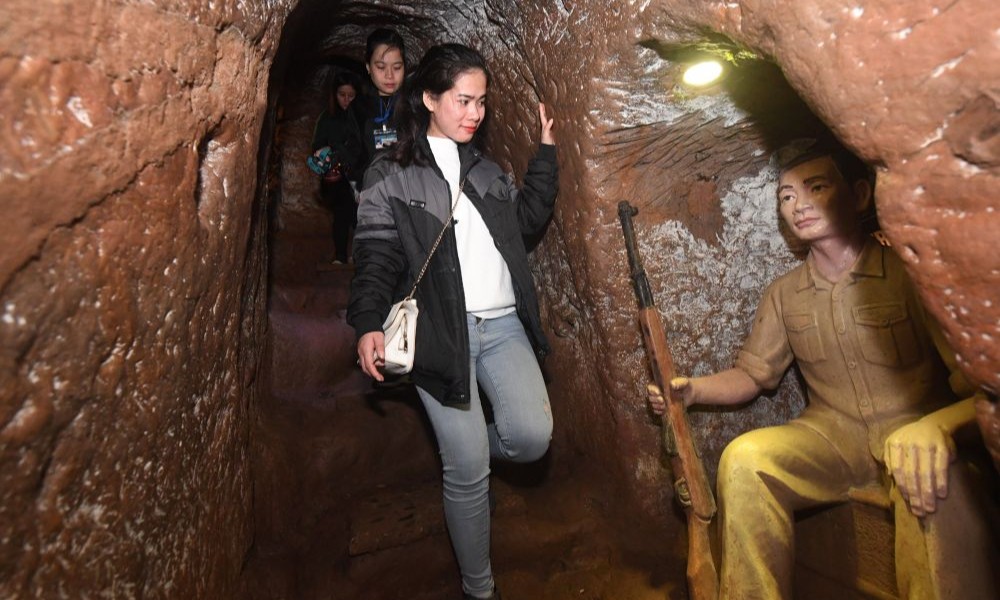
A guide walks past a model of a militia member inside the Vinh Moc tunnel network. (Photo by Hoang Dinh Nam/AFP via Getty Images)
[MOAA PRESENTS: Vietnam Unchronicled]
Most of the notorious prison Hoa Lo, also known as Hanoi Hilton, is demolished, but it remains open to tourists interested in seeing where many American POWs were kept. Much of the tour is dedicated to the horrific treatment of the Vietnamese at the hands of the French, with a small area focused on Americans, albeit no mention of their treatment.
Backpackers are also welcome, with access to hostels and homestays. If you’re short on time, visit the bustling city of Hanoi; the charming resort city of Hoi An; the modern Da Nang Port; or the old imperial capital of Hue, home to the imperial palace.
Grab a Drink, See a Show
In Hanoi, there are bars and cafes on Train Street along both sides of the main line. Don’t worry: There’s a warning when a train is coming.
Vietnam is the second-largest producer of coffee worldwide. There’s iced coconut coffee for a warm day, and dessert-like yogurt coffee, where the drink is drizzled over Vietnamese yogurt.
A specialty of Hue is a sublime coffee blended with sweetened condensed milk and salt. Hanoi’s specialty is egg coffee, featuring whipped egg yolks and condensed milk, sometimes served with the strong coffee on the side. The use of whipped egg yolks stems from a time in Vietnam when dairy products were scarce but the demand for cappuccino-like drinks was high.
Midway between Hanoi and Ho Chi Minh City is Da Nang, where glitzy bars and restaurants cater to Westerners. Seek out Happy Heart, a cafe serving both Vietnamese specialties and American comfort food.
At night, Da Nang’s visitors can watch the 2,185-foot-long Dragon Bridge erupt in a show of fire and water.
[MEMBER BENFIT: Passport/Visa Services With G3 Global Services]
The nearby town of Hoi An is touristy, especially during the annual lantern festival, and its brightly lit boats and sidewalks are on display nightly. Bring home a few souvenir lanterns to enjoy your own festival.
If You Go
- Apply for a single-entry electronic visa online for $25, which is valid for up to 90 days. (Information as of December 2025)
- Download the ride-hailing service Grab before you arrive. You might save money by requesting a motorbike.
- Contact your cellphone carrier for information about international roaming plans.
- The Vietnamese currency is called the dong; $100 was about 2.6 million dong as of December 2025. Some ATMs will take American cards. If exchanging currency at a bank, bring crisp and clean bills.
Capt. Edward Lundquist, USN (Ret), is a writer on military topics and travel.
Military Officer Magazine
Discover more interesting stories in MOAA's award-winning magazine.