
(This article by Charlsy Panzino originally appeared in the June 2026 issue of Military Officer, a magazine available to all MOAA Premium and Life members who can log in to access our digital version and archive. Basic members can save on a membership upgrade and access the magazine.)
Equine-assisted therapy offers a unique way for members of the military community to rebuild confidence, foster camaraderie, and practice mindfulness as they work through physical and emotional challenges.
Participants can experience physical, cognitive, and socioemotional benefits through guided interactions with horses, such as grooming, riding, and herd observation. Some have identified a reduction in symptoms of post-traumatic stress, depression, and anxiety among servicemembers and veterans who spend time with horses.
Working with horses can be especially helpful for those who perceive a stigma of seeking mental health assistance, said Amy Causey, director of program quality and development at Equest, a nonprofit in Dallas that provides equine-related services.
[RELATED: 52 Affiliates Receive Grants From MOAA Charities]
“The horses … really draw people in,” Causey said. “A lot of people that don’t like that traditional ‘let’s sit down in a room and talk about our problems’ format of counseling might really thrive in our environment.”
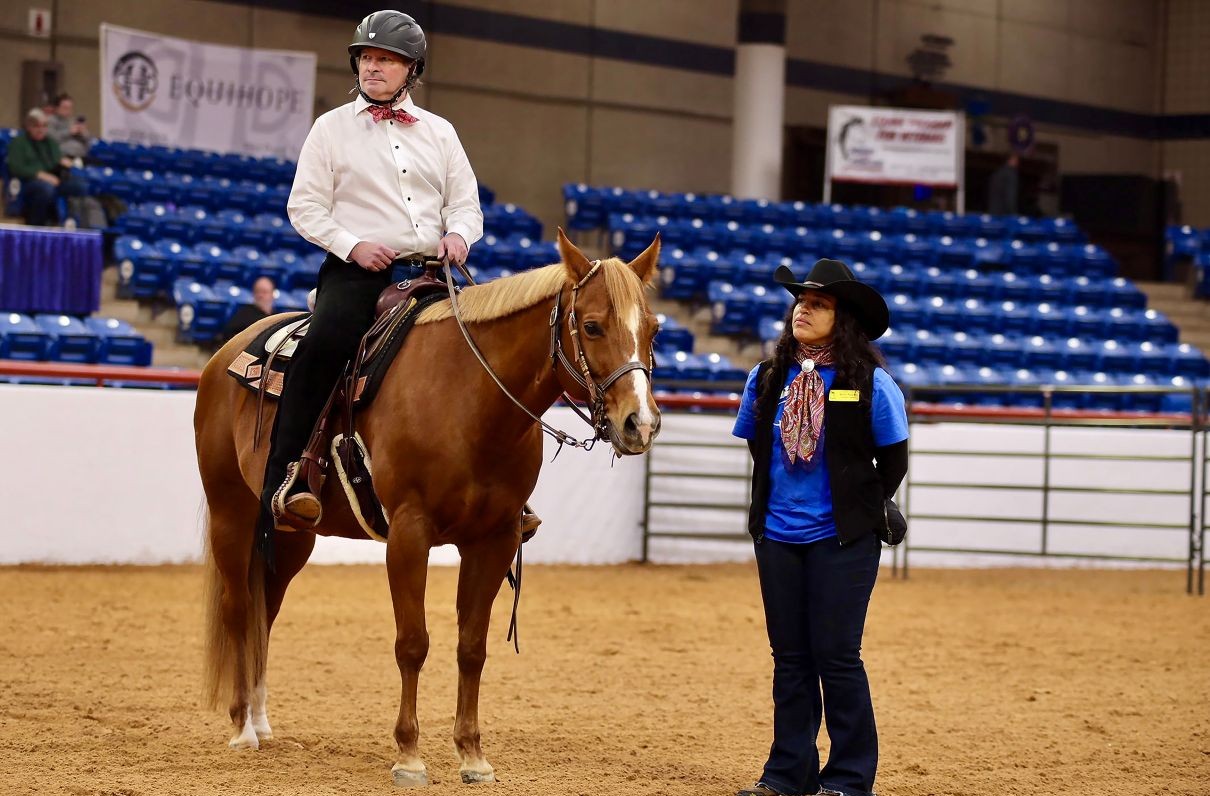
Equest in 2013 launched its Hooves for Heroes program, which offers therapeutic riding classes, physical and occupational therapy, and equine-assisted counseling. Mounted activities require specially trained horses, along with safety equipment, including stirrups and helmets.
Working with a horse helps build confidence and connection in a nonjudgmental space, and it can help those with mobility challenges. A horse’s pelvis, for example, moves the same way as a human’s, Causey said, and feeling that movement while on horseback can help rebuild that muscle memory pattern for walking.
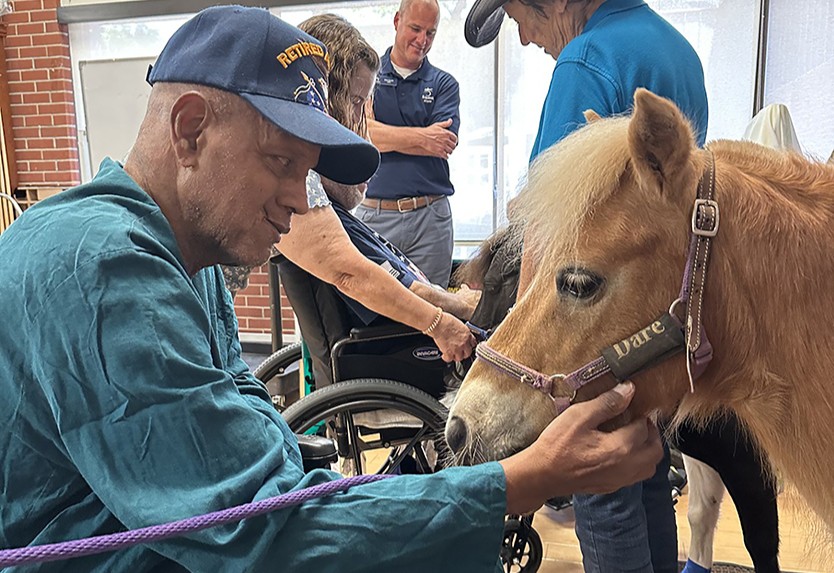
A resident of a VA community living center shares a moment with an Equest mini-ambassador during a visit.
[SERVICE AND ADDICTION: Understanding Pathways to Recovery]
Horses are also especially perceptive to human emotion, said Marine Corps veteran Matthew Ditto, founder of Benevolent Warrior Ranch in Washington state. Ditto said he struggled with finding purpose after leaving the service in 2015, but then a friend introduced him to an unbroken horse — one that hasn’t been trained to be ridden.
Ditto helped with that training.
“With the horse, I have to be mindful and present,” he said. “If I bring in yesterday’s baggage to the training session, I’ve already distorted the lens, and they feel that energy.”
A lack of communication can lead to a failing relationship, Ditto added. “So the horse can teach us how to communicate and understand what presence we’re projecting.”
[RELATED: Trump Clears Path for Expanded Psychedelic Research to Treat Veterans’ PTSD]
Transitioning to civilian life after nine years in the Marine Corps was especially difficult because of the lack of camaraderie and shared responsibility, he said.
Equine-assisted therapy can help fill those gaps since horses respond to human emotions in real time, according to Emily Sellers, executive director of Idaho-based Champ’s Heart, which provides services for the military and veteran community.
“As the person learns to calm their breathing and regulate their emotions, the horse responds as well,” Sellers said.
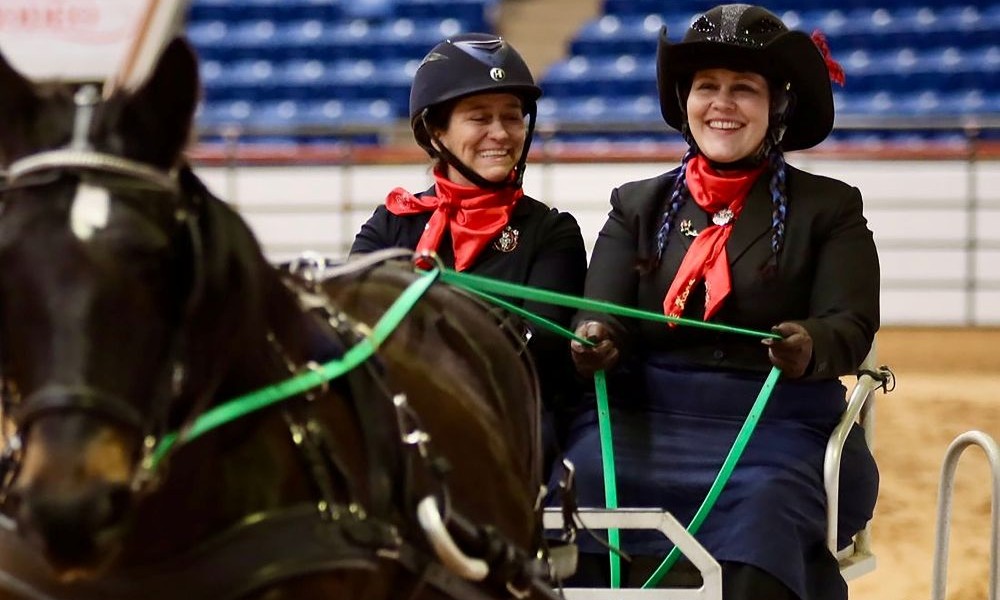
Army veteran Kara Moser Kennon, right, participates in a horse show featuring a dedicated portion for veterans.
Along with stronger communication, participants gain improved self-esteem, emotional regulation, and a deeper sense of trust, she added.
While the VA and TRICARE do not directly cover this type of therapy, some organizations — including Equest, Benevolent Warrior Ranch, and Champ’s Heart — cover costs through donations and grants.
Charlsy Panzino is a writer based in Boise, Idaho.
Military Officer Magazine
Discover more interesting stories in MOAA’s award-winning magazine.