
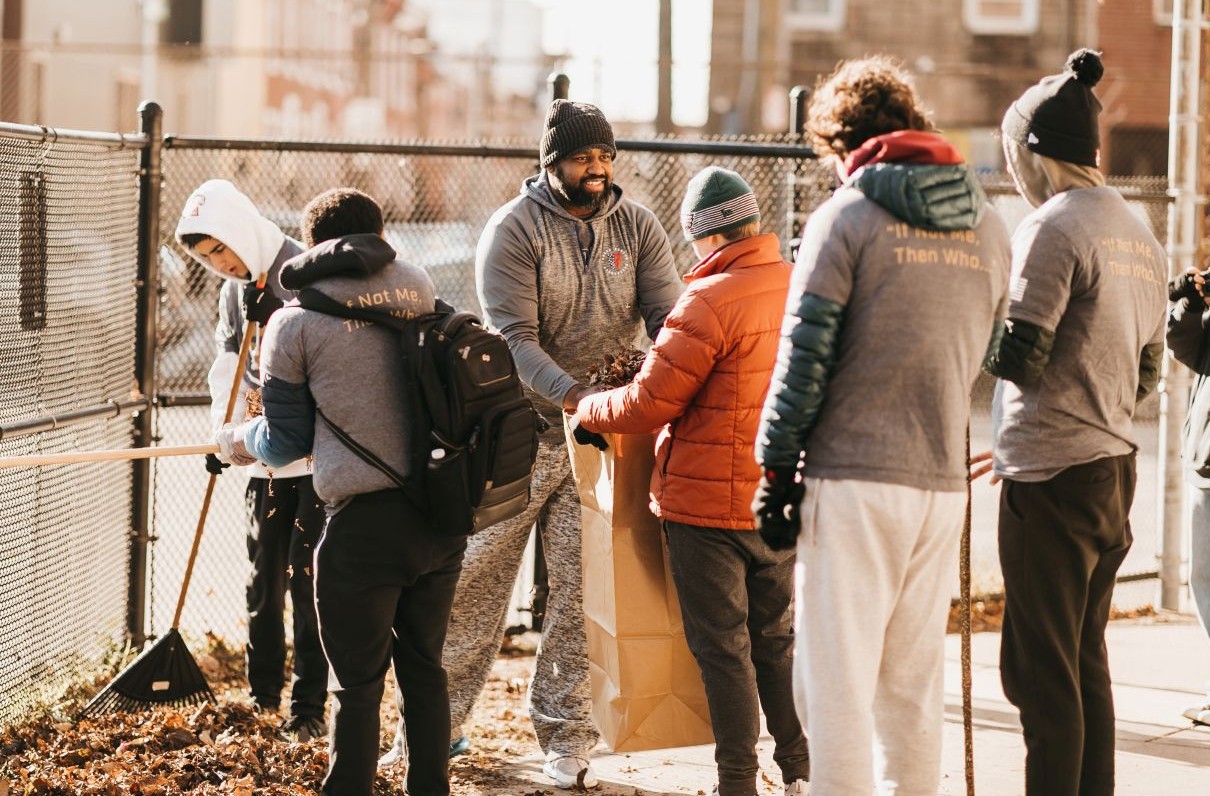
(This article by Kathie Rowell originally appeared in the March 2026 issue of Military Officer, a magazine available to all MOAA Premium and Life members who can log in to access our digital version and archive. Basic members can save on a membership upgrade and access the magazine.)
Following a 20-year military career and 16-year civilian career, retired Army field artillery officer and outdoors lover Lt. Col. William “Bill” Armstrong hit the trails — among them the Appalachian and John Muir trails in the U.S. and the path leading to Hadrian’s Wall in England — after retiring for good in 2006.
Those experiences and a desire to protect the environment led to his membership in the Sierra Club. He again found purpose as a volunteer leader for outings, guiding hiking, kayaking, and other outdoor activities while fostering a love for nature in others.
“The Sierra Club not only fights for the environment, but they’re also deeply committed to getting people outside and making converts of them, so we have a big outings program,” he said.
Indeed, the Sierra Club’s Military Outdoors program gives him the opportunity to directly impact the lives of fellow veterans and active duty servicemembers and their families.
“It’s just something that I know helps people. That’s why I do it — just out of a desire to serve.”
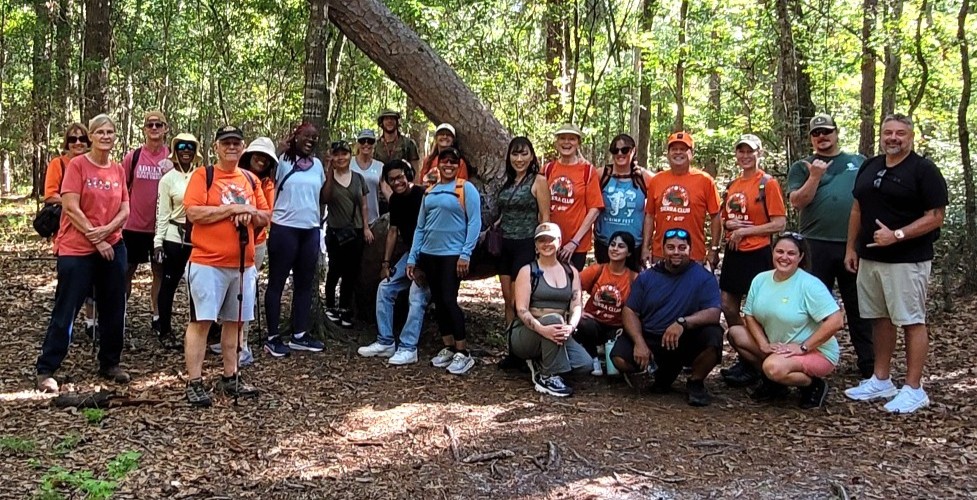
Lt. Col. William “Bill” Armstrong, USA (Ret), and a group of hikers explore Washington Oaks Gardens State Park in Florida. (Courtesy photo)
Gaining by Giving Back
Armstrong’s ingrained need to serve is common among veterans. The 2025 Veterans Civic Health Index, released in September 2025, found veterans who donate their time average about 93 hours of volunteer work each year; comparatively, nonveterans who volunteer give about 70 hours annually.
The report also found veterans are 30% more likely to belong to a group, organization, or association than nonveterans.
Volunteer involvement not only provides a sense of purpose and fosters camaraderie, but it can also mitigate symptoms of post-traumatic stress disorder, according to a 2017 report published in the journal Psychiatry Research. The findings were from a study that observed post-9/11 veterans who volunteered with national nonprofit The Mission Continues, now part of the Travis Manion Foundation. The report found volunteerism improved health and well-being, enhanced social support, and helped with reintegration into civilian life.
“Volunteering like the civic service program we studied is structured and purpose-driven,” Monica Matthieu, a researcher with the study who holds a doctorate in social work, told Military Officer. “It’s very familiar to military service for servicemembers and veterans. Volunteering can be a very meaningful experience for everyone. And when it’s mixed with teamwork, the camaraderie of other veterans, and benefits others, it’s like a trifecta — a win-win-win.”
She believes the same outcomes are there for fully retired veterans undergoing a different type of transition.
“Retirees have a little more time to be thoughtful about the type of volunteering they want to do,” she said. “Volunteering also enhances transition support by offering opportunities to be engaged in meaningful activities that they choose while also addressing some of the challenges in identity and isolation that are often felt with retirement, life transitions, and overall change.
[RETIREMENT GUIDE: Taking the Right Financial Risks]
“We found that veterans are most drawn to formal, organized service opportunities that blend purpose, structure, and connection — a combination that promotes both personal recovery and community reintegration,” she added. “Of all the reasons [for service] identified, the majority — 84% of the veteran sample — reported a personal reason, such as wanting to continue to serve after their military obligation was completed. Service as a broad theme was defined as wanting to continue to serve, to give back to the community, and to make a difference in the lives of others, in terms of giving time or helping others.”
Matthieu said researchers noticed the effect of volunteer service extended beyond the veterans.
“We also noted a spillover effect of volunteering on veterans’ families,” she said, noting the positive impacts on “family functioning and their own social support systems.”
‘A Real Void’
The Sierra Club’s Northeast Florida Group, of which Armstrong is a member, partners with the First Coast YMCA to encourage participation in the Military Outdoors program. He’s seen firsthand the difference the program can make on veterans.
“There [are] a lot of issues that are specific to retired or ex-military. They don’t know where to go. They don’t want to go by themselves,” he said, “so we provide all that for them.”
One success story Armstrong cited involved a veteran suffering from severe PTSD, noting she was virtually a prisoner in her own home.
“Her counselor finally said: ‘Find some way, find some group, or some way to get out.’ So she found us, and we’ve been a real lifesaver for her,” Armstrong said. “She’s since become one of our leaders in our military group.”
[RETIREMENT GUIDE: Essentials for Aging in Place]
Among his other volunteer work is Groundwork Jacksonville, a project aimed at creating and maintaining a mostly urban trail that connects neighborhoods throughout the Florida city.
“I’ve just always had a desire to help others, and of course I like getting outside myself. It’s just nice to be able to provide a service to people,” he said.
“I think there’s a real void when you retire. I think it’s important to find something to do with your time. You’ve been serving others, and so it’s good to try to find something when you get out.”
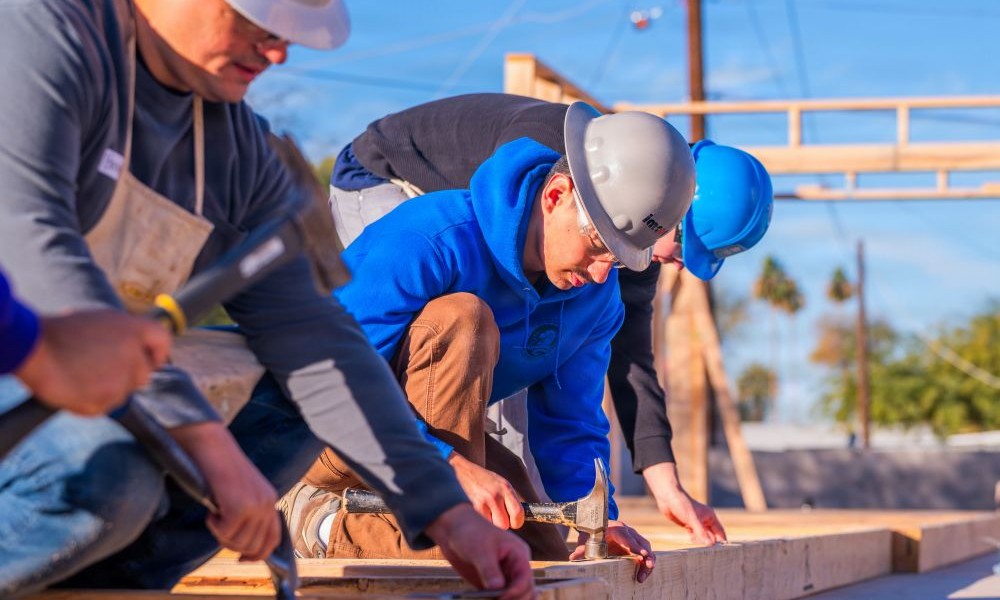
Airmen from the 607th Air Control Squadron volunteer at a Habitat for Humanity event Dec. 13, 2025, in Buckeye, Ariz. (Senior Airman Elias Carrero/Air Force)
‘Something Greater Than Yourself’
Former Marine Corps Lance Cpl. Ralph Quintanilla served four years before separating from the military in 1973 and embarking on his civilian career, most of which was spent working for his father’s insurance business.
After retiring for good, he felt a need to give back.
“Up to that time throughout my life, I had really never thought of anybody but myself. Maybe I was self-centered,” he said. “It was time to turn a new leaf and give back instead of just taking.”
Quintanilla connected with Austin Habitat for Humanity and has become a stalwart in the Texas-based program, volunteering twice a week and helping with construction on approximately 10 to 15 houses a year.
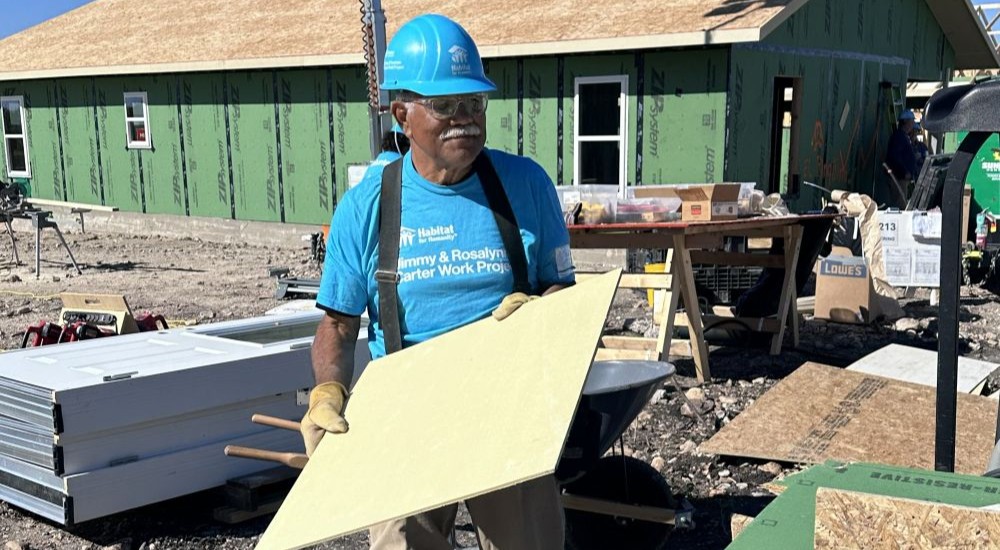
Former Marine Corps Lance Cpl. Ralph Quintanilla found purpose again by volunteering with Austin Habitat for Humanity. (Courtesy photo)
“I particularly enjoy leading the fence crew,” he said. “I’m pretty well-versed on fence building, thanks to Habitat. I didn’t know anything about it before.”
For his dedication, he was awarded the Austin Habitat President’s Volunteer Service Award in 2025.
One project that was particularly satisfying, he said, was a large development called Scenic Point, where about 60 homes were constructed over a period of several years as part of an effort to build affordable housing.
Quintanilla noted that Habitat home recipients are often emotional when they get their keys.
“They say it’s a life-altering thing,” he said. “And they always mention how they were very much in need of a home, and before Habitat came along in their life, they didn’t envision that being possible, so it was just like manna from heaven.
“It’s good to do anything that allows you to have community engagement. You get networking and friendship,” he added. “Sort of like in the service, [it’s] something greater than yourself, involved in some purpose.”
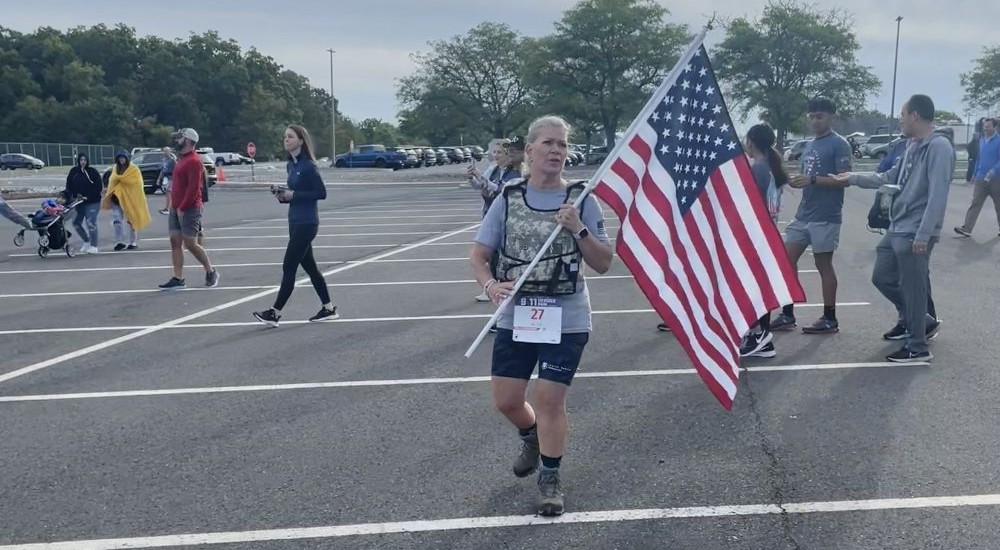
Former Air Force Capt. Cathy Christian takes part in the 9/11 Heroes Run, an annual event sponsored by the Travis Manion Foundation. (Courtesy photo)
‘I Had More to Give’
For Cathy Christian, a former Air Force captain, a desire to spend more time volunteering for causes she believes in was a motivator for her decision to retire from her civilian career in 2020.
Christian had served eight years in the military, deploying for operations Desert Storm and Desert Shield as a senior weapons director for airborne warning and control systems. After separating from the Air Force, she embarked on a career with Prudential Financial in New Jersey where she was asked to help with veterans’ initiatives.
“I found that camaraderie that I felt was missing after service, that purpose, helping others, and through those kinds of opportunities I realized that I really wanted to devote more of my time to giving back,” she said. “That’s when I realized I was really not as fulfilled as I could have been and recognized that I really had this innate need to serve in a bigger way, in a bigger capacity. I felt like I had more to give than I was able to by working full time.”
When her retirement date and the coronavirus pandemic hit simultaneously, Christian went all-in on the organizations with which she already had connections through Prudential. One was the Travis Manion Foundation, created in memory of Marine Corps 1st Lt. Travis Manion who died in Iraq during an ambush. Manion led a counterattack against enemy forces, drawing fire so other members of his patrol could escape. For his bravery, he was awarded the Silver Star and Bronze Star with Valor.
Christian had trained as mentor for the foundation’s Character Does Matter youth program while still employed. In addition to serving as a mentor, volunteers with the organization can plan service projects and participate in the annual 9/11 Heroes Run. For her part, Christian’s primary focus involves building relationships between the foundation and schools — in her case, two in Philadelphia.
[RELATED: More Retirement Resources From MOAA]
“I’m going down there now once a month and working with those students, teaching them about character and giving them exercises,” she said. “A couple weeks ago, one of the girls that I had been working with for a couple years now wrote me a little note telling me how much she appreciated me and how much she thanked me. That’s what makes it worthwhile.”
Christian uses a mix of foundation-provided curricula and her own experiences as resources.
The Values in Action character strengths survey helps students identify their inherent traits. Mentoring sessions then build on them.
“One girl, when she first came into the classroom, was very quiet and very shy,” Christian said. “By the end of the year, she was a leader. She would speak up, she would participate, she would help rally around everybody else and get them organized.
“For me, it’s that ripple effect. If I can make a difference in one kid’s life, maybe they pay it forward, and then maybe they pay it forward, and we create a world where people are kind and caring and compassionate towards each other again.”
Christian also volunteers with No Barriers, a nonprofit helping people with disabilities break through their respective challenges to live their best lives. In this role, she creates curricula and facilitates sessions.
[RELATED: MOAA’s Digital Retirement Guide]
In all, she said, her volunteer work provides a renewed sense of purpose and helps her feel like she’s adding value to society in a meaningful way.
“A second thing that both of these organizations provide for me is a renewed sense of community, which, quite frankly, was missing after the service,” she explained.
She encourages other veterans to give volunteer work a try, but stresses that finding the right fit is vital.
“I think you should do kind of an internal self-assessment of what you’re good at, what you enjoy, and what’s the need,” Christian said. “The overlap of those three things is the sweet spot.”
Want to Volunteer?
There are myriad volunteer opportunities across the nation. Here’s a small sample:
- Boys & Girls Clubs of America: The nonprofit provides a safe, fun place for children to grow into capable adults. Volunteers may lead programs focused on academics, health, or leadership; coach sports teams; and serve as mentors.
- Disabled American Veterans: DAV offers a broad variety of volunteer opportunities. Among them are assisting at VA hospitals, driving veterans to and from medical appointments, helping with basic home repairs, organizing outreach eff orts for unsheltered and at-risk veterans, providing a meal and a visit to homebound veterans, and teaching a class that could benefit veterans.
- Dogs Inc.: Canine lovers can volunteer to raise puppies, which will be trained as guide, service, therapy, or skilled-companion dogs, given at no charge to veterans and others in need.
- Habitat for Humanity: The nonprofit brings together people to build homes, communities, and hope. Its Veterans Build program focuses on housing, employment, volunteer opportunities, and education for former servicemembers. Volunteer opportunities include construction and repair work, administrative tasks, and event planning.
- Honor Flight: The organization celebrates veterans by providing trips to Washington, D.C., to tour memorials. Volunteers handle several roles, from coordinating travel to participating in welcoming ceremonies.
- No Barriers: The organization offers programs that help people with disabilities lead their best lives. Volunteers might serve as photographers, videographers, webmasters, graphic designers, event supporters, and fundraisers.
- Sierra Club: The group’s mission is to enjoy and protect the wilderness. Volunteer opportunities include leading outings; planning and participating in cleanups, educational programs, and service projects; and engaging in political advocacy. Its Military Outdoors program removes barriers (such as costs) that prevent active duty servicemembers and veterans from enjoying nature.
- Team Rubicon: This veteran-led group responds to disasters and crises worldwide. Volunteers may be called upon for everything from debris removal and hazard mitigation to home repair and emergency medical care.
- Tragedy Assistance Program for Survivors: TAPS provides a peer-support network and a connection to resources for those grieving a death in the military or veteran community. Volunteers may help work events and mentor youth.
- Travis Manion Foundation: The nonprofit is primarily a youth-mentoring program led by veterans and families of the fallen. Opportunities include Character Does Matter, the foundation’s hallmark program in which volunteers are trained to conduct leadership programs and mentor youth; and Operation Legacy, which conducts service projects such as food drives.
- United Service Organizations: The USO supports servicemembers and their families through hospitality, education, and opportunities for connection. Volunteer roles include teaching, providing hospitality, planning events, and supporting troops deploying to or returning from combat zones.
Kathie Rowell is a writer in Louisiana.
Military Officer Magazine
Discover more interesting stories in MOAA's award-winning magazine.