

(This article by Todd Gilchrist originally appeared in the June 2026 issue of Military Officer, a magazine available to all MOAA Premium and Life members who can log in to access our digital version and archive. Basic members can save on a membership upgrade and access the magazine.)
Following tenures in the Air Force and Marine Corps in the mid-1980s, John Wimberly fought disability, housing insecurity, and drug and alcohol addiction for almost 30 years before getting sober in 2014. But even after acquiring a job performing outreach for Long Beach Rescue Mission, which works to end homelessness, and securing an apartment through Operation Healthy Homecoming, a California-based program managed by Mental Health America, Wimberly again faced the prospect of homelessness in 2024.
“Then I came into contact with U.S.VETS,” Wimberly told Military Officer. “When I didn’t know what I was going to do, they gave me shelter, they fed me on a daily basis, and they offered job counseling.”
The 33-year-old organization, which received the Congressional Medal of Honor Society’s Community Service Award in 2023, is one of hundreds across the country that assist members of the military and veterans’ community as a way to repay their service and sacrifice.
Veterans make up 5.3% of all adults experiencing homelessness in the country, according to a December 2024 report to Congress by the U.S. Department of Housing and Urban Development.
But significant progress has been made in reducing veteran homelessness over the past 15 years, decreasing the point-in-time count — a tally of people without shelter recorded on a single night — from over 75,000 in 2010 to less than 33,000 in 2024, according to VA press secretary Pete Kasperowicz.
[RELATED: VA Shuttering Underperforming Clinics, Addressing Leadership Shortcomings at Others]
Between 2022 and 2024, the VA permanently housed nearly 134,000 homeless veterans, the department reported in October 2024. After surpassing its FY 2024 housing goal by almost 17%, and even doing so ahead of schedule, the department ensured 96% of its housing recipients did not return to homelessness, according to the same news release.
The VA maintains a broad spectrum of programs to address veteran homelessness. “Getting Veterans Off the Street,” one of its newest initiatives, moved more than 25,000 unsheltered veterans into interim or permanent housing in less than six months. President Donald Trump signed an executive order in May 2025 to, among other related efforts, establish a Los Angeles campus with a goal of housing up to 6,000 homeless veterans on site by 2028.
As outlined in the VA’s One Team Operational Framework, the department has continued to focus on expanding resources for homeless and at-risk veterans, leading to the housing of almost 52,000 veterans in FY 2025. Kasperowicz said that in the same fiscal year, the National Call Center for Homeless Veterans fielded more than 196,000 calls and over 17,000 online chats to make about 120,000 referrals to local VA medical centers for further assessment and services.
‘It Just Kept Me Going’
Some veterans are turning to nongovernmental resources that can serve as stopgap measures or to otherwise meet their needs. For its part, U.S.VETS has 49 residential and service sites in operation across the country that help provide emergency, transitional, and permanent housing, mental health and substance abuse support, and career development and employment services.
 “U.S.VETS has a holistic approach, so it’s not just the housing, but it’s the root causes of homelessness,” said Tess Banko, pictured, a Marine Corps veteran and military spouse who serves as a project director for the nonprofit. “Once somebody is in a transitional program or in permanent supportive housing, additional support [is offered] in case management to help them reach their goals,” she said. “It depends on the challenge that the person is facing, but it’s not just a clinician that goes in to assess what the problem is. There really is a listening process … being guided by the person who comes looking for housing or resources.”
“I won’t even call it work — it’s a mission,” she said.
Wimberly said the organization provided both support and accountability.
“U.S.VETS would not let me go back to any old behaviors because of the people checking on me,” he said. “Talking to people, the counseling that they gave, they kept me mindful of what I had been through … and how far I had come. And it just kept me going.”
‘The Gold Standard’
In addition, the Veterans Transition Center of California (VTC), a nonprofit based in Monterey County, offers a recovery program custom-designed for each recipient to address any combination of medical, psychological, occupational, financial, educational, and social issues.
Lt. Col. Thomas Griffin, USA (Ret), a Life member of MOAA, founded VTC after discovering veterans among the clientele of the homeless program he ran for a local government’s housing authority in the 1990s. Under a provision of the federal McKinney-Vento Homeless Assistance Act, the Vietnam Veterans of Monterey County acquired housing at the former Army post Fort Ord, which was turned over to VTC for renovation.
“In 2002, we housed our first homeless veteran, and we’ve not looked back since then,” Griffin said. “Between then and now, we have grown substantially and are now also housing incarcerated veterans on parole.”
[RELATED: MOAA Stresses Need for Clear Veterans Strategy in Senate Testimony]
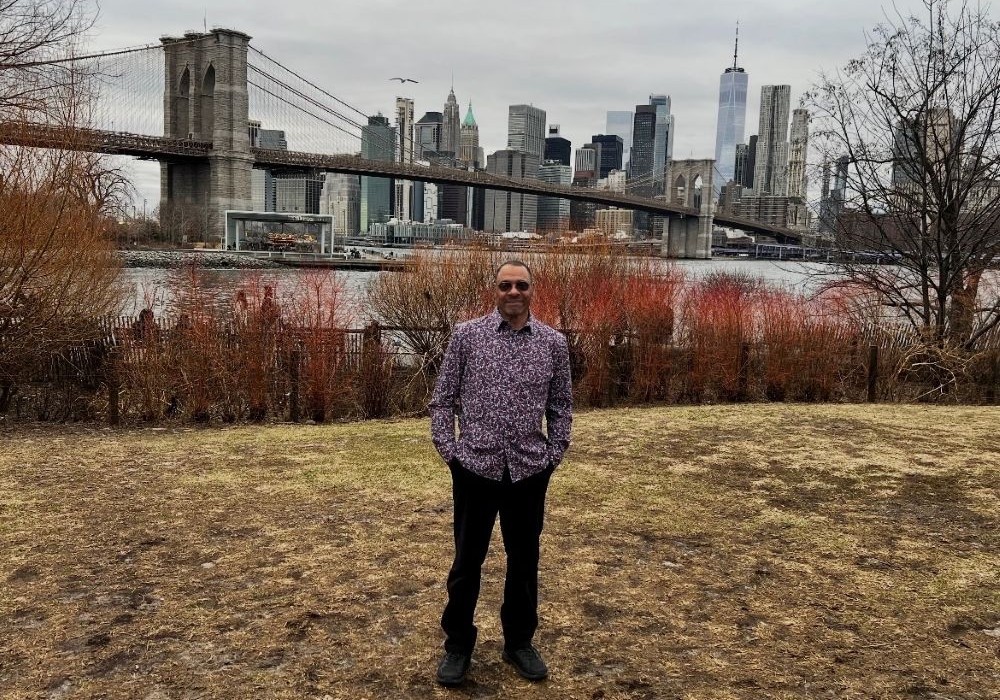
The Veterans Transition Center of California helped veteran Marcus Blevins find housing after his release from prison in 2020. (Submitted photo)
Marcus Blevins, a veteran who served in the 1970s and is a beneficiary of VTC’s services, began a life sentence in 1994 for residential burglary. Due to several factors — the passage of California’s Proposition 57 in 2016, which granted board reviews to nonviolent “three strikes” off enders; an emergency plan by the state to alleviate a 2020 outbreak of COVID-19 at San Quentin State Prison, which offered accelerated parole to certain individuals; and a letter from VTC supporting Blevins’ request to continue rehabilitation as a parolee — he was granted release in May 2020.
“That letter carried a lot of weight,” he said. “The [parole board] knew that I was coming to a place that has a great track record.”
Within six weeks of his release, VTC placed him in temporary housing, joining a community of others from similar backgrounds that could lend social support on top of the organization’s individualized case management.
“There were guys that I knew from prison that were veterans that were there to help shepherd me into the program,” Blevins recalls. “The Veterans Transition Center mostly wants you to be proactive, and they foster an environment that is conducive to you taking the initiative as an adult.
“As far as reentry is concerned, it’s almost like the gold standard.”
Indeed, there is a 0% recidivism rate for “incarcerated veteran graduates” of VTC, Griffin said. “We have a cyclical thing going where the graduates come back and tell the other guys there’s a lot of hope, stick with it, it’s worth it.”
Part of Blevins’ reentry process saw him take on a part-time job as a driver for other veterans. Today, he has a full-time role with the VTC that the organization created with him in mind. “I’m now the in-prison program manager for the VTC, the first of its kind,” he said. “The CEO of this organization pulled me aside and said: ‘I want you to come up with a position, and when you do, I’ll present it to the board.’”
A ‘Flexible’ Approach
On the East Coast, the New England Center and Home for Veterans (NECHV) offers accommodations to homeless veterans at a “great big building in downtown Boston,” as the organization’s vice president of human services, Lena Asmar, described it.
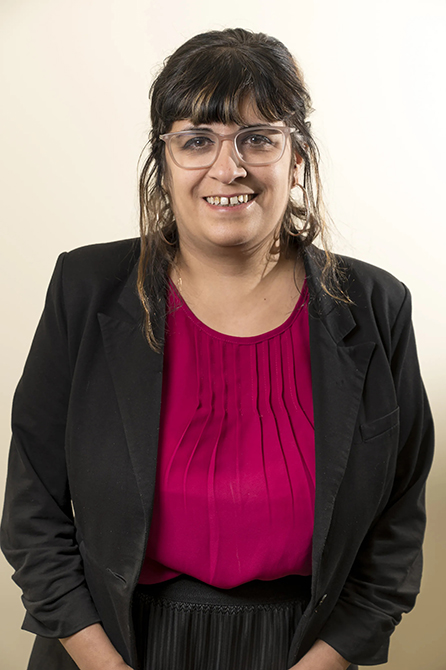 “If somebody’s experiencing homelessness, particularly a veteran, this is a great place for them to be,” said Asmar, pictured. “But ideally, we don’t even want them to come here. We want to prevent that episode of homelessness and try to keep them in their home, in their community, and to make sure they get those supports to be able to stay there.”
“What’s most important for me is that our team works with veterans in a way that’s flexible and with empathy,” she added.
NECHV offers transitional, permanent, and supportive housing, including a specific initiative for servicewomen, who in FY 2025 comprised almost 10% of all veterans assessed by the VA for homeless programs. In the past year, the center served 1,797 veterans and their family members, and it placed 240 veterans in permanent housing.
Asmar said 70% of those individuals received services outside of the facility, with support tailored to each recipient.
“Some folks need really long-term, really deep services,” said Capt. Andy McCawley, USN (Ret), a MOAA member who now serves as the center’s president and CEO. “The people we see now, as opposed to, say, 10, 12 years ago, tend to be more acute with significant complexities — medical, age-related, comorbidities, and those kinds of things — or do require some significant service networks to really help them effectively.”
The center’s Safe Haven program, which serves up to 10 veterans at a time who are experiencing chronic homelessness, provides recipients with a safe environment and on-site services to treat immediate issues around mental illness and substance abuse. The goal is to place them in transitional or permanent housing within 60 to 90 days.
NECHV also offers customized career and vocational education to help veterans compete in the job market. At the time of this writing, the center was enrolling recipients in the Homeless Veterans’ Reintegration Program, a federal grant managed by the Labor Department’s Veterans’ Employment and Training Service division.
“There [are] so many different types of trauma that people can experience, so it’s vital for our team to work to establish trust,” McCawley said. “When you’re approaching a veteran experiencing homelessness, they [might feel they have] become invisible, and the goal is reestablishing or helping them with their own identity.”
Get Involved
MOAA chapters are also making meaningful contributions in their communities. For example, over a 15-year period, the Grand Canyon (Ariz.) Chapter donated to 893 formerly homeless individuals, pouring nearly $103,000 into the effort, about 67% of which directly came from chapter members’ donations, according to Col. Pete Kloeber, USAF (Ret).
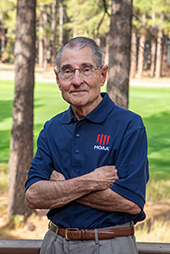 Kloeber, pictured, is a MOAA Life member, board of directors member, and membership chair of the Grand Canyon Chapter, which he stood up in 2012 in Flagstaff, Ariz. While he and his wife were working with the VA’s local office for supportive housing, they discovered an opportunity to help veterans by acquiring goods and services to restore their dignity and help them get back on their feet.
“We asked the VA to let us know what these veterans might like. One guy wanted a coat,” Kloeber recalled.
Whereas organizations might enroll recipients in longer-term or more existential programs, the chapter’s support is more immediate and practical.
“There’s a veteran that the VA paid for to get a commercial driver’s license, but he had to attend the truck driving course here in Flagstaff — and he lived in Page, about 120 miles north of us,” Kloeber said. “So we paid for four weeks of lodging for him while he attended the course. He graduated, and he was employed within a week.”
If you or your chapter want to get involved, check out the VA’s website, which offers an abundance of literature cataloging how community organizations, businesses, and individuals can assist in ending and preventing veteran homelessness. For landlords and property owners, that means accepting housing vouchers or developing partnerships to obtain funds to mitigate risk for low-income participants.
In concert with that, consider donating essential household goods, such as mattresses, to organizations that help veterans acquire housing.
Individuals can also participate in Stand Downs, one- to three-day events during which VA staff and volunteers provide food, health care services, and other assistance to homeless and at-risk veterans. Veterans can also receive referrals for housing, employment, substance abuse treatment, and mental health counseling, among other services.
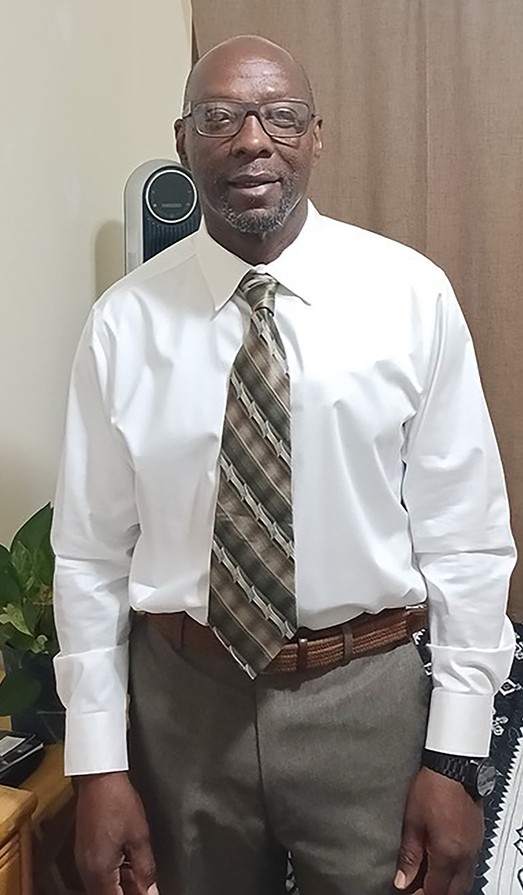 The outcome of these efforts is far deeper than four walls and a roof over a veteran’s head. Ronnie Randon, pictured, who served in the Army in the early 1980s and has been diagnosed with PTSD, spent 33 years in prison for murder before VTC sponsored his release. He was already heavily involved with groups focused on anger management, relapse prevention, domestic violence, and restorative justice when he was picked up a little over a year ago by one of VTC’s drivers — you guessed it, Marcus Blevins — and was provided housing.
“You have to imagine for 33 years [while I was in prison], I’ve been hearing noises, keys, TVs,” Randon said. “For the first time [in decades], it was quiet. And I didn’t even know what that feeling was, but I do know that I started crying, probably for about two hours. It was almost like there was a cleansing.”
Meanwhile, for Banko of U.S.VETS, the fight against veteran homelessness is not just an act of service but also a mutually beneficial endeavor.
“When veterans succeed, communities and our country are strengthened further,” she said.
Todd Gilchrest is a writer based in Los Angeles.
Military Officer Magazine
Discover more interesting stories in MOAA’s award-winning magazine.