
(This article originally appeared in the June 2026 issue of Military Officer, a magazine available to all MOAA Premium and Life members who can log in to access our digital version and archive. Basic members can save on a membership upgrade and access the magazine.)
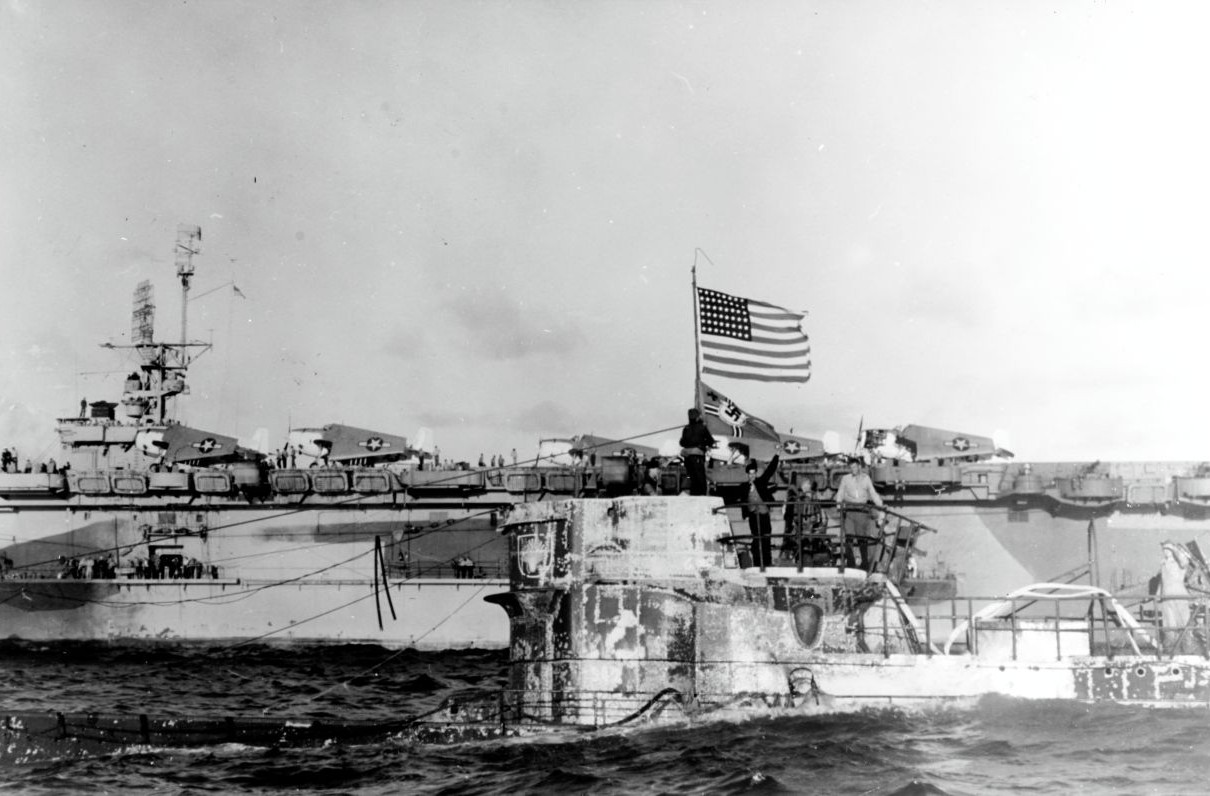
Capt. Daniel Gallery of the U.S. Navy stood atop the German U-boat he and his task group had just captured June 4, 1944. On a flagpole above him flew a German naval ensign and above that, the American flag.
The Navy captured the submarine U-505 in the Atlantic Ocean near Africa during a daring and complex operation, later transporting it to the U.S. in secret as a valuable intelligence asset. It was the only German U-boat the U.S. Navy captured during World War II.
Today, it is the only German submarine on display in the U.S. and the only remaining complete and intact German Type IX-C U-boat, according to Naval History and Heritage Command. Visitors can step aboard U-505 at the Griffin Museum of Science and Industry in Chicago, a few yards from Lake Michigan, where the sub arrived at the end of its last water voyage.
Aboard U-505, you can stand where German crew members removed the cover from the sea strainer valve to let water flood into the sub during their attempt to scuttle it when the commanding officer, Oberleutnant zur See (Lt.) Harald Lange, ordered the crew to abandon ship during the U.S. Navy’s attack. You can see where the crew slept close to their torpedoes and imagine the noise and fear when the U.S. Navy dropped depth charges from above.
Hunting U-Boats
As German U-boats in the Atlantic attacked Allied supply lines and convoys of merchant ships and escort vessels, the U.S. Navy organized hunter-killer task groups to counter the threat with antisubmarine escort ships.
Hunter-Killer Task Group 22.3, commanded by Gallery, was at sea in June 1944 with carrier USS Guadalcanal (CVE-60) and five destroyer escorts. The task group was authorized to capture a German sub so the Allies could hope to gain better access to German technology, tactics, and communication codes.
[FROM THE U.S. NAVAL INSTITUTE: Wrangling a Runaway U-Boat]
Gallery had already served with USS Guadalcanal and sunk German submarines earlier in 1944. He saw the possibility of capturing a U-boat and organizing boarding parties.
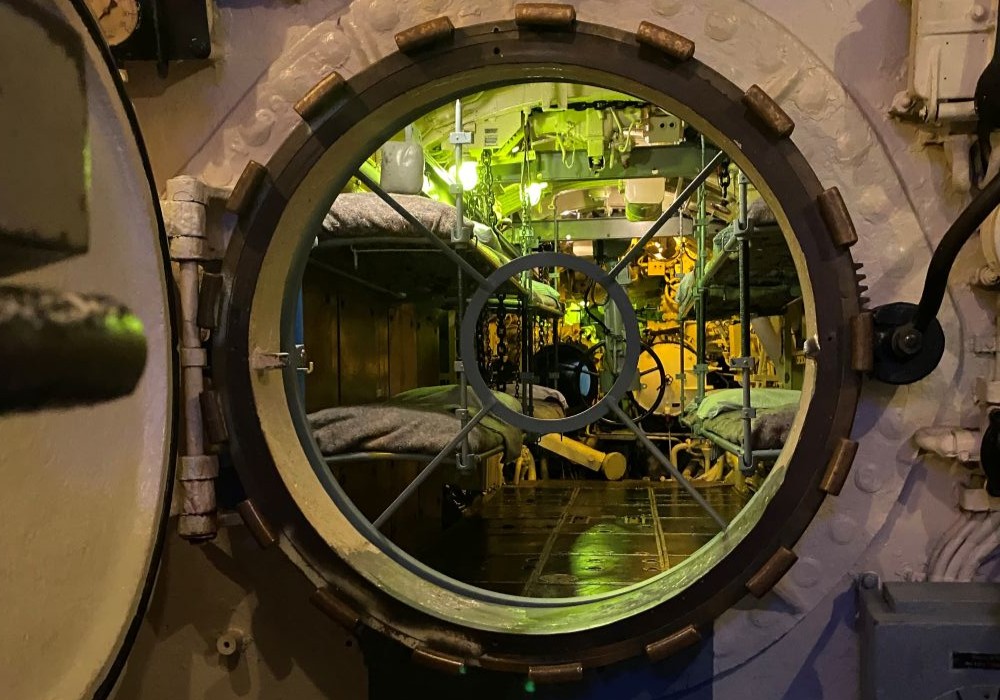
Visitors to the Griffin Museum of Science and Industry in Chicago can get an up-close look at U-505. (Photo by Kathleen Curthoys)
At sea that June, the task group sent up aircraft to search from the air while sonar operators listened below. The group had turned toward Casablanca, Morocco, for refueling when USS Chatelain (DE-149) reported a contact and located the U-boat on June 4. An attack with depth charges forced U-505 to surface. Ships and aircraft then fired on the U-boat with antipersonnel ammunition.
The German crew abandoned U-505 after attempting to scuttle the sub.
When members of the U.S. task group from USS Pillsbury (DE-133) boarded the abandoned sub, they didn’t know what they would find or whether there would be booby traps. They found the sub was quickly flooding, with water coming in through the sea strainer valve. They rushed to cover and secure the opening in order to avert disaster.
“They very definitely put their lives on the line when they went down the hatch,” Gallery recalled during a 1945 interview. “There was constant danger that she [the sub] would founder and take all hands with her. And every valve, switch, and push button in the U-boat was a possible booby trap.”
One of the boarding team members, Lt. j.g. Albert David, was awarded the Medal of Honor.
It was the first time the U.S. Navy had boarded and captured an enemy warship at sea since the early 19th century, according to Navy history documents.
The task group rescued the German crew. One German sailor died during the attack and was buried at sea.
The Last Voyage
U-505 was towed to Bermuda, about 2,500 nautical miles away, arriving June 19, 1944. The German survivors brought to Bermuda were later held as POWs in Louisiana.
Allied engineers and intelligence personnel closely studied U-505, which led to the development of improved countermeasures used against U-boats. U.S. Navy analysts took stock of what was on board, such as T5 acoustic homing torpedo manuals, radar and radar detectors, two Enigma code machines, and codebooks. The Navy cataloged more than 1,200 German military items considered secret.
The U.S. Navy viewed the capture of U-505 as highly sensitive. As a result, it ordered Gallery to ensure the task group guarded the secret.
After the war was over in Europe, U-505 was put on display in U.S. cities on the East Coast. The Navy had no more use for the sub, and Gallery, a Chicago native, was seeking a home for it. The museum joined the city of Chicago and private groups to raise funds to preserve the sub and put it on display.
First, it had to be moved from storage in Portsmouth, N.H., to the Midwest.
In 1954, a tugboat brought U-505 through the St. Lawrence Seaway and then through four of the Great Lakes. After six weeks in transit, the sub still had to go a few hundred yards from Lake Michigan to the museum on a rail-and-roller track.
U-505 was put on display at the museum in September 1954. It was designated a National Historic Landmark in 1989.
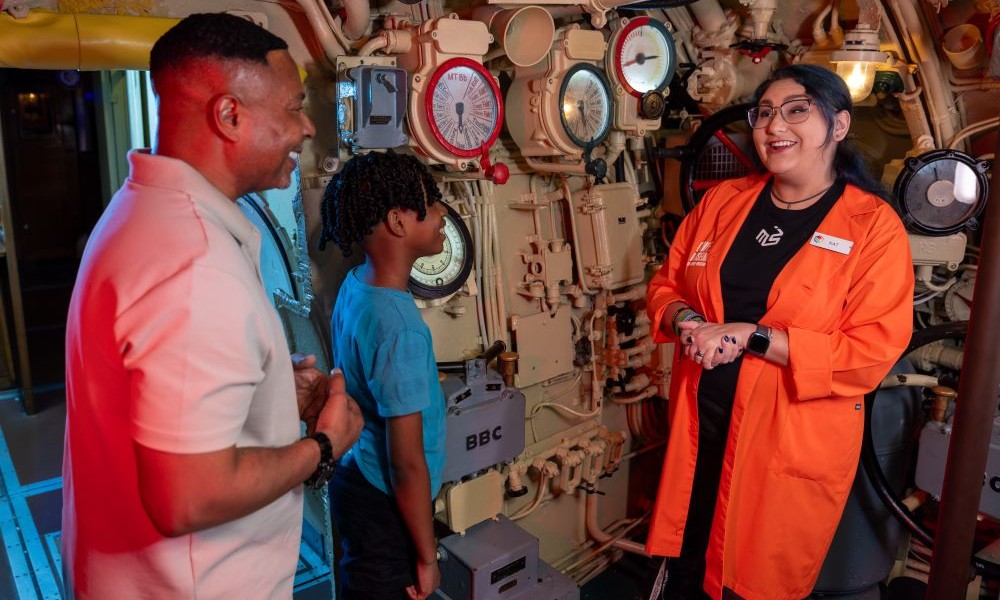
Guided tours and interactive experiences are available for visitors to the U-505 exhibit at the Griffin Museum of Science and Industry. (Courtesy photo)
By 1997, after years sitting outside in Chicago’s particular brand of weather, it was clear the 252-foot sub needed to be brought inside.
In 2004, the sub was positioned on a set of huge dollies and moved into a new underground exhibit hall, where jacks were raised to take on the sub and lower it into place. Atmospheric lighting gives the sub a sense of still being at sea.
Military Officer Magazine
Discover more interesting stories in MOAA’s award-winning magazine.