
(This article by Heather Kuldell-Ware originally appeared in the June 2026 issue of Military Officer, a magazine available to all MOAA Premium and Life members who can log in to access our digital version and archive. Basic members can save on a membership upgrade and access the magazine.)
Paris has a reputation as a city of romance. But that glamorous image often eclipses another, less celebrated chapter of the city’s story: its wartime past.
Each year, millions journey to Normandy to walk the Longues-sur-Mer gun batteries or reflect at the Normandy American Cemetery. Far fewer carve out time to explore Paris’ own World War II history. For four years, the city lived under Nazi occupation defined by curfews and rationing, alongside a growing underground resistance determined to reclaim freedom.
That story comes into sharp focus at the Musée de la Libération de Paris, which traces daily life in the capital from the German troops’ march down the Champs-Élysées in 1940 through the city’s liberation in August 1944. The museum highlights key figures such as Jean Moulin, the civil servant who worked on behalf of Brig. Gen. Charles de Gaulle — a soldier and statesman — to unify resistance networks; and Gen. Philippe Leclerc de Hauteclocque, commander of the French 2nd Armored Division.
[RELATED: Travel With MOAA Vacations]
Exhibits draw on documents, newspapers, posters, uniforms, and audiovisual testimonies.
One of the museum’s most striking features lies underground: a preserved bunker used as a command post by Col. Henri Rol-Tanguy, head of the French Forces of the Interior during the liberation of Paris. Access requires climbing nearly 100 steps, which limits accessibility for some visitors. The descent offers a powerful reminder of how the city’s fight for freedom once ran beneath its streets.
Reservations are available on site for self-guided or mixed-reality visits — the latter being virtual scenes shown through special glasses.
The city’s most famous subterranean world lies across the street. Macabre yet compelling, Les Catacombes de Paris became the final resting place for roughly 6 million Parisians after overflowing cemeteries caused health issues and sinkholes across the city. In the early 1800s, Louis-Étienne Héricart de Thury transformed what had been a chaotic underground bone repository into a meticulously arranged ossuary, stacking skulls and femurs into geometric walls punctuated by solemn inscriptions and memorial tablets.
[MEMBER BENEFIT: Save Time and Money With Passport and Visa Services From G3]
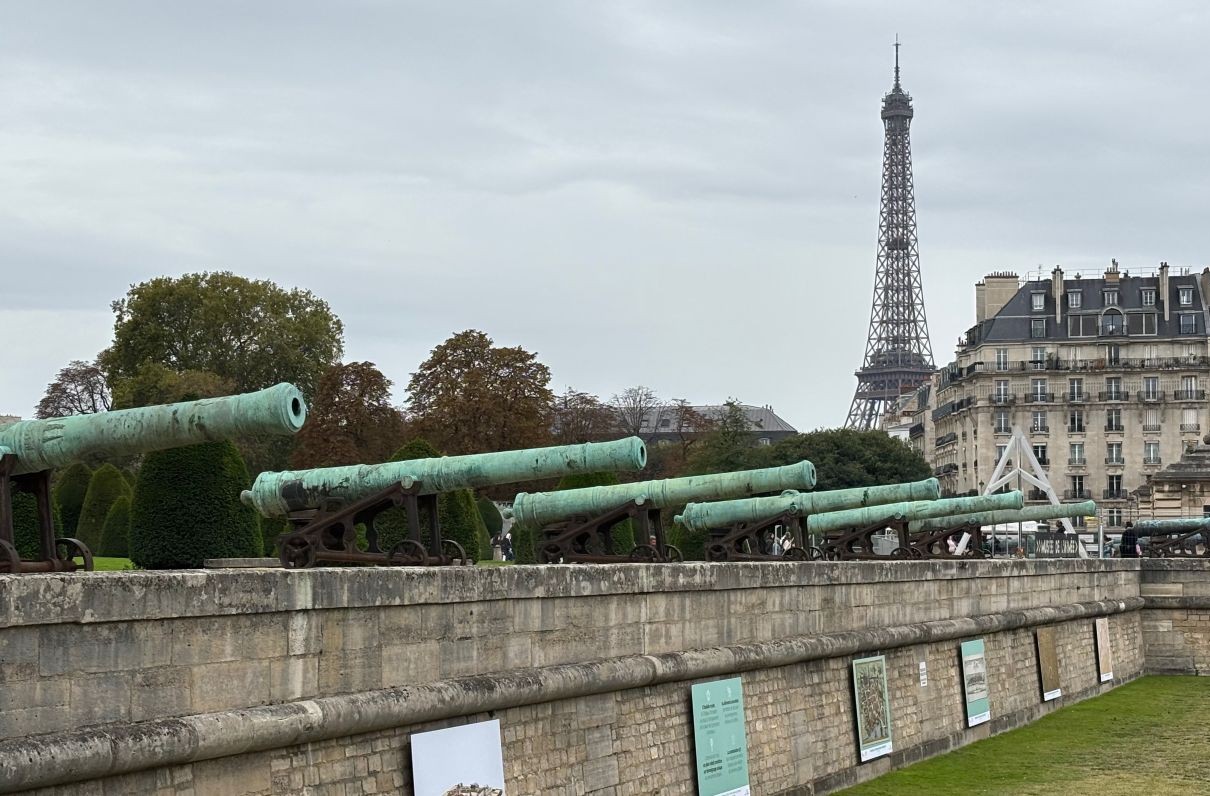
The sweep of France’s military history comes into view at the Musée de l’Armée, housed within King Louis XIV’s 17th century Les Invalides complex, built to care for wounded veterans. Near the Eiffel Tower and the river Seine, the museum traces centuries of conflict and strategy through medieval armor, artillery, uniforms, and weaponry.
In addition to Napoleon Bonaparte’s monumental tomb, areas are devoted to both world wars.
Consider traveling the streets of Paris in an open-top vintage Citroën 2CV. Tour companies use the iconic French car to ferry visitors past major landmarks, including sweeping views from the Basilica of Sacré-Coeur. For American travelers used to wider lanes and fewer scooters, the ride is a heart-pounding, open-air introduction to the city.
Heather Kuldell-Ware is a writer based in Virginia.
Exclusive Discounts for MOAA Members
Members save year-round on travel, storage, and so much more. Access your deals today!