
By MOAA Staff
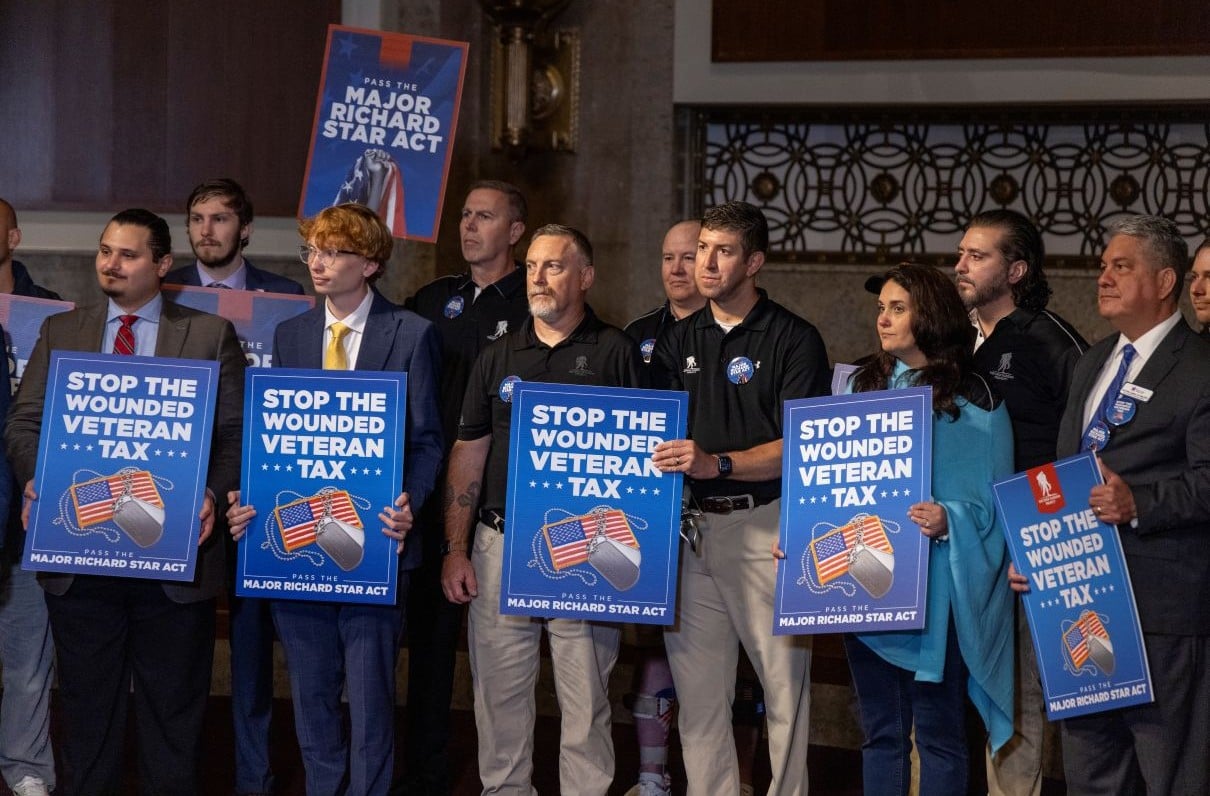
MOAA continues its work to secure passage of the Major Richard Star Act during the 119th session of Congress. The bill would end an unjust pay offset faced by tens of thousands of combat-injured veterans who lose a dollar of earned military retirement pay for every dollar of VA disability they receive.
The Major Richard Star Act remains a high priority for MOAA and other advocacy groups represented in The Star Act Alliance. Contact your lawmaker today and demand a vote on the bill.
[RELATED: New Coalition Forms to End Unfair Pay Offset Facing Combat-Injured Veterans]
Why the Star Act Matters
This unfair pay offset, or “wounded veteran tax,” targets a population already facing physical and financial challenges because of their time in uniform. Ending the offset could mean an additional $1,200 a month, on average, for these wounded warriors.
The bill would not create a new benefit – instead, it would fix an oversight from 2004, when Congress ended the offset for wounded veterans who served at least 20 years in uniform.
Under the legislation, veterans would be able to choose between receiving their current compensation – DoD retirement pay and Combat-Related Special Compensation (CRSC) – or receiving their full DoD retirement and earned VA benefits. Of the more than 50,000 veterans eligible under the Major Richard Star Act, it’s expected some may keep the tax-free CRSC, reducing the expected cost of the legislation.
[TAKE ACTION: Ask Your Lawmakers to Support Combat-Injured Veterans]
Star Act Resources
Learn more about the legislation, bust common myths about concurrent receipt, and more:
- MOAA Advocacy in Action Resources (2026): Issue Paper (PDF download) | Star Act Stories
- MOAA.org Article (2026): Inside the Star Act CBO Score
- MOAA.org Article (2025): Major Richard Star Act: Fact vs. Fiction
- Star Act Alliance: Bill Overview (PDF download) | Social Media Toolkit
- Wounded Warrior Project: Understanding the Major Richard Star Act
- Veterans of Foreign Wars: Advocacy Talking Points: Retirement and Military Personnel
- MOAA.org Article (2021): Maj. Richard Star, a Voice for Disabled Veterans, Loses Battle to Cancer
- MOAA.org Article (2024): Tonya Star, Widow of Maj. Richard Star, Dies at 51
Why Hasn’t Congress Passed the Star Act?
Despite strong support in the form of cosponsorship, this bill has not been brought to the floor of either congressional chamber for a vote.
One reason may be the price: An estimated $8 billion over 10 years. MOAA believes the projection is far higher than the bill’s actual cost – many eligible veterans may elect to continue receiving current benefits, for tax purposes and other reasons – but even the full $8 billion would amount to less than 0.1% of the annual federal defense budget.
Competing priorities across Capitol Hill and myths about the Star Act that continue to circulate have plagued efforts to move this bill across the finish line. Numerous partners in the veterans advocacy community will continue to work together to achieve this enduring priority – whether standalone passage or inclusion in a "must-pass" bill. These efforts extend beyond the Hill and into the halls of the Pentagon. Gaining support from Pentagon leadership is essential.
MOAA will keep reminding lawmakers that the cost of caring for our combat-injured veterans by passing the Star Act pales in comparison to the cost of breaking faith with those who sacrificed limbs, health, and futures in service to this nation. And what impact does this have on our ability to recruit an all-volunteer force from a population who has seen the most vulnerable warriors struggling?
Star Act Legislative History
119th Congress: The House version of the bill (H.R. 2102) had 317 cosponsors as of March 23, 2026; the Senate version (S. 1032) had 78 cosponsors. The House bill was referred to House Veterans’ Affairs Committee’s disability assistance and memorial affairs panel in April 2025. The Senate bill was referred to the Senate Armed Services Committee in March 2025.
The bill was introduced in the Senate on Oct. 8, 2025, and again on March 3, 2026, for consideration of unanimous consent, but it was blocked by an objection on both occasions. Text of the legislation was put forward as an amendment to the FY 2026 National Defense Authorization Act (NDAA) in the Senate but was not included in the final bill.
118th Congress: The House version of the bill had 326 cosponsors at the end of the session. It was placed on the House’s Union Calendar (for scheduling bills with financial components) but did not reach the House floor. The Senate version had 74 cosponsors at the end of the session; it was referred to the Senate Armed Services Committee in February 2023, about a month into the session, and did not advance further.
117th Congress: The House version of the bill had 335 cosponsors at the end of the session. It was placed on the House’s Consensus Calendar (for bills that have met a certain sponsorship threshold but have not received floor consideration) on Oct. 25, 2022, but did not reach the House floor. The Senate version had 66 cosponsors at the end of the session; it was referred to the Senate Armed Services Committee in March 2021 and did not advance further.
116th Congress: The House version of the bill had 101 cosponsors at the end of the session. It was referred to the House Veterans Affairs’ Committee panel on disability assistance and memorial affairs in March 2020 and did not advance from that committee. The Senate version had 31 cosponsors at the end of the session; it was referred to the Senate Armed Services Committee in March 2020 and did not advance further.