

(This article by Ray Cavanaugh originally appeared in the May 2026 issue of Military Officer, a magazine available to all MOAA Premium and Life members who can log in to access our digital version and archive. Basic members can save on a membership upgrade and access the magazine.)
Many cases of cellulitis might not look or feel like anything important, especially to those accustomed to danger and discomfort. But if left untreated, cellulitis can become lethal.
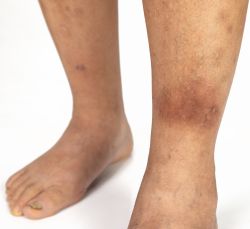 An infection of the skin’s deeper layers, cellulitis can occur anywhere on the body but most often surfaces on the feet or legs as a small, reddish, blistery protrusion (pictured). It usually isn’t contagious, but it is highly infectious and can cause gangrene and sepsis.
Most cases take place when bacteria — usually strep or staph — enters the body following a break of the skin, whether due to surgery, an accident during yard work, or at the gym.
Typical cellulitis symptoms include redness of the skin, accompanied by swelling. The afflicted area might also feel tender to the touch and have a warmer than average temperature. Another possible sign might include red streaks on the skin extending from the original infected spot.
[HEALTHY LIVING: Beat Back Pain With a Strong Core]
“Pain is common, but painless or minimally painful cellulitis definitely occurs,” said Dr. Brett Sloan, a professor of dermatology at the University of Connecticut’s School of Medicine and a retired Air Force lieutenant colonel who served as a senior flight surgeon and dermatologist.
Regardless of the pain level, cellulitis “continues to worsen if untreated,” he said. The condition might look harmless at first, but it will spread. Over a period of hours to days, it “becomes increasingly red, warm, swollen, and tender,” he added.
Any change of body temperature or unusual sweating accompanied by infection is a sign of a medical emergency. Also severe is any sudden feeling of general physical weakness or a sensation of tingling or numbness in the afflicted area.
[HEALTHY LIVING: How to Mitigate Symptoms of Type 2 Diabetes]
Most cases of cellulitis are treated with oral antibiotics, but more serious cases might require the intravenous type. Cellulitis can show on the face, neck, arms, or torso. But most cases surface on the legs, Sloan said.
He recommended marking “the edge of the redness to monitor whether it is improving.”
Those with diabetes, skin conditions, or a weakened immune system should be especially cautious about cellulitis. A prior episode of cellulitis increases the chance of having it again.
Ray Cavanaugh is a writer based in Massachusetts.
Have More Questions About Your Health Care Benefit?
MOAA's TRICARE Guide answers some commonly asked questions.