
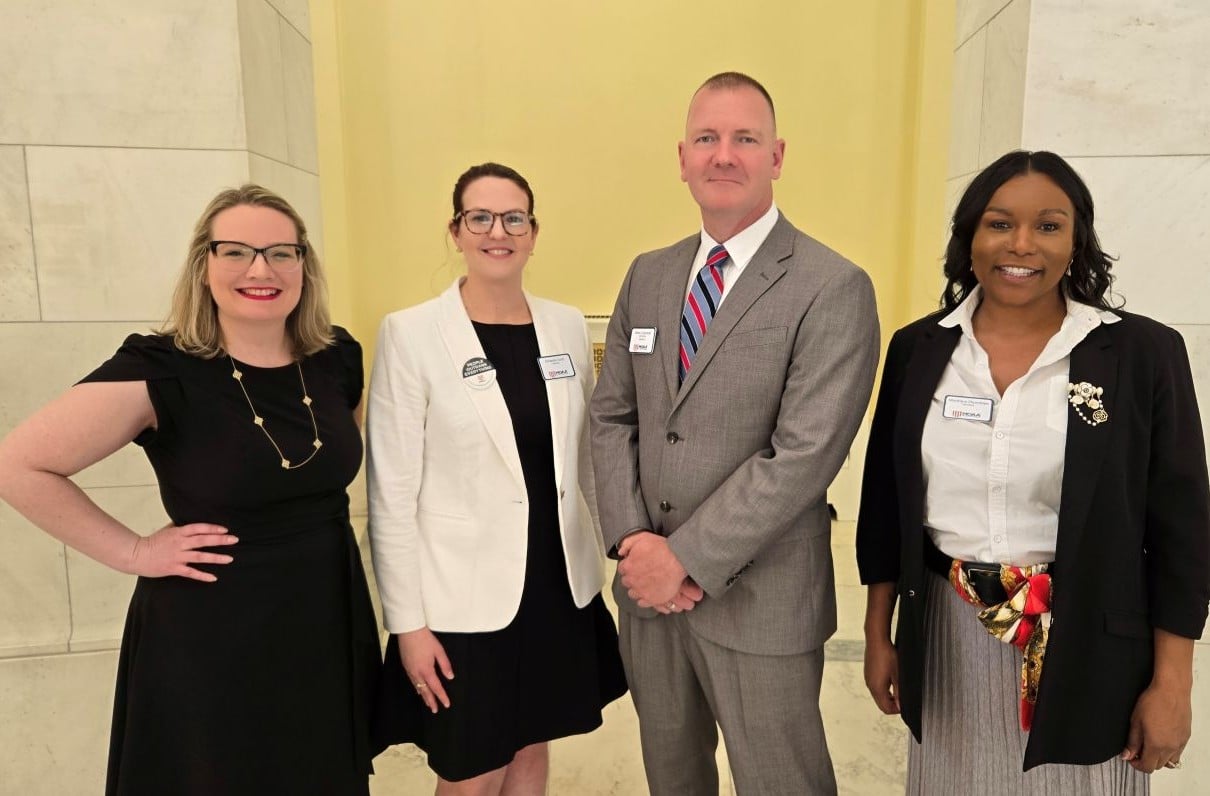
Members of MOAA’s Currently Serving Advisory Council (CSAC) and Currently Serving Spouse Advisory Council (CSSAC) met with lawmakers recently on Capitol Hill to advocate for legislation that directly impacts servicemembers and their families – an experience one Navy spouse called “eye-opening.”
“My main takeaway was this: Be the change you want to see by showing up, amplifying your voice, and staying rooted in advocacy that makes true change,” said CSSAC member Monique Ekundayo. “The mantra of ‘Never Stop Serving’ is not just a saying in our military community, it's true to form in our everyday lives!”
Ekundayo joined fellow spouses, currently serving members, and MOAA staff on the Hill to support three bills designed to improve the quality of life of those who serve and their families. Click the links to join their efforts by sending a message to your legislators asking them to:
Lower the military spouse unemployment rate by cosponsoring the Improve and Enhance the Work Opportunity Tax Credit Act (H.R. 6231 | S. 3265), which would give employers a tax credit for hiring military spouses.
“Sharing my story on the hill about being discriminated against in employment as a brand new military spouse and advocating for a solution was so empowering,” Air Force spouse and CSSAC member Amanda Scott said. “It’s been almost 10 years since that happened to me, and now that I’m gainfully employed in a career I love, it’s so important that I try to help pass [this legislation] so that discrimination never happens to another military spouse.”
Ensure activated Guard and Reserve members receive equal benefits for equal service by streamlining statutory duty statuses from 30 to four through the Duty Status Reform Act (H.R. 6976). This restructuring would reduce inconsistent interpretations of activation authorities and promote uniform access to service-earned benefits such as Basic Allowance for Housing (BAH) and credit received toward retirement.
Improve identification of health care access issues by cosponsoring the Military CARE Act (H.R. 6796), which would create a standardized digital platform for TRICARE beneficiaries to report access-to-care challenges, enabling the Defense Health Agency to pinpoint regional gaps, inform data-driven staffing and funding decisions, and connect beneficiaries with patient advocates for appointment support.
“All of the congressional offices were receptive to and supportive for the legislative issues we proposed,” CSAC member Maj. Michael Gilbertson, USA, said. “It was a professional and personal honor and privilege to speak on behalf of our MOAA members across the country and the world.”
Adding Your Voice
The impact MOAA’s advisory councils had on Capitol Hill was clear – and yet, many of our nation’s servicemembers and their families lack the access or tools to make their voices heard in Washington. This matters because lawmakers pass legislation that shapes the policies directly impacting the quality of life of our servicemembers and their families; it is imperative that congressional offices hear from the people their decisions affect.
MOAA’s Legislative Action Center gives servicemembers and their families a direct line to their lawmakers, no matter where in the world they are stationed. Additionally, we are equipping members of our advisory councils with the advocacy skills they need to champion issues that will positively impact their communities.
Click to learn more about MOAA’s advisory councils.

Resources for Currently Serving Officers
MOAA can help you succeed in your military career and beyond.