Whether you’re a veteran seeking health care in the Last Frontier, a new military spouse adjusting to life on the move, or a young soldier who needs help avoiding a bad financial decision, a community of support is available … and those supporters need to work together.
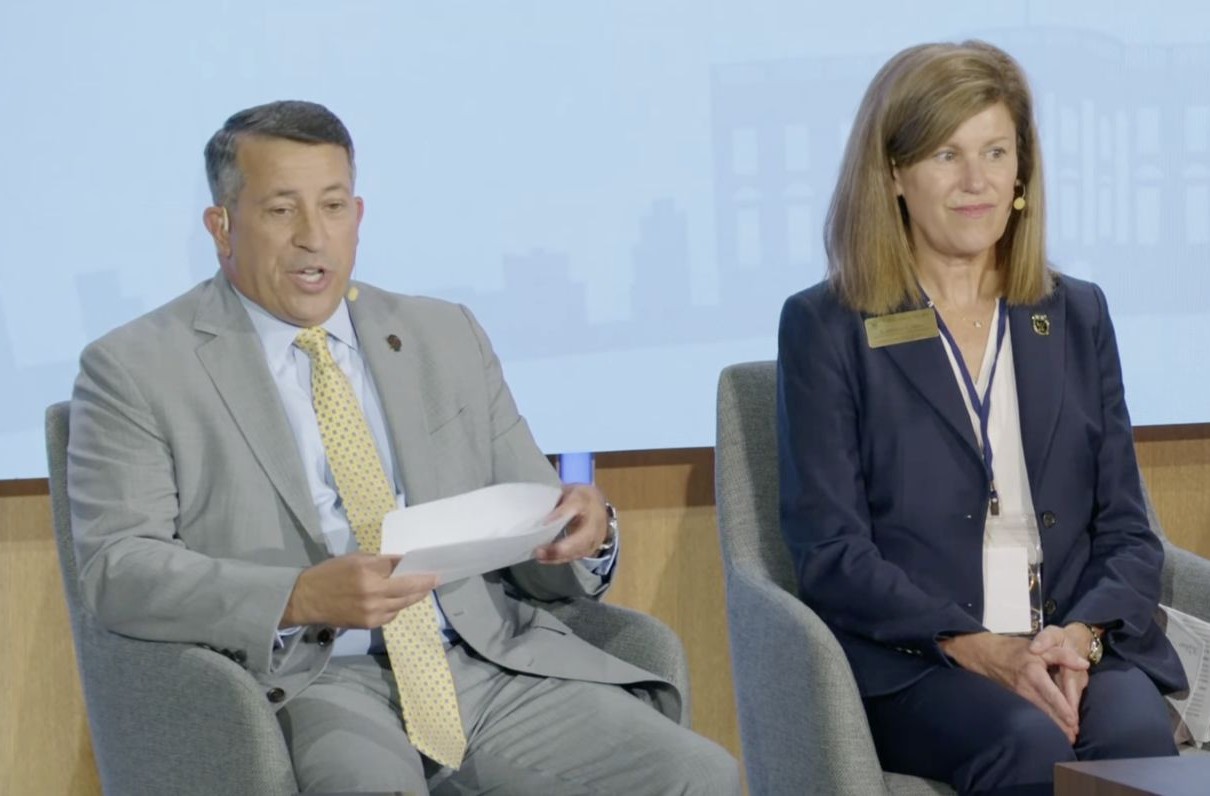
That was the message from a recent panel discussion moderated by MOAA President and CEO Lt. Gen. Brian T. Kelly, USAF (Ret), as part of the 12th Annual Warrior Symposium, hosted by America’s Warrior Partnership (AWP) and Hiring Our Heroes Aug. 5-6 in Washington, D.C. This year’s event focused on transitioning from service and the need for collaborative efforts to back the warfighter and their family.
“The problems that we have, the challenges that we have – they’re surmountable,” Kelly said during the discussion. “But it takes a coalition of people working together.”
MOAA’s president shared the stage with Verdie Bowen, the director of the Alaska Office of Veterans Affairs; Kathleen Jabs, special assistant for military and veteran affairs in the office of the president at the College of William and Mary; and Max Lane, executive director at JPMorgan Chase and head of Military & Veteran Wealth Strategies at J.P. Morgan Private Bank. JPMorgan sponsored the panel.
“Bringing different interests together is a critical step to advancing solutions,” Kelly said after the event. “I want to thank AWP for allowing me to participate in their event, and I’m hoping for similar discussions during TotalForce+ in October.”
[LEARN MORE: TotalForce+]
Collaboration Is Key
Bowen frequently works with nonprofits across Alaska to meet the range of needs faced by veterans, many of whom live far removed from traditional support services.
“We have gone out and solicited every nonprofit throughout the state to get them into one database,” he said. “The [local] nonprofits will be able to help us provide services to our veterans in those communities, and the only way we can do that is to get them together.”
Jabs discussed her background as a military spouse and “the state of constant transitions” faced by that community, beginning with young spouses adjusting to the military lifestyle.
“Spouses don’t join the military, but they do affect recruiting, they affect retention, they affect job performance,” Jabs said. “Who can actually perform if you’re worried about what’s happening at home or with your children?”
She addressed the “common cause” faced by conference attendees.
“When we can be incentivized and really work to collaborate and build those partnerships – public, private, nonprofit, education partners – I think we can start to achieve greater scale and greater numbers.”
[RELATED: ‘TRICARE Is Falling Short’: MOAA, Military Coalition Highlight Gaps]
Lane, a veteran, discussed the importance of “leveraging veterans to speak to veterans” about financial support issues.
“You put a Marine in front of another Marine, they’re going to be best friends in, like, five minutes.” he said.
Lane also stressed the need to view financial stability as a security issue, sharing the oft-repeated story about a new recruit using bonus money to buy “an all-black Dodge Charger R/T at 26% APR because it’s awesome. Terrible financial decision.”
“I use the Dodge Charger joke … because everybody knows that joke, but the sad thing is, everybody knows that joke because it happens,” Lane said. “And I believe that we as a military, as a country, can do better to empower our communities to talk about financial stability.”

Resources for Currently Serving Officers
MOAA can help you succeed in your military career and beyond.