
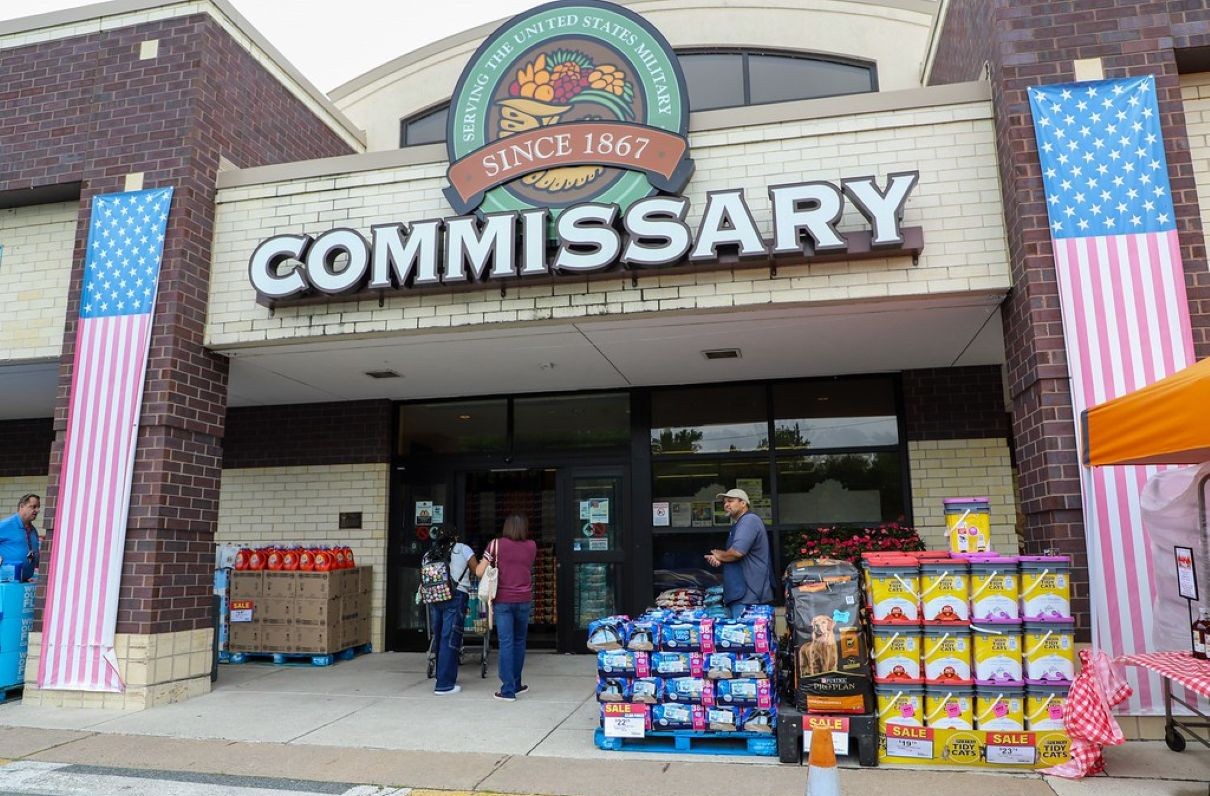
The Defense Commissary Agency (DeCA) issued a Request for Information (RFI) to the grocery industry, investment firms, and other potential partners Sept. 19 seeking feedback on the possible privatization of commissary operations.
The request, which covers all 178 commissary locations in the U.S. and Puerto Rico, represents the latest chapter in a decades-long debate over whether the commissary system should remain a government-managed benefit or transition to private sector control. While industry feedback may highlight opportunities to reduce costs or improve operations, history offers a clear warning: Once privatized, it becomes far harder to safeguard quality and affordability for the military community.
Privatization Priorities … and Problems
The RFI has two goals: to determine whether commercial operators are interested in and capable of managing commissary operations, and to assess whether such a shift could occur without government subsidy (or with a substantially reduced subsidy) while still preserving the military community’s critical benefit of 23.7% average savings for authorized patrons.
In recent years, DeCA has introduced variable pricing and private label products as part of its work to maintain these savings – changes that initially worried patrons (and military and veterans organizations) but are now accepted. The piloted expansion of commissary privileges at 16 locations demonstrates future opportunities for improving the system. MOAA supports this expansion, which would benefit civilians working in support of the total force, yet privatization would represent a fundamental shift in mission and intent.
Congress appropriates about $1.4 billion annually to cover DeCA’s operating costs. A private company taking over commissary operations would need to recoup those costs, most likely through higher prices and diluting the very benefit the system is meant to provide.
For military families living on tight budgets, retirees on fixed incomes, and survivors reliant on commissary savings, even a modest increase in prices could erode a benefit that has stood for more than 150 years.
[RELATED: A Privatized Commissary System Would Put Your Service-Earned Benefit at Risk]
A Long-Standing Debate
Commissary privatization is not a new concept. The Grace Commission floated the idea as part of a broader effort to improve government efficiency in the late 1980s.
In 2001, then-Defense Secretary Donald Rumsfeld asked whether the Pentagon should even be running a chain of grocery stores. And Sen. John McCain (R-Ariz.) pushed for a similar privatization pilot program in the mid-2010s.
Each time, the outcome was the same: The prevailing consensus has been that the system must remain under Pentagon management to ensure the quality of life benefit is protected for servicemembers, retirees, veterans, and survivors. Unlike commercial grocery chains, commissaries are not designed to maximize revenue. Instead, they exist to deliver a benefit that will attract, retain, and support morale and readiness for the military community.
Lessons From Housing Privatization
The Pentagon has explored privatization before, most notably through the Military Housing Privatization Initiative (MHPI). Established in 1996, MHPI was designed to address the overwhelming backlog of housing repairs that the government could not afford to tackle alone. Early results were promising, with newly built and renovated homes improving the quality of life for military families.
By 2005, when Basic Allowance for Housing (BAH) was increased to cover 100% of housing costs, the initiative still appeared successful. But by 2019, military families had become increasingly vocal about mold infestations, pest problems, and other unsafe conditions found in privatized housing.
[RELATED: Urge Congress to Restore the Basic Allowance for Housing]
Such widespread failures prompted Congress to act, establishing the Tenant Bill of Rights in the FY 2020 National Defense Authorization Act.
In 2021 and 2022, two privatized housing companies settled lawsuits tied to falsifying maintenance logs to achieve performance incentives. Despite fines totaling over $65 million, the companies still own and operate military family housing due to the long-term, restrictive nature of these privatization agreements.
The MHPI experience serves as a cautionary tale. While privatization can work under certain conditions, quality of life for military families will suffer when revenues are squeezed or oversight falters.
The Path Ahead
As policymakers weigh the future of your commissary benefit, the lessons from MHPI loom large. Cost-cutting and privatization may offer short-term savings, but when the quality and integrity of a critical benefit are at stake, the consequences fall directly on servicemembers, veterans, retirees, and survivors.

Resources for Currently Serving Officers
MOAA can help you succeed in your military career and beyond.