
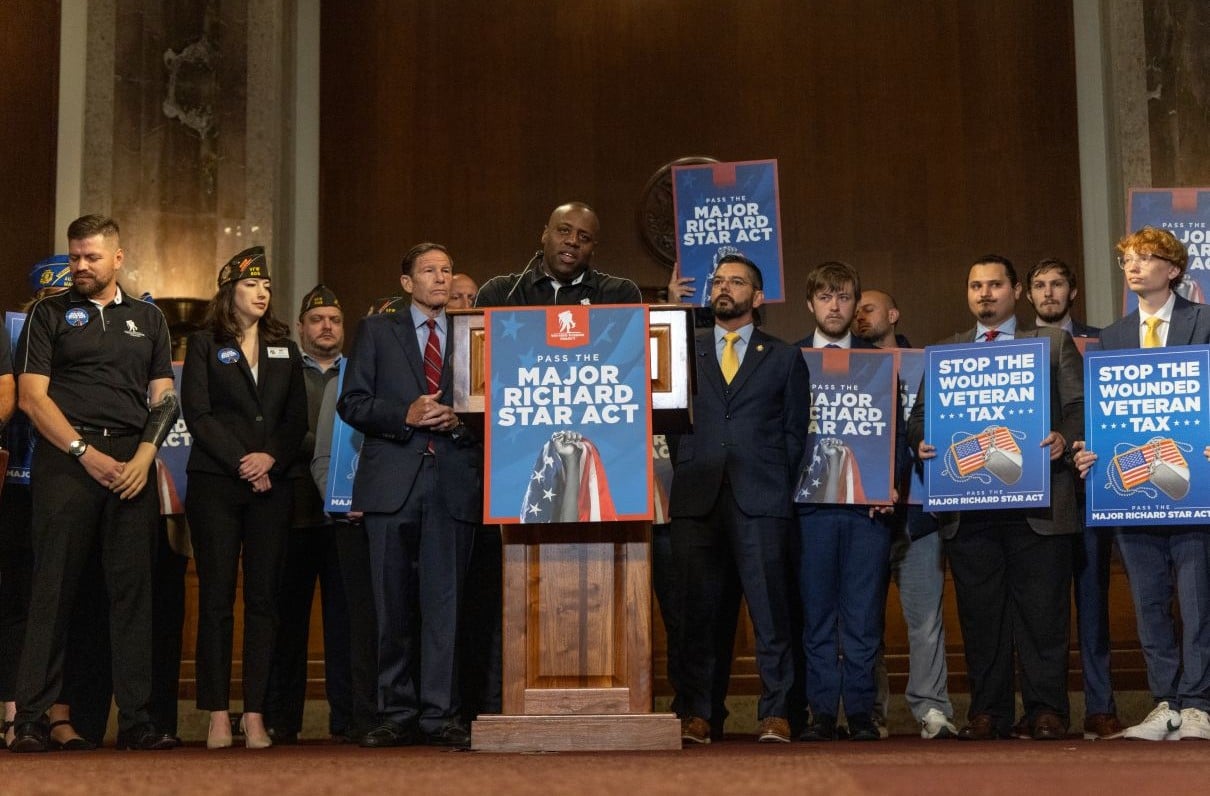
 Approximately 54,000 veterans forced to medically retire due to combat or combat-related injuries prior to completing 20 years of service essentially pay a “wounded veteran tax,” losing a dollar of earned DoD retirement pay for every dollar received in VA disability pay. To remedy this unjust offset, MOAA has joined with fellow military and veteran advocacy groups in recent years to urge Congress to pass the Major Richard Star Act (S. 1032 | H.R. 2102).
[TAKE ACTION: Ask Your Lawmakers to Support Combat-Injured Veterans]
The bill would authorize concurrent receipt of DoD retired pay and VA disability pay for combat-injured veterans forced to medically retire. It enjoys widespread bipartisan and bicameral support in Congress, with 76 Senate and 298 House cosponsors as of Aug. 19. However, as in previous sessions of Congress, misconceptions about the legislation endure.
As MOAA continues its work to secure passage of the bill – or its inclusion in the annual National Defense Authorization Act – as part of our Summer Advocacy in Action campaign, here’s a look at some of these false narratives:
Fiction: The bill authorizes “double dipping” of benefits.
Fact: DoD-provided military retirement pay and VA-provided disability pay are two separate benefits created for two distinct reasons. Retirement pay is earned for years served in the military. Disability pay helps make up income veterans might lose due to injuries or other health problems attributed to service.
Fiction: The bill is too expensive.
Fact: This common misconception has resulted in hesitation among many who have questions about this bill. However, the bill’s estimated price tag of $8 billion over 10 years represents about one-tenth of a percent (0.1%) of a single year’s defense budget ($852.2 billion in FY 2025). Furthermore, the bill is not retroactive and will not include back pay. These factors, along with a phase-in approach to the new rules, significantly reduce the cost of the legislation.
[RELATED: MOAA-Backed Caregiver Aid, Plus Other VA-Focused Legislation, Moves Through Key Committee]
Fiction: The bill would have little impact on veterans.
Fact: Each veteran covered by this legislation would receive about $1,200 more in compensation per month, per estimates.
[RELATED: 3 Priorities, 1 Mission: MOAA’s Summer Advocacy in Action Topics]
Fiction: The bill creates a new benefit during a time of fiscal uncertainty.
Fact: The benefits offered by the Major Richard Star Act are not new. Congress eliminated the retirement pay/disability pay offset more than two decades ago, yet lawmakers left out those forced to retire due to combat injuries. This bill simply ends this unfair exclusion and offers each veteran the chance to choose what option is best for them: The benefits spelled out in the legislation, or their current, tax-free combat-related special compensation (CRSC).
How You Can Help
To eliminate this unjust offset and move this bill across the finish line, MOAA is reaching out to congressional offices in both chambers to correct these and other misconceptions and advocate on behalf of combat-injured veterans. However, we require your support and sustained engagement to help advance this bill and make its importance known to all members of Congress. Your voice will amplify our message and ensure lawmakers do not forget about our combat-injured veterans and their service to our nation.
[DOWNLOAD THE ISSUE PAPER: Major Richard Star Act]
Together, our sustained engagement can help ensure Congress honors the service of over 54,000 veterans who were forced to end their service prematurely. Passage of the Major Richard Star Act not only reaffirms the nation’s commitment to its veterans, but it also enhances the security of the nation. To sustain the all-volunteer force, it is imperative that those who have given so much are treated fairly. The retention of servicemembers depends on it.
Reach out to your lawmakers today via our Legislative Action Center, and keep up with the latest on this legislation and other MOAA priorities at our advocacy news page.
When MOAA Speaks, Congress Listens
Learn more about MOAA’s key advocacy issues, and contact your elected officials using our messaging platform.