
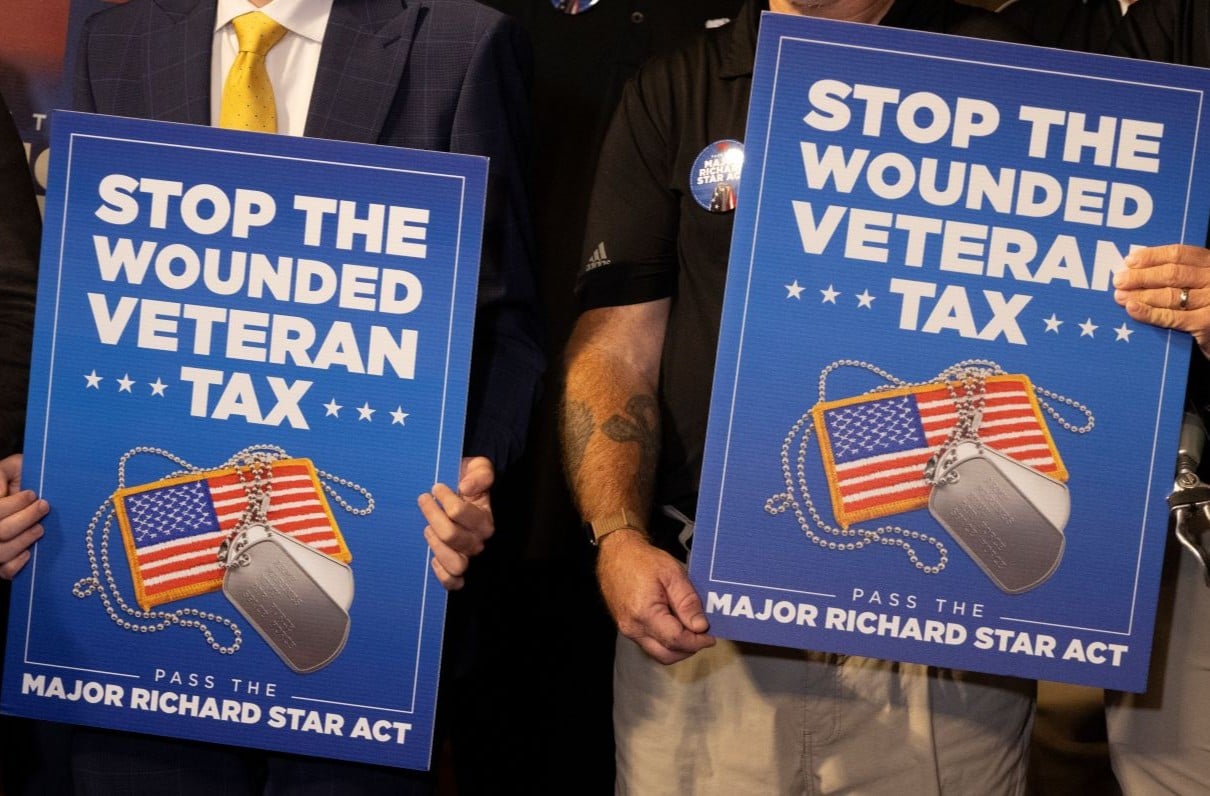
The Major Richard Star Act — legislation to eliminate the unfair offset that forces many combat-injured, medically retired veterans to forfeit a portion of their retirement pay when they receive VA disability compensation — is again stalled in Congress, despite broad support and renewed pressure.
Here’s where things stand, and how advocates and veterans can join MOAA’s efforts to keep pushing the legislation forward.
Senate Floor Action
- The Senate version of the bill (S. 1032) was introduced Oct. 8 for consideration by unanimous consent on the Senate floor. The effort would’ve moved the bill forward to the House for a vote, but it was blocked by an objection.
- After the objection, a compromise motion to waive procedural hurdles and allow a single roll call vote (at a 60-vote threshold) on the bill before the end of the year was raised. It was blocked in similar fashion.
- The voiced objections claimed the bill would amount to “double dipping” and would impose unacceptable costs. However, retirement pay and disability compensation are two separate, service-earned benefits, and the cost is modest in the context of the broader federal (and military) budget.
[RELATED: Major Richard Star Act: Fact vs. Fiction]
Senate NDAA Process
The National Defense Authorization Act (NDAA) is often used to advance veteran-benefits reforms because it is considered a “must-pass” bill. Advocates hoped the Star Act could hitch a ride as an FY 2026 NDAA amendment, but the process hit multiple roadblocks:
- Richard Blumenthal (D-Conn.), Sen. Mike Crapo (R-Idaho), and Sen. Elizabeth Warren (D-Mass.) introduced the text of the legislation as a Senate NDAA amendment, but it was not included among the limited amendments to the bill passed by the chamber Oct. 9.
- Efforts by Reps. Gus Bilirakis (R-Fla.) and Raul Ruiz (D-Calif.) to introduce the legislation as a House NDAA amendment also were not successful. As in previous years, the Star Act was not found “in order” in the House Rules Committee, preventing its consideration on the House floor.
- Some congressional leaders argue the bill lacks an offset or scoring mechanism to show how its costs will be absorbed, making it politically risky in tight fiscal and budgetary negotiations.
In short: even when lawmakers manage to insert Star Act language into NDAA drafts, the bill faces structural and budgetary constraints that prevent its inclusion in the final version.
[RELATED: CDC Formally Recognizes Gulf War Illness]
Why MOAA Isn’t Giving Up
MOAA remains among the most active and invested advocates for the Star Act.
- MOAA has identified the Star Act as an enduring priority — we will continue advocating until it becomes law.
- MOAA will continue working with hundreds of councils and chapters nationwide, grassroots advocates, and other military and veterans service organizations to coordinate outreach to lawmakers, provide templates for constituent messaging, and mobilize support for the Star Act.
- MOAA continues to emphasize that while the “cost” objection is repeated, the estimated financial impact of Star Act enactment is relatively modest (less than $1 billion annually over 10 years, by many estimates).
- Because Congress is sensitive to constituent pressure, MOAA sees continuous grassroots engagement as a critical lever for the future.
The moral and political case for the Star Act remains strong, and relentless advocacy may yet force a vote.
How You Can Help Keep Pressure on Congress
If you want to help move the Star Act forward, you and your network can take these steps:
Contact Your Senators and Representative: Use MOAA’s Legislative Action Center and ask your lawmakers: “Will you cosponsor and push for a floor vote on the Major Richard Star Act (S. 1032/H.R. 2102) before year’s end?”
Ask to meet or engage with their veterans’ policy or appropriations staff when lawmakers are home for district work periods; if you’re personally affected by this “wounded veteran tax,” include your story when communicating with Congress.
Leverage Grassroots Pressure and Media: Write opinion pieces (or a letter to the editor) for local and national news outlets about veterans unfairly denied full benefits. Use social media campaigns tagging your lawmakers, veterans groups, and national media.
Demand Action From Congress: In the last three sessions of Congress, the Star Act has had overwhelming support from lawmakers (117th, 118th, 119th) yet the bill has not received a floor vote. Cosponsoring such a bill allows lawmakers to gain credit for supporting veterans without taking action: Tell your senators and representative that the debt we owe these combat-injured veterans cannot be calculated with a simple Congressional Budget Office score, and demand they bring the Star Act to the floor for a vote.
The Bottom Line
The Major Richard Star Act is backed by broad bipartisan support and a compelling moral argument, but procedural gatekeeping and cost objections have repeatedly stymied its progress. The next few weeks may be the last chance in 2025 to push it into law.
With a sustained, coordinated grassroots effort, veterans and advocates can make that push count.
When MOAA Speaks, Congress Listens
Learn more about MOAA’s key advocacy issues, and contact your elected officials using our messaging platform.