
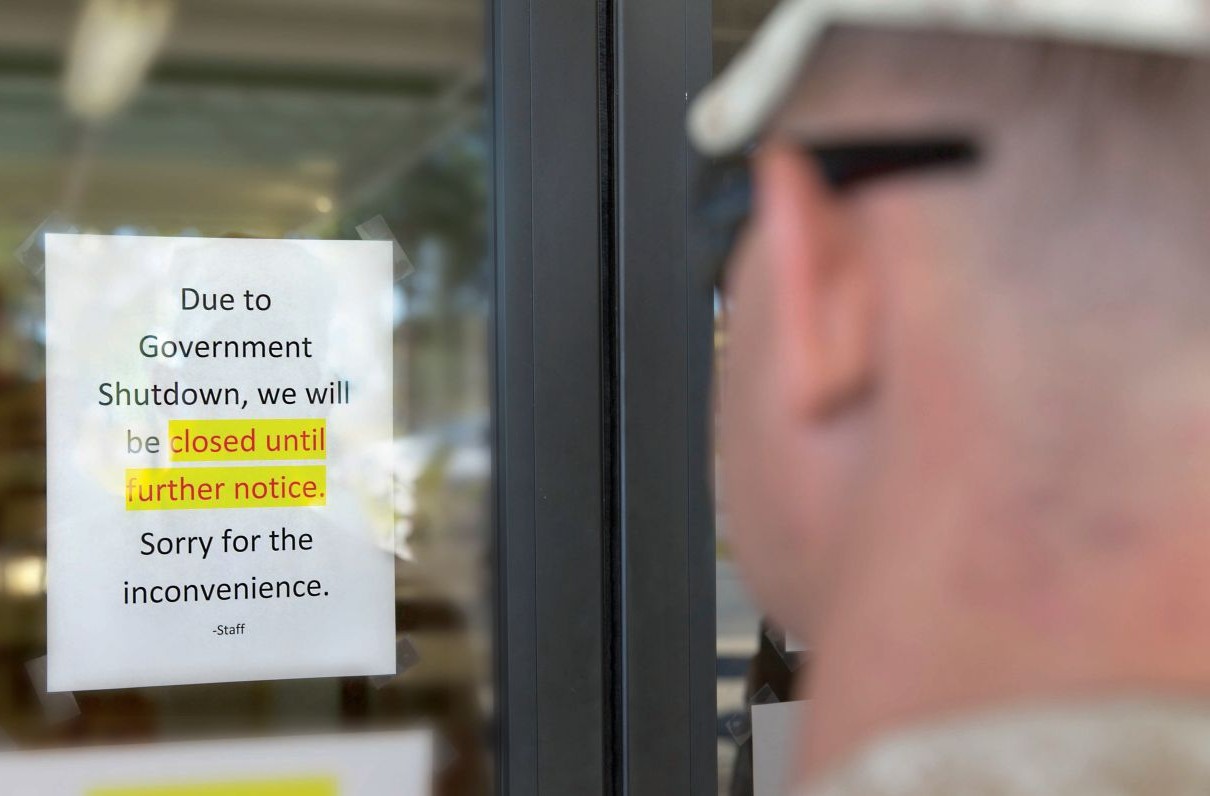
With just over two weeks until the end of the fiscal year and the Oct. 1 government funding deadline, Congress faces mounting obstacles to avoid a shutdown. Lawmakers are working on a short-term continuing resolution (CR) to extend funding into November, but divisions in both chambers threaten progress. Both parties appear entrenched, raising the likelihood of a shutdown even as leaders on both sides acknowledge it would damage national security and political stability.
MOAA is closely monitoring these developments and the potential impact a CR or shutdown would have on uniformed servicemembers, veterans, survivors, and their families.
Continuing Resolutions: A Costly Stopgap
While a CR is far less disruptive than a shutdown, MOAA has long cautioned against their repeated use. Congress has missed the deadline for passing all appropriations bills for more than a quarter-century, and while stopgap measures may keep the lights on, they delay readiness investments, quality-of-life improvements, and health care reforms while wasting billions of taxpayer dollars.
[RELATED: MOAA Members Make Their Voices Heard During Summer Recess]
Operating under a CR means:
- No new initiatives: Housing repairs, child care expansions, and health care improvements cannot move forward.
- Readiness delays: Training exercises, PCS moves, and equipment contracts are disrupted or deferred.
- Pay and benefits uncertainty: Adjustments to allowances or new benefit provisions tied to annual legislation may be postponed.
Shutdown: The Far Worse Option
While disruptive, CRs at least keep the government operating and ensure servicemembers receive timely pay. A shutdown, by contrast, halts many federal operations outright. Servicemembers must report for duty during a shutdown, but their paychecks will stop unless separate legislation is passed to authorize compensation.
Coast Guard members have gone without pay in past shutdowns, and uniformed personnel in the U.S. Public Health Service and NOAA are not typically covered by shutdown pay protections. PCS moves and training schedules may also be delayed or canceled, disrupting both families and unit readiness. Veterans may see slower processing of disability claims and other VA benefits, while families could lose access to child care, commissaries, and other support services.
Stay Informed, Stay Engaged
Servicemembers and families deserve stability and predictability. MOAA will continue to press Congress to complete its work on appropriations and protect pay and benefits. As the deadline approaches, we urge MOAA members to stay engaged by:
- Visiting MOAA’s advocacy news page for ongoing updates.
- Signing up for alerts through MOAA’s Legislative Action Center.
When MOAA Speaks, Congress Listens
Learn more about MOAA’s key advocacy issues, and contact your elected officials using our messaging platform.