
 Editor’s Note: This article is part of MOAA’s 2025-26 TRICARE Guide, brought to you by MOAA Insurance Plans, administered by Association Member Benefits Advisors (AMBA). A version of the guide appeared in the November 2025 issue of Military Officer magazine.
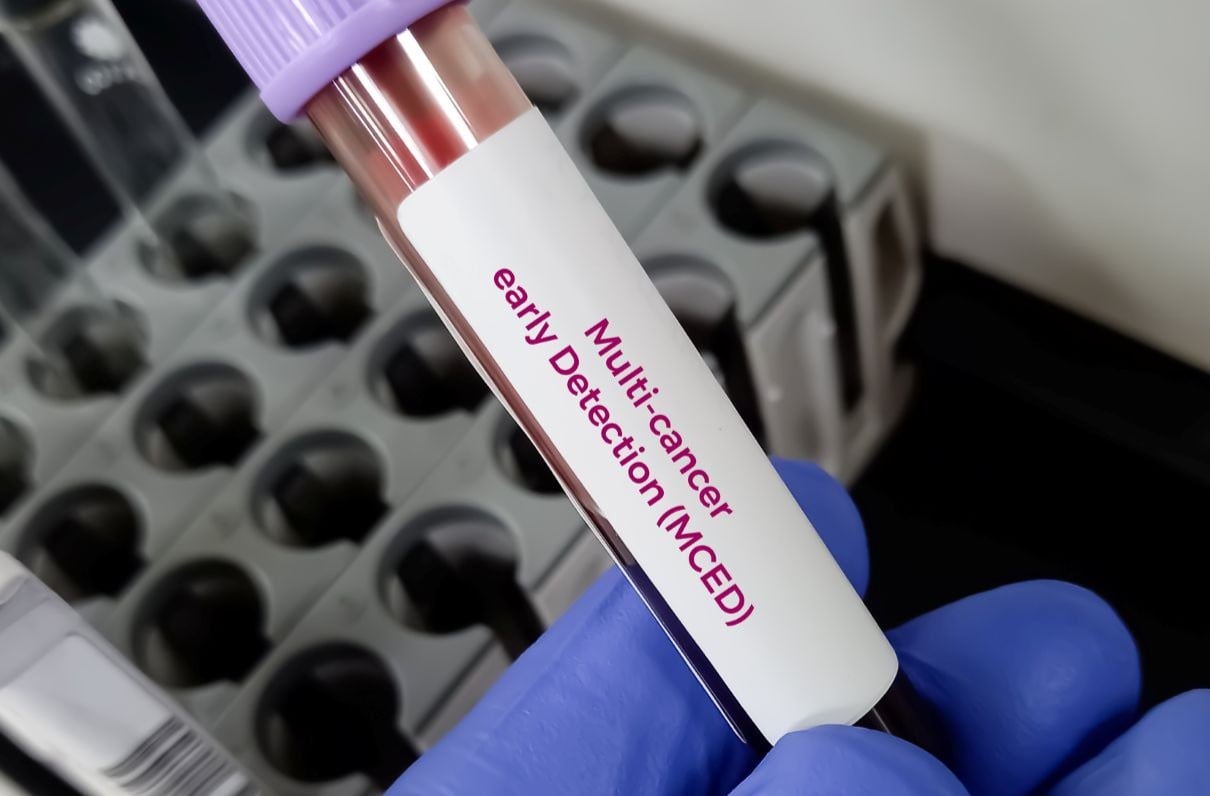
TRICARE has joined hundreds of leading health systems and employers by covering Galleri, a multi-cancer early detection test, for beneficiaries age 50 and over with an elevated risk of cancer. The Defense Health Agency authorized Galleri coverage using the Lab Developed Test (LDT) Demonstration Program, a MOAA advocacy win from more than a decade ago that continues to provide benefits for servicemembers, retirees, their families, and survivors.
What Is Galleri, and How Does It Work?
Galleri is a multi-cancer early detection test that screens for many aggressive cancers before symptoms appear. Using a blood sample, it looks for a unique “fingerprint” of cancer from DNA fragments shed from cancer cells into the bloodstream. Galleri can screen for more than 50 cancers, including many that have no recommended screening available. Galleri results also provide direction to your doctor on the cancer’s origin to help guide the next steps in diagnosis.
Only five cancer screening tests are recommended by the U.S. Preventive Services Task Force – breast, cervical, colorectal, lung (for those at risk), and prostate. Most other cancers do not have recommended screening tests and are often diagnosed at a later stage. Early detection is important because it can significantly improve cancer survival rates.
[RELATED: Major Change for TRICARE Coverage of Breakthrough Alzheimer’s Drug]
Galleri Ordering Process
If your provider agrees that the Galleri test is appropriate for you, they will submit an authorization – subject to approval by TRICARE – and give you an order for the test. You will have a blood draw done, and results will be available about two weeks after your blood sample is received at the lab. There are two possible results: No Cancer Signal Detected or Cancer Signal Detected.
Nearly 99% of people who use the Galleri test will screen negative with No Cancer Signal Detected. Continue with routine cancer screening tests your healthcare provider recommends.
Around 1% of people ages 50-79 are expected to receive a Cancer Signal Detected test result. This result will include the predicted tissue type or organ associated with the signal, called a Cancer Signal Origin (CSO) – information that can help guide your healthcare provider with next steps. After diagnostic evaluation, around 40% of people with a Cancer Signal Detected result are expected to have a confirmed cancer diagnosis.
[RELATED: 2026 TRICARE Plan Costs Revealed]
Galleri is a new technology, and some health care providers may not be familiar with it. If you are interested in discussing the Galleri test with your medical provider, you can download a discussion guide that includes instructions on ordering the screening test from the Galleri website.
Out-of-Pocket Costs
The Galleri screening test is subject to TRICARE cost sharing. Medicare does not cover the Galleri test, so beneficiaries on TRICARE For Life who get the Galleri screening should expect to be billed for the TRICARE annual deductible ($150 per individual for most retiree families) and the applicable cost share.
[MEMBER-EXCLUSIVE PUBLICATION: Transitioning Into Medicare and TRICARE For Life]
Recognizing TRICARE Leadership
MOAA appreciates TRICARE’s leadership on Galleri multi-cancer early detection screening. In an April 2025 post on X, during Cancer Control Month, Sen. Markwayne Mullin (R-Okla.) highlighted this “major breakthrough for military health” and thanked DoD leadership for “making sure TRICARE beneficiaries have access to cutting-edge tools to catch cancer early – when it’s most treatable – and save lives.”
In mid-2025, TRICARE changed its coverage of Galleri to limit testing to once per lifetime versus an annual screening test – MOAA will follow up with the Defense Health Agency on testing limits to ensure coverage evolves to align with recommendations for Galleri testing.
Roots in MOAA Advocacy
A decade-old MOAA legislative win contributed to TRICARE’s coverage of the test.
On Jan. 1, 2013, TRICARE ceased coverage of more than 100 lab developed tests without notice to patients or providers. MOAA led The Military Coalition’s efforts to restore TRICARE coverage of LDTs, resulting in a provision in the FY 2015 National Defense Authorization Act (NDAA) that gave DoD the authority to authorize provisional coverage of emerging technologies and services under TRICARE. That authority, together with continued advocacy from MOAA and coalition partners, led to the establishment of the LDT Demonstration, which now covers more than 100 LDTs including the Galleri test.
MEDIPLUS® TRICARE Supplement
Works hand-in-hand with your Select or Prime Plan. Count on valuable protection.