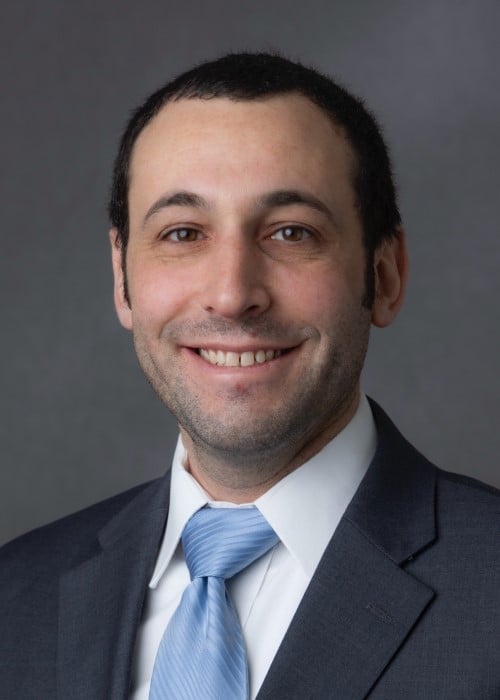
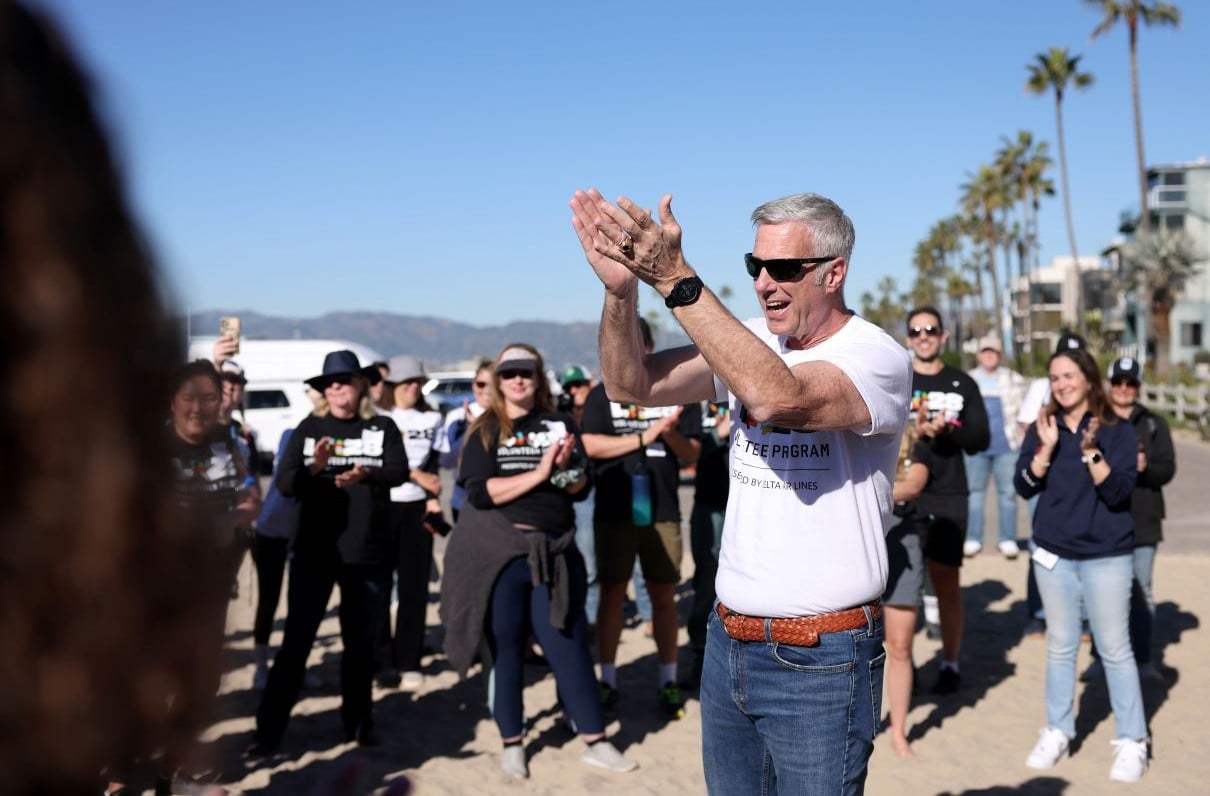
Reynold Hoover was enjoying retirement when he got the email.
“I was not looking for a job,” the retired Army lieutenant general told Military Officer in a recent interview. “I really was home on the couch.”
The email came from talent acquisition firm Korn Ferry, asking if Hoover would be interested in serving as CEO of the 2028 Los Angeles Olympics.
“I thought: You know what? On the 2nd of July in 1979, I took an oath at West Point for a life of public service. It wasn’t just an oath to wear the uniform — it was an oath to serve when called,” he said. “And that email to me was just another call to service to unite the world around sport at a time that we need it the most.”
In his new leadership role, Hoover, who is a Life member of MOAA, is responsible for directing the organizers of the Summer Games, including the Olympic and Paralympic sports. In an exclusive interview with Military Officer, he spoke about the logistics of planning the Games, the federal government’s visa policy, how he applies skills from his military career to this current job, and more.
This interview was edited for length and clarity.
Q. What lessons and skills have you taken from your military career and incorporated into the CEO position?
A. I am responsible for basically the day-to-day operations and the delivery of the Games. So from a military perspective, when I got the job in June 2024, I came in just like any other commander would come into an assignment: You look at your organization, and you assess the organization and the people that you have in the jobs that you have.
Then I went to Paris and saw the Summer Games, and I realized that it is a very complex undertaking. But at the end of the day, it really is about operations, plans, and logistics — fundamental skills any military leader must understand. If you get those three things right, it’ll generally work out pretty well.
So we reorganized the LA headquarters after Paris — and it may or may not resemble a military joint staff headquarters — and then the next piece was to get the right people into those senior leadership jobs to do what we need to do to get the job done.
At least since I’ve been here on the job, we are exceeding expectations, we are breaking Olympic records, and we are ahead of our planning schedule. We recently announced we crossed over $2 billion in contracted commercial sponsorship. We’re about 80% of the way to our sponsorship goal. We do not directly get any federal money to organize the Games, nor to fund the organizing committee. And so all of our money is raised basically from corporate sponsorship, from ticket sales, from hospitality sales, from merchandise sales and licensing, broadcast revenue rights, and things like that. We work very hard to raise what will lead to $7.2 billion to do the Games, and we’re well on our way to get there.
[RELATED: ‘It’s All About Unity’: CALMOAA President on Advocacy Success]
Q. Some sports will take place in Oklahoma City, over a thousand miles away from Los Angeles. What goes into such complex planning?
A. Oklahoma City is a great partner of ours, and it will be the place where we host softball and canoe slalom because it has incredible facilities for both of those sports. Planning and exercising and getting ready for the Games in Oklahoma City is part of that partnership. Oklahoma City Mayor David Holt and his team have an organization that is working on just the Oklahoma City piece, and we work very closely with them to make sure we are in alignment.
[MOAA INTERVIEW: Former Air Force Leaders Talk Sharing Success, Owning Failures]
Q. Tell us about the torch relay for the 2028 Games.
A. For the first time ever, our torch relay will hit all 50 states over 100 days. It will start in April 2028 and will crisscross America. I truly believe that will be the thread that will bind the nation to LA.
I had the opportunity to run the torch in Milan, and I will tell you it was life-changing. When you’re the CEO of an organization — certainly in my case — you are thinking at the operational and strategic level and doing all this planning, and you don’t really get the opportunity — to put it in military terms — to get on the ground with the troops. And this was an opportunity to go to the city center of Milan, to see the joy and the excitement in people’s eyes.
To see people come together around the power of that flame was amazing. And now I just think about that uniting force here in the United States as the flame passes through community to community. We’re really, really excited about that.
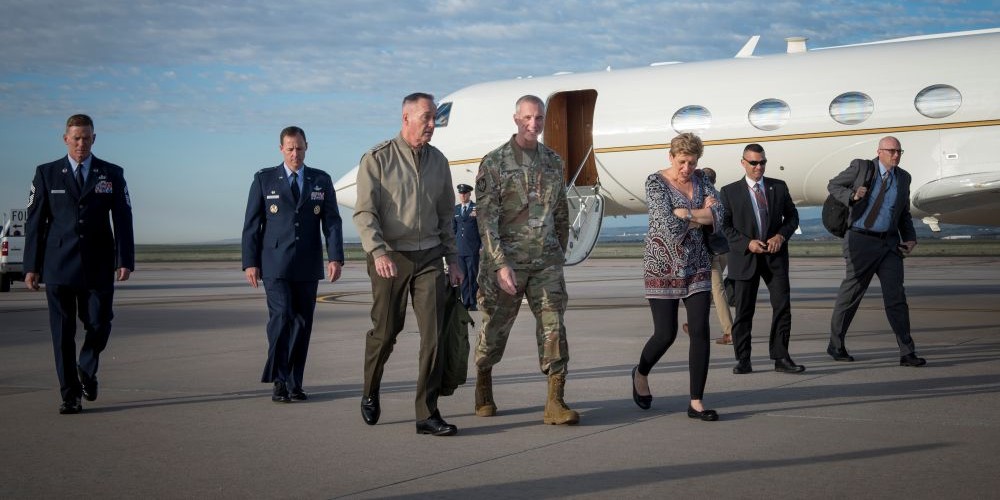
Chairman of the Joint Chiefs of Staff Gen. Joseph Dunford, USMC, walks with Lt. Gen. Reynold Hoover, USA, North American Aerospace Defense Command and Northern Command deputy commander, at Peterson Air Force Base, Colo., on May 24, 2018. (Photo by Senior Airman Dennis Hoffman/Air Force)
Q. You recently returned from the Milan Cortina Games. What were your takeaways from that trip?
A. It reaffirmed to me the power of volunteers. The Paris Olympics had about 45,000 volunteers from all over the world, and they were always happy and had a smile on their faces to make strangers feel at home, and I saw it again in Milan. That spirit of Olympic volunteerism is something that we wanted to capture here in LA, and so we launched our volunteer program about 18 months early, according to the International Olympic Committee’s planning schedule, because we want people to think of the LA28 organizing committee as not just an Olympic organizing committee but as a civic organization and a way to give back to the community. Within 24 hours, we had over 70,000 people sign up to volunteer. Today, we have about 215,000 people from around the world — about 40,000 just here in Los Angeles who want to be a part of history.
Another reaffirming piece was the notion of unity, as was the power that the Olympics and the Paralympics have to really unite the world.
[RELATED: LA28 Volunteer Program]
Q. There’s been public discourse about how the federal government’s travel bans on certain countries and how its immigration enforcement tactics may deter attendance at the Games. What actions are taking place to ensure athletes and their family members can safely attend?
A. Well, a couple of things. We have been — both with the Biden administration and now with the Trump administration — actively engaged with the State Department to make sure these Games will be open and accessible to all. We are working with the State Department on the launch of “LA28 VisaLink.” That is a visa assistance program that’s now automated so that we can make sure athletes and officials and stakeholders who have official responsibilities from whatever country they come to or are coming from will have a clear path to getting their visa.
The second thing is there is an exemption that was provided within the travel bans for the Olympics, Paralympics, World Cup, and a number of other sporting events. And while the State Department will still do their processes to vet people, there is an exemption to make sure that people who need to be here, who are part of the Games, will be able to come to LA and experience it.
I think the proof in that and the excitement that’s generated around the world about the Olympics is the fact that on Feb. 23 we announced over 5 million people already registered [for the LA28 ticket draw]. We’re the earliest to go on sale for an Olympic organizing committee in the history of the Games.
You know, I thought being the deputy commander at U.S. Northern Command and tracking Santa every year with North American Aerospace Defense Command was the best job ever. But being the CEO of what will be the biggest Games in Olympic history and really uniting the world — it’s humbling, but it is also the best job ever.
[FROM 2020: NORAD Aviator Outlines Santa-Tracking Mission]
Q. What’s the state of infrastructure in LA compared to when the city hosted the 1984 Games?
A. In ’84, everyone worried about transportation. And in ’84, they didn’t have near what the transit system is today. In ’84, they didn’t have the technology that we have today. In ’84, they didn’t have the capability of doing remote work like we have today.
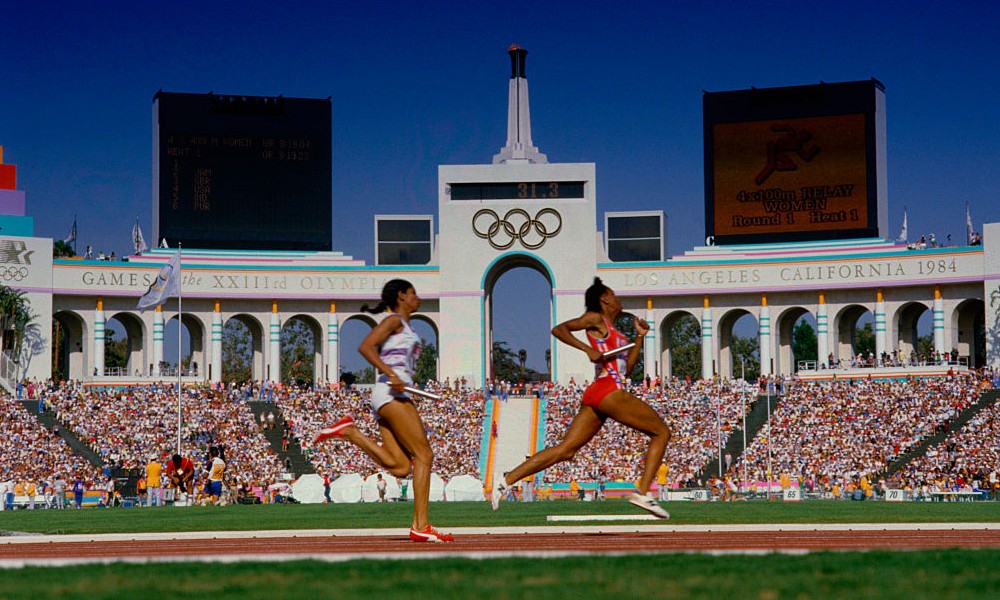
Nearly 6 million people attended events during the 1984 Summer Games in Los Angeles. (Photo by Gilbert Iundt/Corbis/VCG via Getty Images)
Today, we have an incredible metro system. LA Metro is a key partner of ours in transportation and planning. We have incredible technology, both artificial intelligence as well as ability to work remotely. The mayor has already said she’ll ask those able to do so to work remotely so people will be off the roads.
In ’84, they had deliveries in the overnight hours. And so, to get big trucks off of the roads, we will do the same thing. In ’84, they didn’t have a Games route. The state of California just this last year made progress on a Games route network, so think of that as an “Olympic Games express lane.”
Editor’s note: Legislation to approve the network’s implementation went into effect in 2025, with a current estimate of about 300 miles, a spokeswoman for Hoover told Military Officer.
Q. What is your favorite Olympic sport?
A. I’m not supposed to have favorites. I think for me, there’s a whole bunch of different sports. I came late in life to rugby; I love the rugby sevens, both men’s and women’s. The U.S. women’s team is awesome — I got to see them play in Paris. I will say wheelchair rugby and wheelchair basketball are pretty amazing sports. So I’ve got a whole bunch.
Q. What inspired you to become a member of MOAA?
A. MOAA for a very long time has been supportive of our servicemembers in uniform and their families. When I retired, I wanted to be a part of something that is really doing good work for our servicemembers — active duty, retired, reserve, and so on. We need to take care of those people who are serving and those people who have served. And that’s what MOAA is all about, and that’s why I wanted to be a Life member.
[RELATED: MOAA Membership Levels]
Q. What’s next for you after the Games? Is it back to the couch?
A. That’s what my wife tells me. You know, coming out of retirement to do this was the opportunity of a lifetime. This is really an amazing way to capstone almost 40 years, if you count the time at West Point in uniform, to serve the country, to serve Angelenos, and to really do something where we are making a mark.
We have an incredible team here. When I started, we had 120 people or so, and today we’re about 620. We will be about a thousand by the end of the year, and by the time the Games come, we’ll be about 5,000, and we’ll have about 60,000 volunteers. It’s a massive, massive undertaking.
I’m fortunate enough to be here, and when the cauldron’s out at the end of the day, if people say we did a job well done, then I think it was a success for us.
The 2028 Los Angeles Olympics kicks off with an opening ceremony July 14, 2028. The Games will run through July 30. The Paralympic Games will begin Aug. 15 and conclude Aug. 27.
Military Officer Magazine
Discover more interesting stories in MOAA's award-winning magazine.