Submitted by the Chattanooga (Tenn.) Chapter
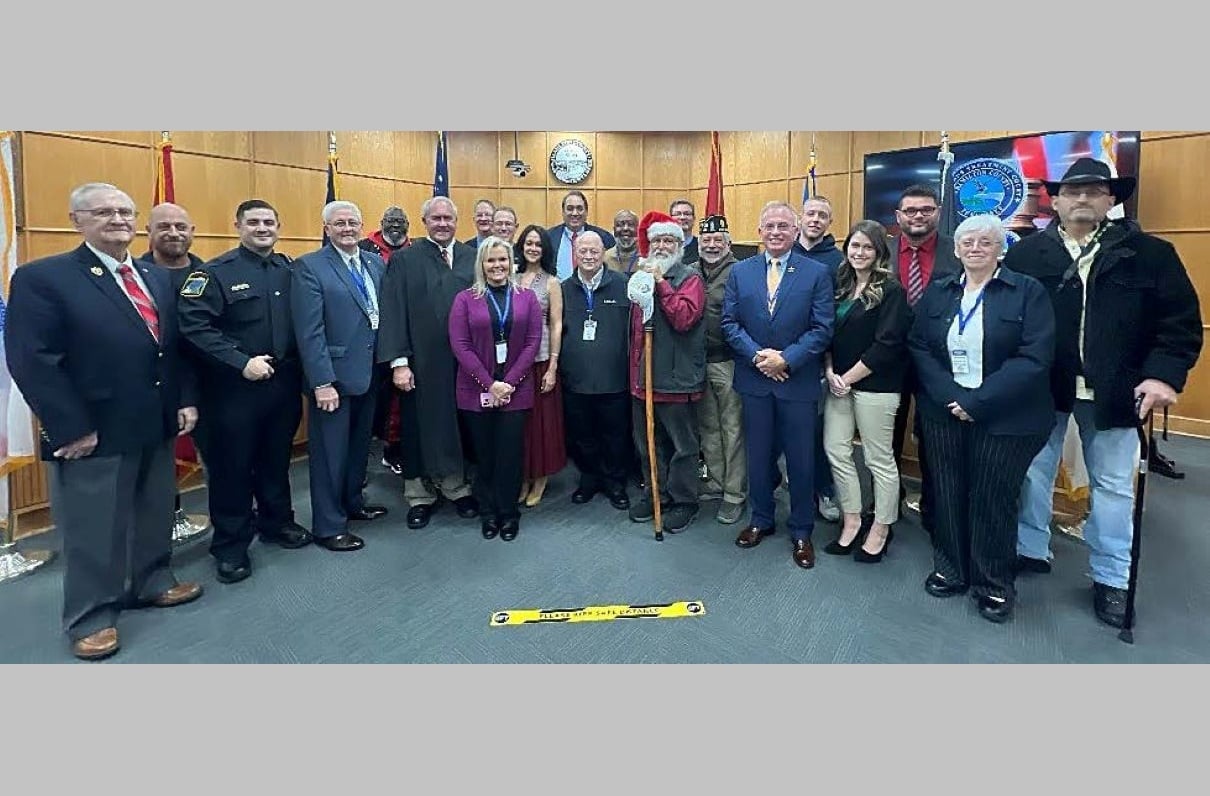
A Community Outreach Grant from MOAA Charities awarded to the Chattanooga (Tenn.) Chapter is supporting veterans navigating the justice system and recovery process.
The funds provide transportation, food, temporary housing, rent assistance, utilities, furniture, and gift cards for essential personal needs to veterans in the Hamilton County Veterans Treatment Court, a program designed to identify justice-involved veterans and connect them with the services and structure they need to reclaim their lives. Without this assistance from the chapter, recovery for some veterans would be nearly impossible.
Prior to November 2024, veterans involved in the Hamilton County, Tenn., judicial system had no dedicated avenue for specialized support.
“The veterans treatment court became a reality through the persistence and leadership of Criminal Court Judge Boyd Patterson and General Sessions Court Judge Garry Starnes,” said Lt. Col. Ray Mitchell, USA (Ret), chapter president. “Their commitment ensured that veterans are now identified early in the judicial process and prioritized for treatment over incarceration when appropriate.”
[APPLY FOR A GRANT: MOAA Charities is accepting applications for its 2026 Community Outreach Grant program until Feb. 28.]
Once admitted, veterans participate in either a 12- or 18-month intensive program. The court is intentionally structured to address the full spectrum of challenges facing justice-involved veterans. A cornerstone of the program is the VA health care system. Health care providers and coordinators attend weekly court sessions, allowing veterans immediate access to care —bypassing long wait times — for substance abuse counseling, mental health services, and medical treatment.
In addition, a veterans service officer is present at each court session to ensure participants receive appropriate disability evaluations and access to all earned benefits. Local government and nonprofit partners assist with housing, food security, and other essential needs when required.
One of the most critical elements of the veterans treatment court is its mentor program, in which the Chattanooga Chapter has played a significant role. Eight veteran mentors — including Mitchell and three other chapter members — serve as peer supporters, individuals who understand military culture, combat stress, and the difficult transition to civilian life. These mentors work closely with participants to encourage treatment compliance, sobriety, law-abiding behavior, and successful reintegration into society. They act not only as guides but as trusted confidants at a time when many veterans feel alone. Another chapter member is one of the court’s two mentor coordinators.
[GET INVOLVED: Find a MOAA Chapter | MOAA Virtual Chapters]
All mentors have completed extensive training, including a three-day Department of Justice Veterans Treatment Court Foundational Workshop, said Mitchell, who shared the story of a veteran impacted by the court and the chapter’s support through grant funds:
A veteran in his early 50s had dropped out of school in the eighth grade and spent most of his adult life involved in drug use and trafficking. His arrest record dated back to 1999. In July 2025, another arrest likely would have resulted in a lengthy prison sentence. Acknowledging that his life had to change, he was given the opportunity to enter the newly established veterans treatment court and enroll in a VA addiction treatment program.
While incarcerated, however, he had fallen behind on rent, utilities, vehicle payments, and insurance. With no income and no safety net, returning to drug trafficking would have been his only means of survival.
“The MOAA grant assistance prevented that outcome,” said Mitchell. “By stabilizing his basic living needs, the grant allowed him to stay focused on recovery. Several months into the program, he has made significant progress and continues moving forward with his life.”
He added that as is the case with all successful programs, the veterans treatment court requires many elements to come together at exactly the right time.
“The MOAA Community Outreach Grant arrived at a moment when it could make the greatest difference,” Mitchell said. “For veterans entering the justice system, this is often the lowest point of their lives — job loss, fractured families, financial crisis, and homelessness are common realities. By easing even part of that burden, MOAA’s support removes critical obstacles to recovery. This grant did more than assist veterans — it changed lives, restored hope, and in at least one case, quite literally saved a life.”
Want to Help Servicemembers in Your Community?
Learn how you can make a difference with your local chapter.