(This article originally appeared in the December 2026 issue of Military Officer magazine.)
The largest Smithsonian museum is about to get bigger.
The National Air and Space Museum is planning a 44,000-square-foot expansion of its Chantilly, Va.-based wing. The new area at the Steven F. Udvar-Hazy Center is set to open in 2028 to coincide with the location’s 25th anniversary.
Announced late last year, the expansion is expected to cost $60 million, with private donations covering the cost. Monetary contributions have so far come from the center’s namesake, Steven Udvar-Hazy, and his wife, Christine; Charles and Lisa Simonyi; Sarah and Ross Perot Jr.; the Thomas W. Haas Foundation; and Air Lease Corp.
“The story of aerospace continues to unfold. It’s not something that’s over, and so to tell these stories in authentic and impactful ways, we need space to do so,” said Chris Browne, a former naval aviator and a Life member of MOAA who serves as the museum’s John and Adrian Mars director.
“This is entirely funded by the generosity of philanthropy of those who believe not just in our ability and the work we do, but more than that, they’re committed to the mission in terms of the storytelling and bringing to the public these timeless stories and these peerless artifacts that … are really very much an American story,” Browne told Military Officer during an interview at the center.
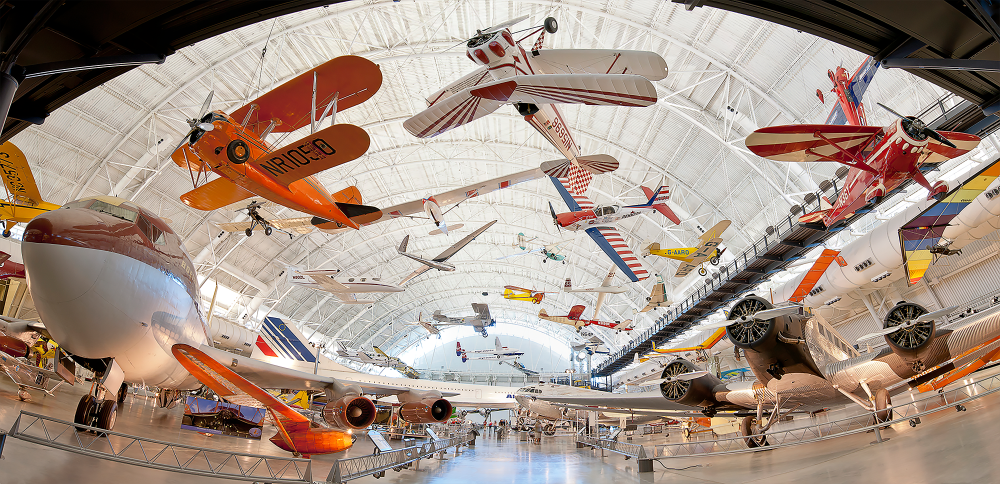
The Udvar-Hazy Center collection ranges from the early ages of flight through spacecraft and modern prototypes. (Photo courtesy of the Smithsonian)
According to a Smithsonian press release announcing the expansion, the center is one of the top-20 most-visited museums in North America, hosting more than a million visitors in 2025. The expansion will add about 20% more available space for those visitors while allowing curators to display more artifacts.
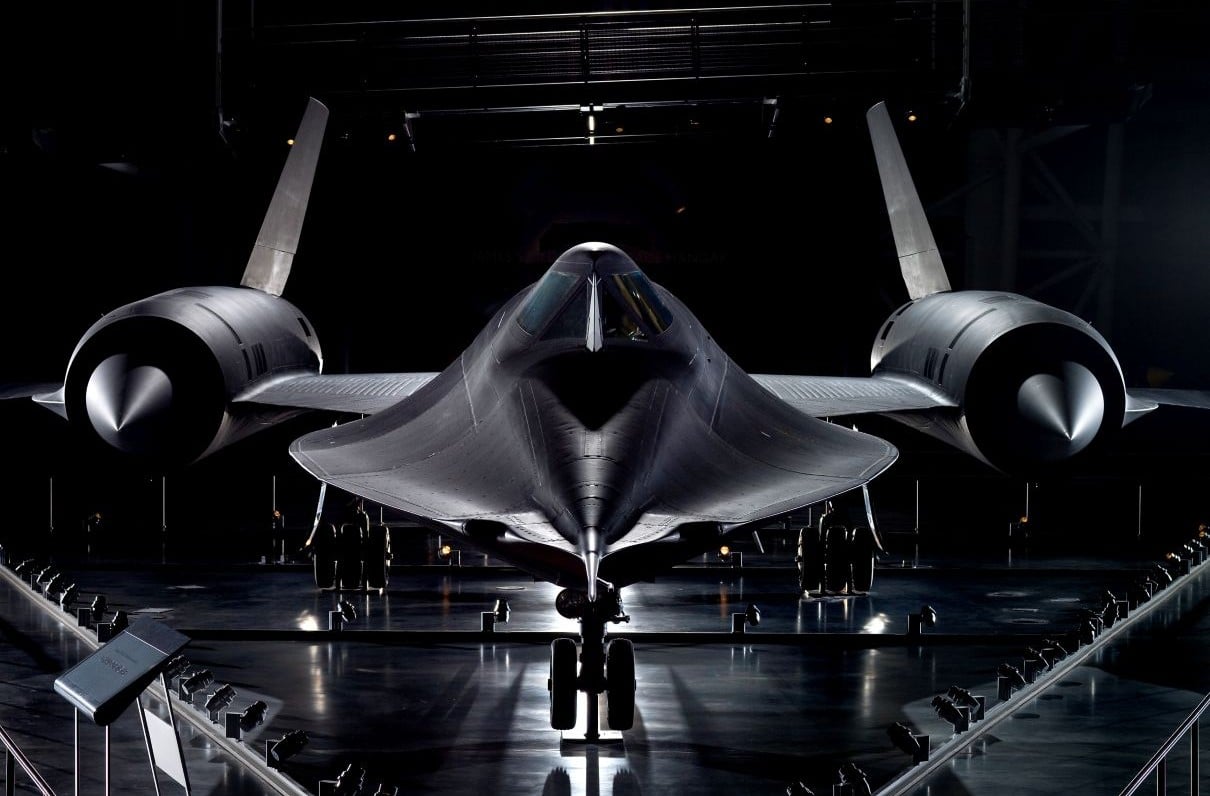
In addition to spaceflight and commercial aviation history, current military exhibits include World War II aircraft, such as the Enola Gay, the B-29 Superfortress that dropped the atomic bomb on Hiroshima; Cold War stalwarts, namely an SR-71 Blackbird reconnaissance plane; and newer acquisitions like an X-35B, a prototype of the F-35 Joint Strike Fighter.
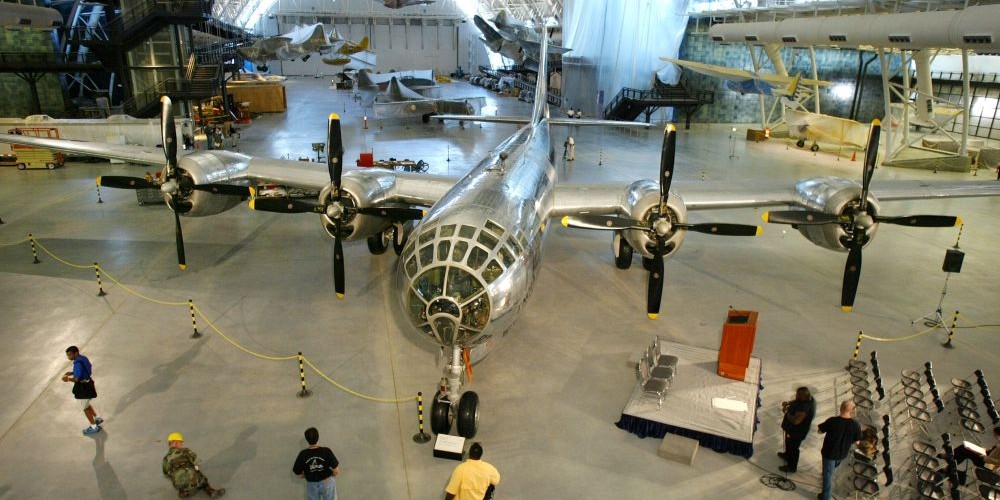
The Enola Gay dropped an atomic bomb on Hiroshima, Japan, in August 1945. (Photo by Mark Wilson/Getty Images)
The museum has about 500 aircraft and spacecraft in its collection, but the center can currently hold only about 200 of those, according to Jeremy Kinney, the museum’s associate director of research and curatorial affairs.
“The one challenge the Air and Space Museum has always had is space,” Kinney said. “The extra space allows us to tell more stories but also to tell more defined stories.”
And it’s not just aircraft. The museum’s collection includes everything from large space vehicles, engines, rockets, and flight components to uniforms, equipment, and historical personal effects. The center even has specialized storage for paintings and other aviation-themed artwork.
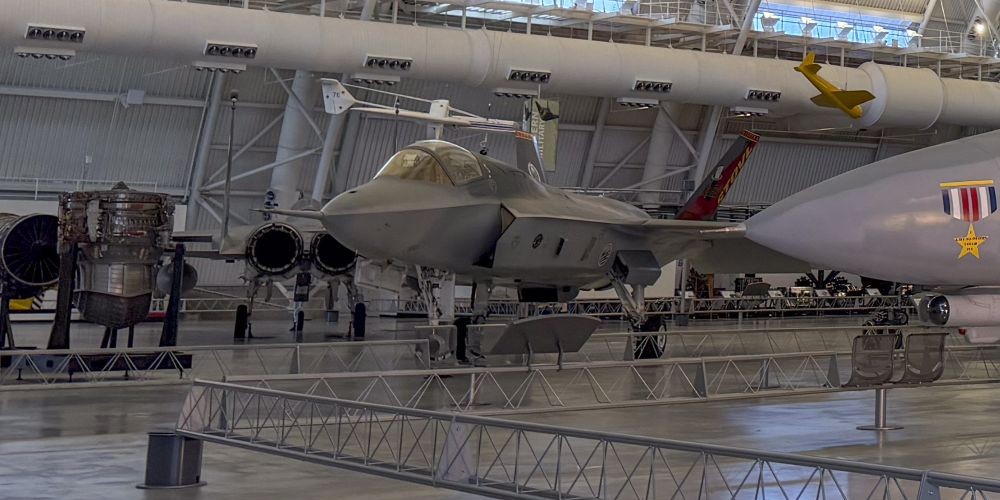
The Udvar-Hazy Center collection includes an X-35B, a prototype of the F-35 Lightning II. (Photo by Mike Morones/MOAA)
Growing Since the ’90s
The National Air and Space Museum opened to the public on July 1, 1976, but it was only a year later that it became apparent another location was necessary. Museum leaders expressed a preference for large buildings near a regional airport, since newer aircraft and potential acquisitions were generally much larger than historical variants and difficult to transport via road.
By 1980, potential sites were under review, and it appeared a location near the Washington Dulles International Airport made the most sense. In 1993, Sen. John Warner (R-Va.) and Rep. Norman Mineta (D-Calif.) introduced bills in their respective chambers authorizing the Smithsonian to plan and design an annex at the airport, appropriating $8 million for the effort. President Bill Clinton signed the bill into law that summer.
Six years later, Steven F. Udvar-Hazy, a Hungarian immigrant and co-founder of an aircraft leasing corporation, donated $65 million to finance the first phase of construction, which began in 2001.
On March 7, 2003, the first artifact, a Piper J-3 Cub, was moved into the newly built hangar, and the Udvar-Hazy Center opened to the public on Dec. 15, 2003 — around the 100th anniversary of the Wright brothers’ first flight.
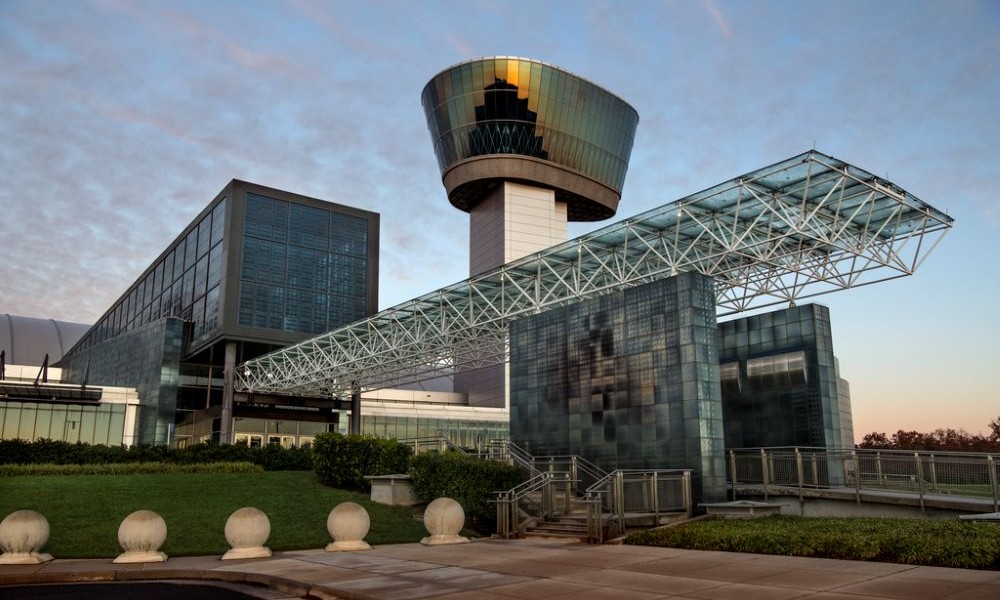
The Udvar-Hazy Center has about 500 aircraft and spacecraft in its collection but has the space to display only about 200 at a time. (Photo by Jim Preston/Smithsonian)
In the ensuing decades, the center has undergone expansions, notably with the addition of world-class collection spaces, artifact conservation areas, and a hangar where visitors can see aircraft and spacecraft in different stages of restoration.
Today’s expansion work on the northern end of the center’s hangar will be a four-bay, 200-foot extension that will add about 44,000 square feet of exhibit space, according to a recent report by the museum.
“The additional 20% of exhibit space will allow us to maximize something that we’ve been doing since the facility opened, which is to house a dynamic collection, bringing new objects, whether they’re flown in, trucked in, and then we can put them on display,” Kinney said. “So when a family comes to visit the Udvar-Hazy Center, there’s always something new every few months.”
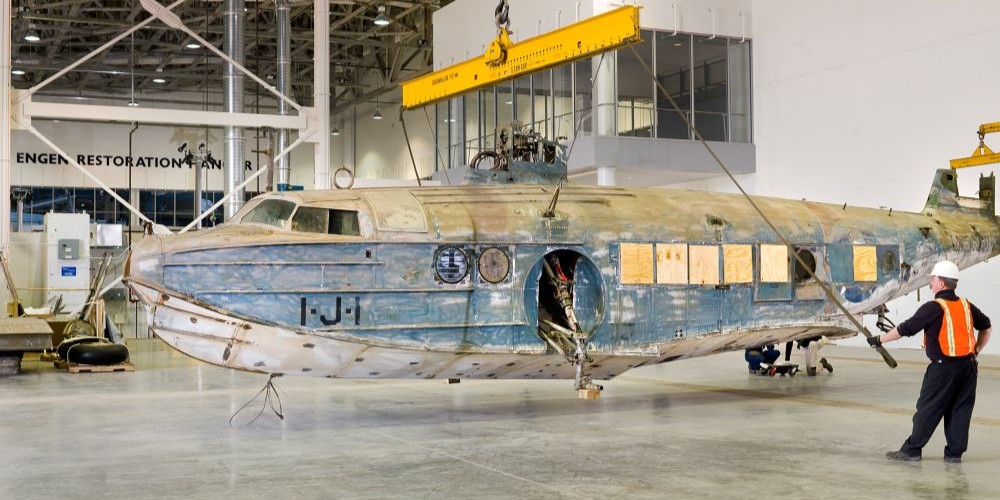
A JRS-1 amphibious seaplane arrives at the Udvar-Hazy Center’s restoration hangar in 2011. (Photo by Dane Penland/Smithsonian)
Upcoming Events
For Browne, one of the highlights of the expansion is being able to tell a more detailed story of World War II aviation.
“It’s the largest air and space collection in the world, and in particular, we have a remarkable collection of World War II aircraft of both the Allies and the Axis powers. And notably [among] those aircraft, we have on display here currently the Enola Gay,” he said. “But we also have in the collection — undergoing renovation — aircraft that span the entirety of World War II, starting on Dec. 7, [1941].”
On the floor of the Mary Baker Engen Restoration Hangar, used by staff to reconstruct, fix, and preserve different types of aircraft and artifacts, sits a Sikorsky JRS-1 amphibious seaplane, identified in a 2017 Smithsonian press release as one of the three remaining aircraft flown during the attack on Pearl Harbor and the only one in the Smithsonian’s collection.
Also undergoing restoration is the Flak-Bait, the nickname for the Martin B-26B-25-MA Marauder bomber that holds the World War II record for surviving 202 combat missions. Nearby sits Shoo Shoo Shoo Baby, a B-17 Flying Fortress that was originally on display at the National Museum of the U.S. Air Force in Dayton, Ohio. The heavy bomber was dismantled and transported to the Udvar-Hazy Center, where it will be reassembled and displayed once the expansion is complete.
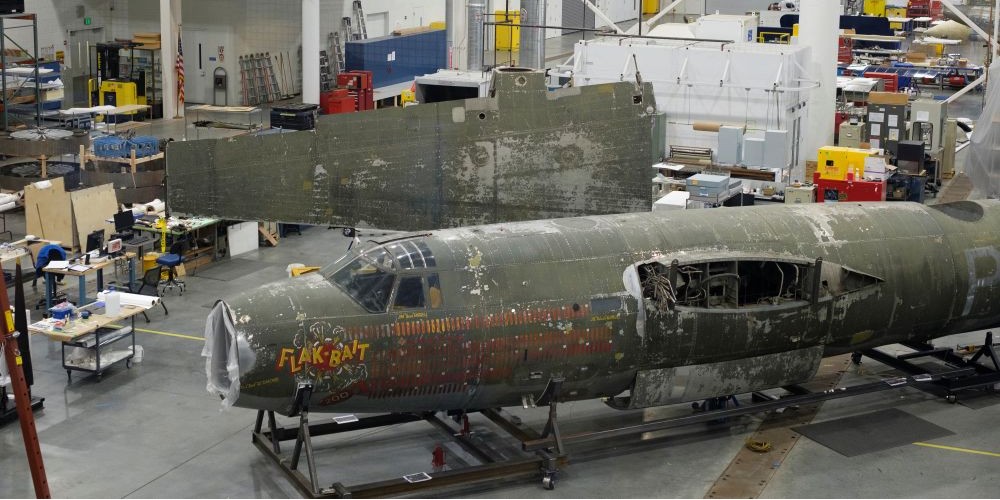
The Flak-Bait, a U.S. Army Air Forces bomber, undergoes restoration at the museum in September. (Photo by Mike Morones/MOAA)
“So [with] these four signature aircraft, three of which are not on the floor display now, we’ll be able to build out the World War II aviation collection and add it to the many aircraft that are on display now to really complete that storytelling. We can’t do that without an expanded facility,” Browne said.
As of this writing, renovation at the D.C. location that began in 2018 is nearly complete, coinciding with the 50th anniversary of its opening and the 250th anniversary of the nation’s founding. Efforts have included a redesign of all 20 galleries, a refacing of the exterior, and the replacement of outdated mechanical systems in the building. Work is expected to wrap up by the end of the year.
The recently renovated galleries are home to new artifacts, including the Blue Origin-made New Shepard rocket and a World War II-era Soviet plane, the Ilyushin Il-2 Shturmovik, as well as new interactive and hands-on exhibits. The At Home in Space exhibit details the past 40-plus years of humans living and working in space.
And in a departure from the typical aerospace artifacts, the Art of Air and Space: Interpretations of Flight exhibit is dedicated to the intersection of flight and the arts, displaying some of the 7,000 works held by the museum.
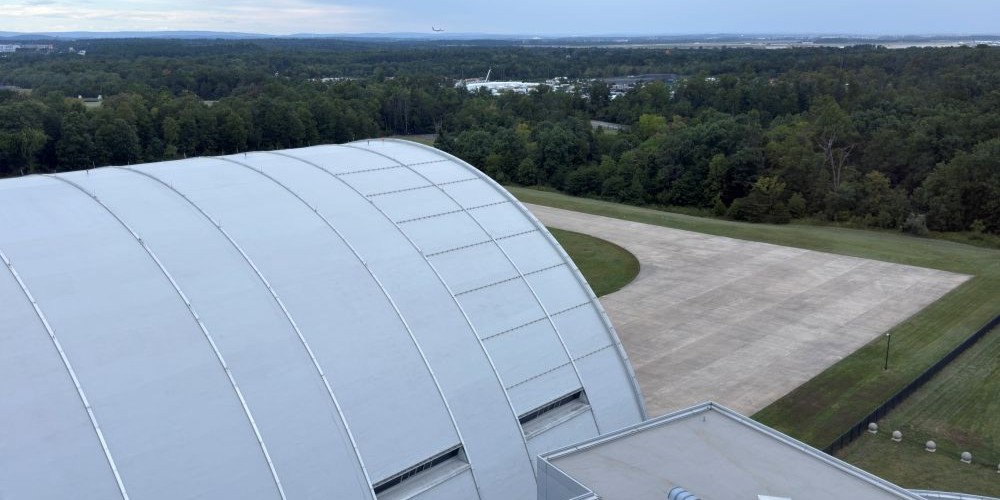
The expansion project will extend the hangar on the north end of the museum. (Photo by Mike Morones/MOAA)
Browne said work at the Udvar-Hazy Center is not as complex or prolonged as the renovation downtown, and it should not require temporary closures or otherwise affect visitors’ experiences, unlike the D.C. location.
“This is taking an existing structure and building onto it — it’s not renovating the interior,” he explained. “Anytime we can expand and further develop our ability to tell these incredible stories — stories that speak to our nation’s DNA — is just a real privilege and honor.”
Military Officer Magazine
Discover more interesting stories in MOAA’s award-winning magazine.