
(This article by Capt. M.J. Hessert, USN, originally appeared in the April 2026 issue of Military Officer, a magazine available to all MOAA Premium and Life members who can log in to access our digital version and archive. Basic members can save on a membership upgrade and access the magazine.)
Marlon Harris doesn’t want to drive a car to the gym. For him, nothing beats the convenience and efficiency of hopping on his bike and rolling straight out the door.
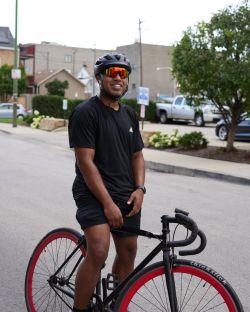 After two combat deployments to Iraq, Harris (pictured) was honorably discharged from the Army in 2009 as a specialist, but it wasn’t until 2023 that cycling became a serious pursuit. Years of convoy missions, patrol operations, and the daily grind of Army life had left him with aches and pains that made high-impact sports a struggle. Cycling, though, felt manageable and comfortable, and he quickly noticed a boost to both his physical and mental health.
Over time, in his role as Chicago program manager for Merging Vets & Players (MVP), Harris recruited fellow veterans to join in. The nonprofit, which serves veterans through exercise programs and peer support, holds group rides along Lake Michigan. Harris tells veterans just getting started to “take it easy and slowly build mileage through consistency.”
[TOTALFORCE+ SPEAKER SPOTLIGHT: MVP’s Nate Boyer on Tackling Transition]
Cycling is great for your health, the environment, and your sense of community. Whether you ride solo or join a pack, whether you bike purely for fitness or to commute, you’re adding salubrious physical activity to your day. Commuting by bike — for work, errands, and social events — is a clever way to blend routine chores with real physical activity.
Despite cycling’s many upsides, there are barriers to getting started. From preparation, getting the proper gear, and figuring out the logistics of getting to where you want to go, it can feel daunting.
The good news is, anybody can do it.
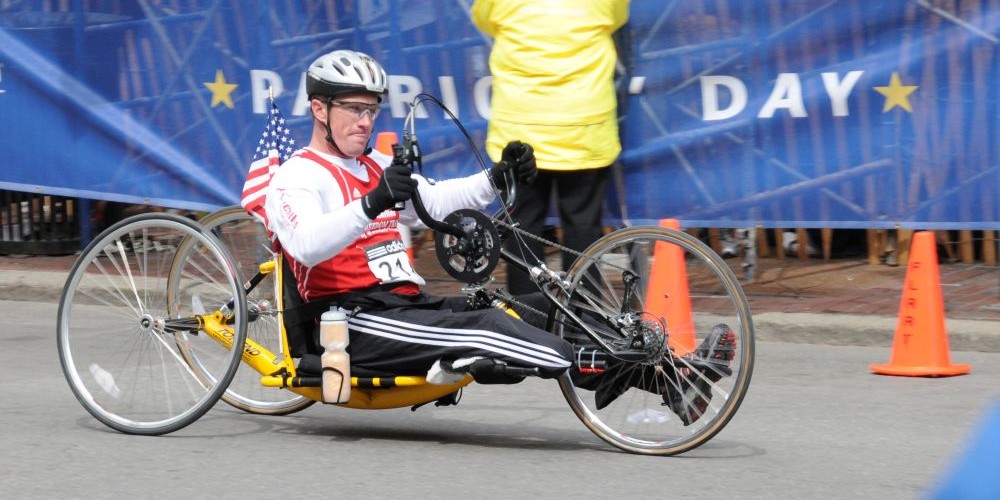
Then-Maj. Kent Solheim, USA, rides his hand bike during the 2009 Boston Marathon. (Photo by Staff Sgt. Curt Squires/Army)
Getting Started
You don’t need a pricey bike to get started. Plenty of serviceable used bikes can be found online for purchase or borrowed from a neighbor.
If you’re buying used, get a tuneup from a professional bike mechanic. Hybrid, gravel, road, or mountain bikes all make solid first choices, and the sheer variety means there’s a bike out there for every rider.
Most bikes nowadays have at least several gears, accessed by a gear shift lever on the handlebars. Those high and low gears are desirable when tackling hills, battling winds, or carrying cargo.
Local bike shops, online reviews, and cycling organizations can point you toward a bike that will fit your needs. Some states even offer tax incentives for using electric bikes. E-bikes in particular are a great option for steep hills, long distances, or for keeping up with a faster group. Swap out a few car trips for bike rides, and you’ll save on gas and car maintenance, too.
If you have mobility or balance challenges, or just want something different, consider recumbent bikes, tandems, or trikes. There are adaptive cycling groups and events, like the Wounded Warrior Project’s Soldier Ride, a four-day cycling experience that brings together people of all abilities. The organization provides the bikes and expertise to get everyone rolling, no matter the physical limitation, so participants can experience the camaraderie and sense of accomplishment that come from riding.
Retired Navy helicopter pilot Cmdr. Mark McManus has completed two Soldier Ride events and is an avid cyclist. In his experience, riding in a group is like being in a flying squadron — both for the adrenaline rush and the teamwork. He joins cycling groups because it provides purpose, fitness, and socialization.
Your own group can be made up of friends, other veterans, and family members. If you want to bring kids along, depending on their size, they can ride in a child’s bike seat, tag along in a towed trailer, or pulled on a tag-along bike. The latter adds a third wheel and extra seat onto the adult bike.
When kids ride their own balance bikes, they learn self-reliance and the rules of the road while gaining independence and life skills. Older adults who might need help keeping up with the youngsters can use a pedal assist e-bike.
Grabbing Gear
Besides the bike, you’ll need some essential gear. A helmet and gloves are must-haves and won’t break the bank. Shorts, T-shirts, and sneakers work fine for everyday rides, but clothing made specifically for cycling goes a long way in terms of comfort if you stick with it.
Clipless pedals, which lock your shoes to the bike, are best saved for intermediate or advanced riders; beginners should skip them. Riding a bike is cooler than running or walking — literally — thanks to the windchill. Have a jacket at the ready, and if you decide to ride through bad weather, remember that wet roads are slick and that coming to a full stop will take longer.
If you get stuck, whether because of weather or a flat tire, some ride-hailing services can take you and your bike. Some cities offer “guaranteed ride home” programs, reimbursing bike commuters who get into a bind, so look into registration. Eventually, you’ll want to learn how to fix your own flats as well as carry a spare tube and small repair kit.
Traffic safety is a real concern on the road. For safer cycling, choose bike-friendly routes, wear bright and reflective gear, and use bike lights and mirrors. The League of American Bicyclists offers safety courses for every age and skill level.
Always ride defensively, and try to anticipate issues before they happen. Follow the rules of the road just like you would if driving a car. Riding with a group is usually safer, so bring a battle buddy when possible.
You’ll likely have to haul stuff around when commuting; cargo bikes could be the solution. These bicycles make it easy to shuttle kids, groceries, or just about anything. You can outfit a regular bike with a rack, panniers, or a frame bag to lug your load. A backpack can also work. For inspiration, check out “Carry Shit Olympics” on Instagram, which features images of cyclists carrying a variety of people, animals, and objects. If you didn’t think you could carry three toilets on a bicycle, think again!
Good to Go
Many veterans’ groups host rides and events to build fellowship, confidence, and fitness. MVP, for example, facilitates a connection for veterans and former professional athletes by providing a platform to socialize, work together, and build relationships.
The organization has found that after leaving the military or elite sports and taking off the uniform, some people lose their fitness routine, identity, self-confidence, and esprit de corps. Through group activities, goal setting, and building rapport with others, that trend can be reversed. MVP runs programs in 10 cities, with group fitness (including cycling) as a big draw.
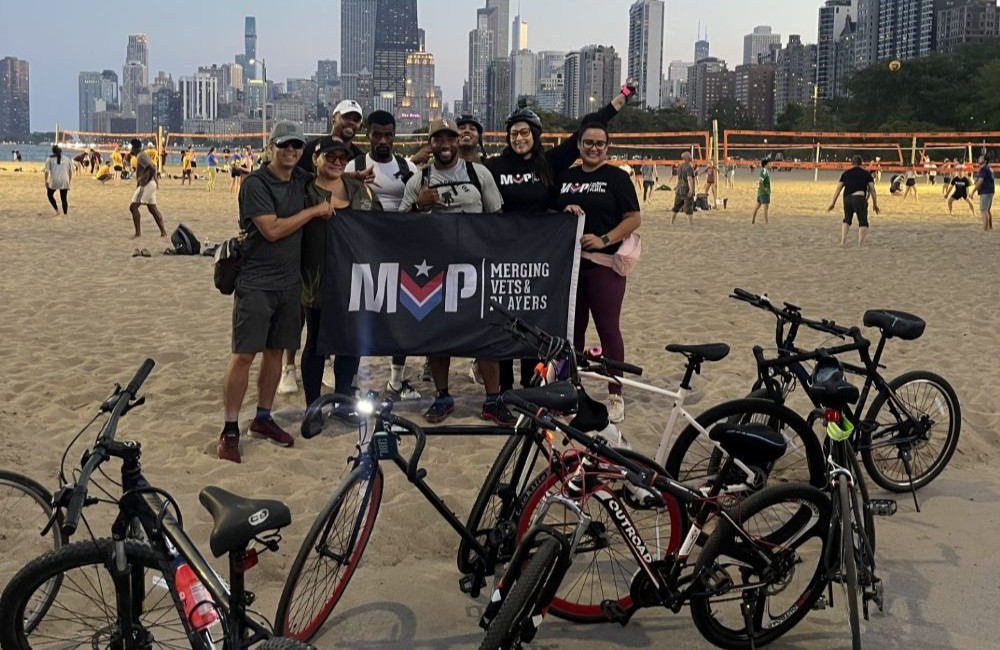
Merging Vets & Players organizes regular group rides in Chicago. (Photo courtesy of Marlon Harris)
Team Red, White & Blue is a 300,000-strong nationwide community focused on health and wellness for veterans. Its events range from local rides around the country to epic bikepacking trips in Alaska and Vermont (like backpacking, but with a bike). The nonprofit’s executive director, Col. Michael Sullivan, USA (Ret), considers cycling a game-changer.
“It gives veterans a low-impact way to manage service-connected conditions and improve their fitness across the board — cardiovascular, muscular, flexibility, and more,” he said. “Beyond the physical, it’s great for mental health. The focused rhythm of the ride helps achieve a ‘flow state’ that reduces stress and boosts well-being. It’s an awesome way for veterans to get moving right now.”
For those who can’t or prefer not to ride outside, the organization hosts virtual rides on its app.
If you’re cycling outdoors for exercise, design your ride around bike paths or quieter streets. If you drive around town thinking, “there’s no way I’d bike here,” trust that instinct. The best bike routes are not usually the same as the best driving routes. Check your navigation app for a bike route mode, which covers hidden gems you wouldn’t notice when driving. Tap into local know-how by chatting up other cyclists or doing some online digging.
If you’re considering a bike commute, test a few options on a weekend. Some public transit services allow you to bring your bike along — helpful if you need to avoid risky stretches of road.
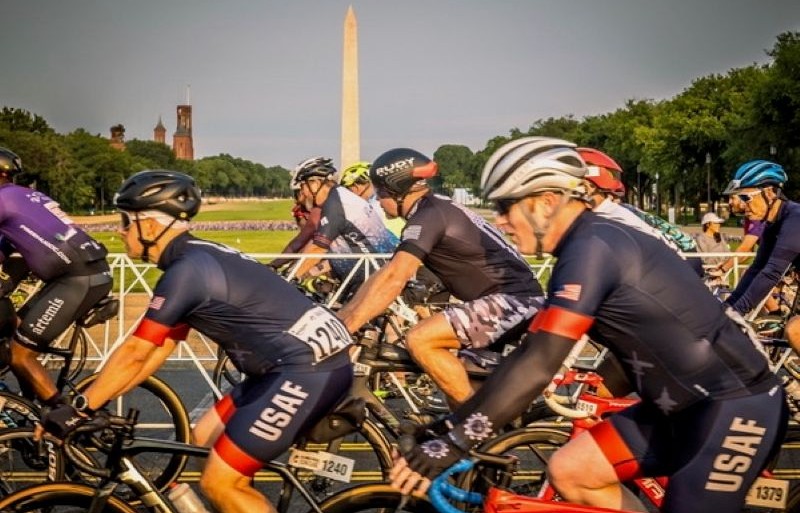
Cyclists travel by the National Mall during the Armed Forces Cycling Classic. (Courtesy photo)
Around the nation’s capital, cyclists can sign up for annual events like the Armed Forces Cycling Classic (AFCC) or Memorial to Memorial (M2M) Ride. AFCC offers both competitive and casual rides for all ages and abilities, and veterans can represent their service branch. The event’s “Challenge Ride” is a 12.5-mile, car-free loop. Die-hard cyclists can ride alongside the Air Force Cycling Team on the M2M Ride — about 350 miles from the Wright Brothers National Memorial in North Carolina to the Air Force Memorial in Arlington, Va.
If you’re itching to get off the beaten path, try mountain biking. It asks for a bit more technical skill and balance, but the perks are huge: closer contact with nature, fresher air, and minimal traffic. All cycling improves balance and reaction time, but mountain biking takes it to another level.
The Dirt Therapy Project, part of Veterans Future Foundation, helps veterans heal and connect through mountain biking. Launched in 2018 by Jonathan Hagerman, a former Marine who deployed to Afghanistan, The Dirt Therapy Project now has 16 chapters nationwide running regular rides and multiday trips. Hagerman said the focus required for mountain biking is therapy in itself.
“It’s just you, the bike, and the trail — everything else fades away,” he said, noting mountain biking won’t replicate the rush of combat but that the adrenaline will get you close.
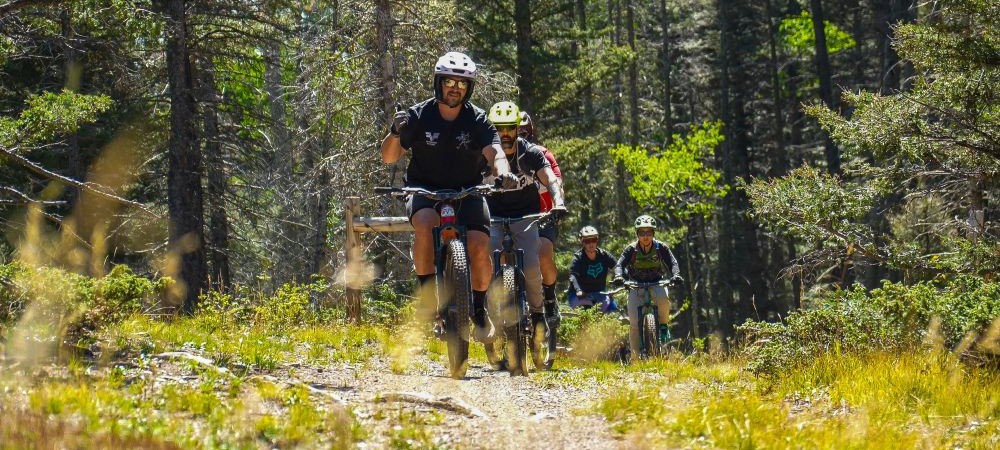
Launched in 2018, The Dirt Therapy Project has 16 chapters nationwide. (Courtesy photo)
Unbeatable Benefits
Cycling offers a long list of health perks, according to studies published by the federal government’s National Library of Medicine, including lower risk of heart disease, diabetes, obesity, and early death; better fitness; more calories burned; and tougher muscles. It’s all attainable when you “get in the saddle,” as cyclists like to say. Plus, biking has been shown to boost mental health, increase life satisfaction and sense of freedom, and cut stress.
Less obvious benefits include sharper balance and coordination, steadier blood sugar, stronger circadian rhythms, and deeper sleep. If you’re out in nature or riding with a group, you’ll see even more benefits than riding alone on city streets.
Your community improves as a result of your cycling, too. You’ll meet new people, see your city with fresh eyes, and think more creatively. Cleaner air, quieter streets, less congestion — these benefits you’ll notice right away. Citywide shifts, like new bike-friendly infrastructure, take longer but start with people like you choosing to ride.
If you swap car trips for bike rides, you’ll save serious cash on car-related expenses and probably health care over time.
Cycling’s benefits are many, and you won’t truly appreciate them until you experience the ride yourself, ideally with a group. Don’t demand perfection the first time out; focus on having fun. After several rides, you will have ironed out most of the kinks and begin feeling a true sense of accomplishment.
Capt. M.J. Hessert, USN, is an emergency physician and aerospace medicine physician in San Diego.
Military Officer Magazine
Discover more interesting stories in MOAA's award-winning magazine.