
(This article by Lt. Col. Patrick J. Chaisson, USA (Ret), originally appeared in the May 2026 issue of Military Officer, a magazine available to all MOAA Premium and Life members who can log in to access our digital version and archive. Basic members can save on a membership upgrade and access the magazine.)
The Boeing Model 299 was a marvel of aviation technology. Designed in 1934 and rolled out one year later, this experimental aircraft dwarfed every military and civilian flying machine then in use. Sporting a wingspan of over 100 feet, a length of 70 feet, and a height of 15 feet, the all-metal bomber weighed in at 15 tons.
Four 750-horsepower, Pratt & Whitney-made radial engines powered the Model 299 to a top speed exceeding 200 mph and gave it an unprecedented range of approximately 2,000 miles. The aircraft could carry about 2 tons of demolition bombs.
Boeing’s engineers incorporated into their new design many innovative features, including a system of gust locks to prevent its control surfaces from moving. These devices kept high winds from damaging the aircraft while it was parked.
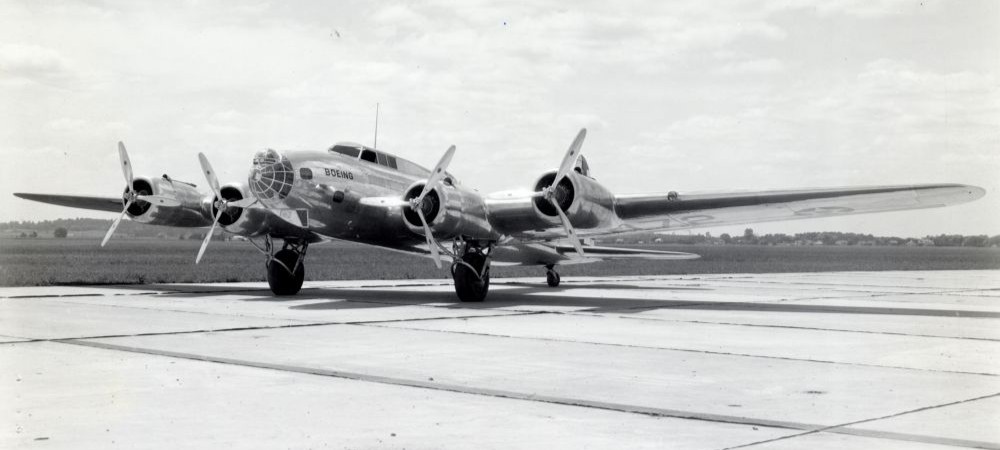
The Model 299 made its first flight in July 1935. (Air Force photo)
[RELATED: Wings of World War II]
The U.S. Army Air Corps (a predecessor of today’s U.S. Air Force) wanted this prototype to enter a competition against two smaller bombers under development by other manufacturers. The winner would receive a lucrative military contract, but Air Corps officials first needed to ensure all three planes met their rigid specifications.
A Fatal Test
Starting in August 1935, military pilots at Wright Field (now Wright-Patterson AFB) in Ohio began testing the Model 299.
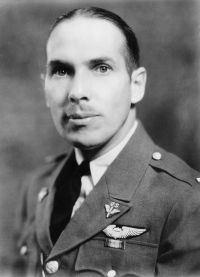 One of those aviators was Maj. Ployer “Pete” Hill, pictured, chief of the Flying Branch under the Air Corps’ Materiel Division. Lt. Col. Douglas Hill, USAF (Ret), a Life member of MOAA and Maj. Hill’s grandson, told Military Officer his grandfather was “somewhat of an adventurer who grew up dreaming to fly.”
The elder Hill won his wings in 1918 but never saw combat in World War I. Instead, he served stateside as an instructor. By 1935, he had become one of the Air Corps’ most experienced test pilots.
“He flew 66 different aircraft” while assigned to Wright Field, according to the grandson, “among them the Boeing P-12, Bellanca C-27C, Curtiss P-6, Douglas DC-2/XC-32, Consolidated A-11, Martin B-10, and, last but not least, the Boeing 299.”
[MORE FROM MOAA: Reenacting 20th Century History]
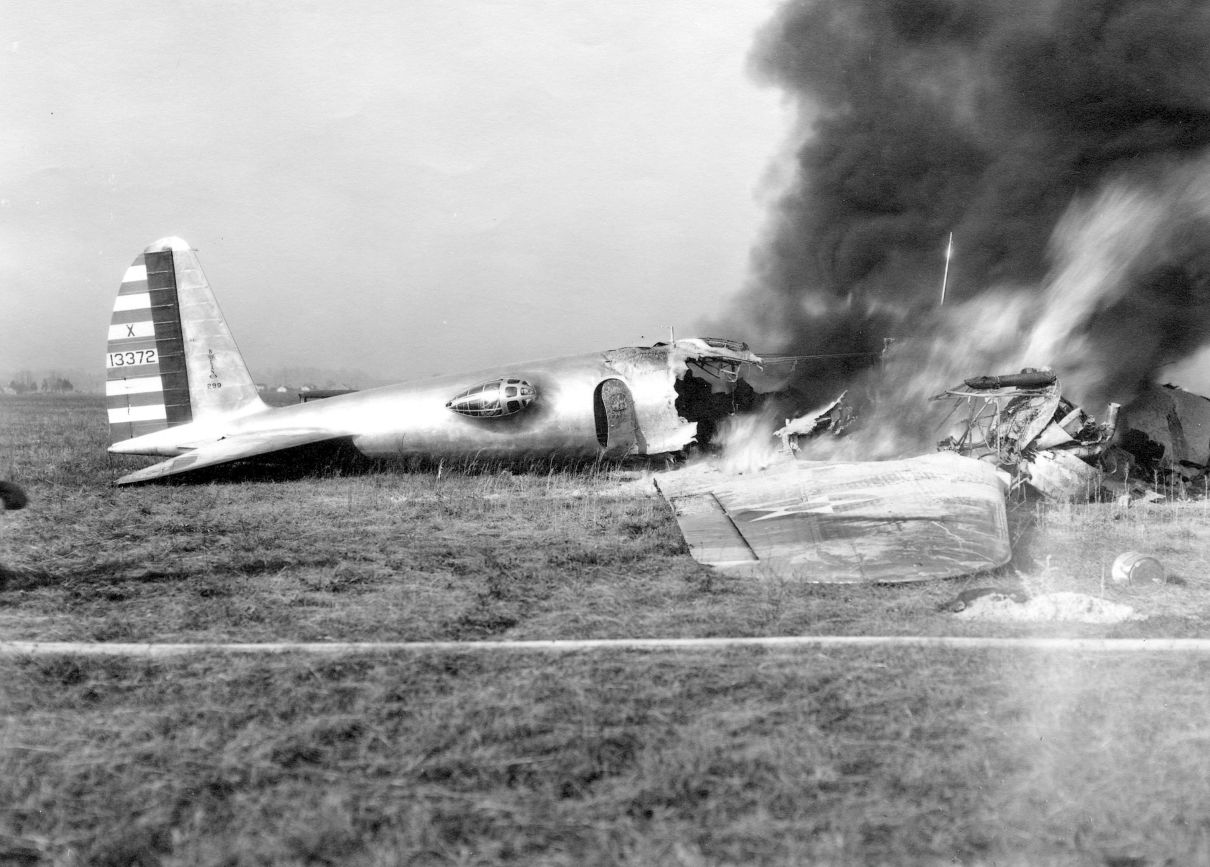
On Oct. 30, 1935, Maj. Hill and a crew of four airmen took the Model 299 aloft for a routine flight over Wright Field. But after takeoff, the giant bomber stalled at an altitude of about 300 feet. Falling rapidly, it burst into flames on impact.
Hill and another flyer were fatally injured, while the other three men onboard walked away with minor injuries. The sophisticated Boeing, however, was destroyed.
The Air Corps immediately conducted an accident investigation, determining the aircraft’s crew forgot to release the gust locks installed to prevent wind damage to their plane’s flight control surfaces. The investigation board also recommended a solution to this problem — one that would forever change the culture of military, commercial, and private aviation.
Preflight Checklists
“The increasing complexity of aircraft challenged even the most well-developed piloting skills,” Douglas Lantry, a curator and historian at the National Museum of the U.S. Air Force, said in regard to the Model 299’s crash. “With so much to remember, pilots needed consistent, repeatable steps to be certain they flew safely every time.”
[FROM THE MUSEUM: Model 299 Crash]
The development of preflight checklists “became the foundation for all aviators’ ingrained safety instincts,” Lantry added. These protocols are now used worldwide whenever a pilot readies an aircraft for flight, regardless of size or complexity.
This checklist culture is one of many legacies Maj. Hill left to the aviation community. In late 1939, the Ogden Air Depot in Utah was renamed Hill Field to honor his achievements. Hill Field became Hill AFB in early 1948.
After the crash, Boeing redesigned its Model 299, which eventually became the iconic B-17 Flying Fortress heavy bomber that helped win World War II.
The Hill family name has remained closely associated with American military aviation. Maj. Hill’s son, also named Ployer, flew combat missions as a radar operator in the Northrop P-61 Black Widow aircraft during WWII, according to the grandson. He then served during the Korean War and in Vietnam as a logistics expert and aircraft navigator before retiring from the U.S. Air Force as a lieutenant colonel in 1974, the grandson added. Lt. Col. Hill died in 2008.
Douglas Hill represents his family’s third generation of noteworthy airmen. A 1972 graduate of the U.S. Air Force Academy, he flew Lockheed C-141 Starlifter transport aircraft for 19 years with the Air Force and Air Force Reserve. In civilian life, he became Airbus chief pilot for United Airlines before taking a safety inspector’s position with the Federal Aviation Administration.
Hill said that during his entire 43-year flying career he never failed to follow all checklists.
“I always have a slight grin on my face,” he said, “knowing that my grandfather caused — and I am the recipient of — a lesson learned that I use every time I settle into the cockpit.”
Lt. Col. Patrick J. Chaisson, USA (Ret), is a writer and historian in Scotia, N.Y.
Military Officer Magazine
Discover more interesting stories in MOAA’s award-winning magazine.