
By MOAA Staff
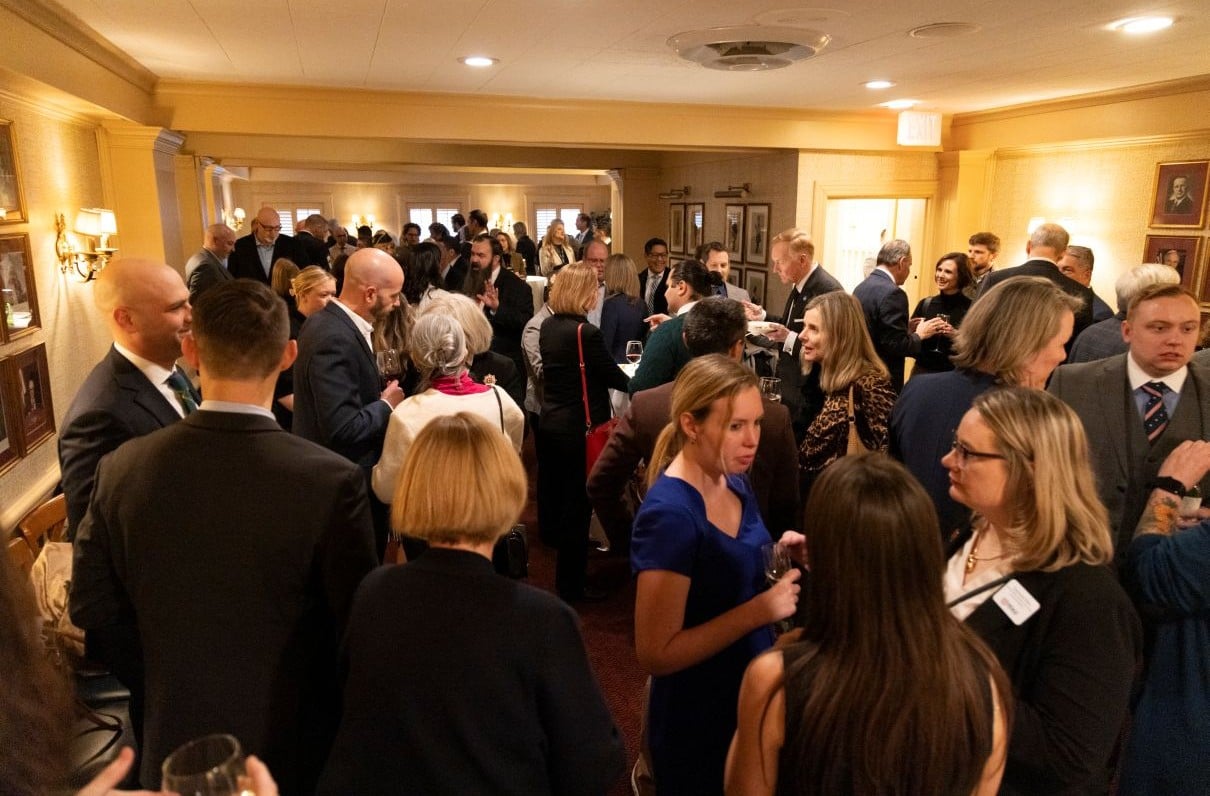
MOAA hosted members of Congress, executive branch officials, Hill staffers, and valued supporters Jan. 14 for a reception marking the start of the second session of the 119th Congress.
The event, held at The Monocle Restaurant on Capitol Hill, also served as an opportunity to share MOAA’s top legislative priorities for the upcoming year.
“Bringing stakeholders together on Capitol Hill fosters the collaboration required to move shared priorities forward,” said Maj. Gen. April Vogel, USAF (Ret), MOAA’s vice president of Government Relations. “This reception created space for constructive dialogue, strengthened relationships, and kept the focus where it belongs: on servicemembers, veterans, their families, and survivors.”
Every attendee also received a list of “MOAA’s New Year’s Resolutions for Congress.” These bills will serve as top focus areas for our association’s advocacy efforts in 2026.
Learn more about these bills, and how you can support MOAA’s work to pass them, below. Note: This is not an all-encompassing list of MOAA’s legislative efforts. For more, visit our Legislative Action Center.
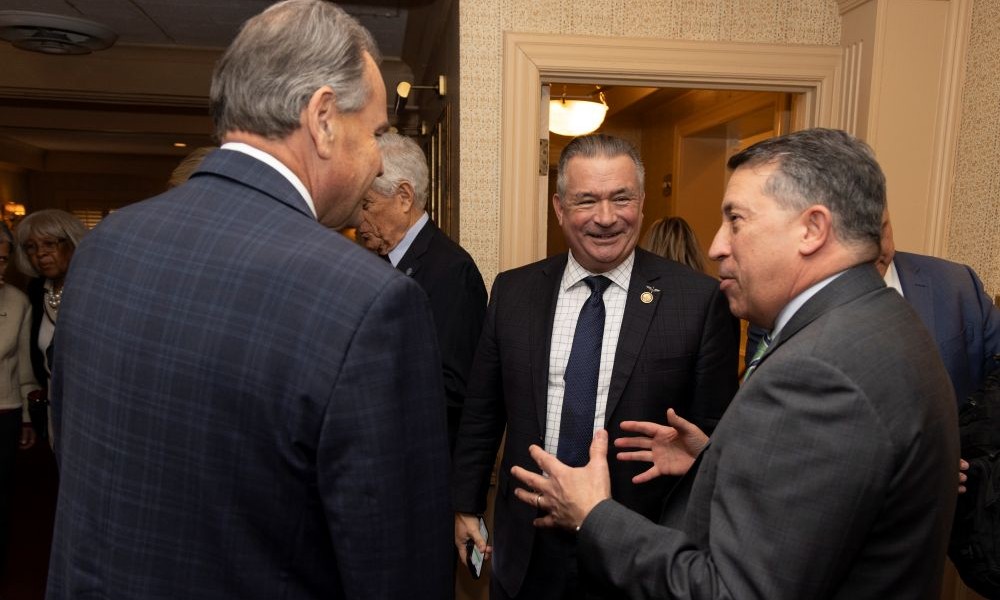
Rep. Don Bacon (R-Neb.), center, speaks with MOAA President and CEO Lt. Gen. Brian T. Kelly, USAF (Ret), during a Jan. 14 reception in Washington, D.C.
Shutdown Fairness Act (S. 3168)
What it does: Allows the Pentagon and the Department of Homeland Security to continue paying servicemembers during any future funding lapse
Who it supports: Currently serving, including National Guard and Reserve members.
MOAA’s take: The best solution remains a timely appropriations process. The bills does NOT include members of the U.S. Public Health Service Commissioned Corps or the NOAA Commissioned Corps; MOAA continues to advocate for their inclusion.
How you can help: Click here and send a letter to your lawmakers now.
Improve and Enhance the Work Opportunity Tax Credit Act (H.R. 6231 | S. 3265)
What it does: Modernizes the Work Opportunity Tax Credit (WOTC), a nonrefundable tax credit employers can take for hiring target group members during the employee’s first year on the job, by increasing the amount of the credit and adding military spouses as a target group The program is intended to reduce the unemployment rate of “job seekers who have consistently faced barriers to employment” by incentivizing employers with a tax credit, according to the Labor Department.
Who it supports: Unemployed veterans and military spouses.
MOAA’s take: MOAA has long championed this program, and the addition of military spouses. Continuing to offer this tax credit to employers while enhancing the program will ensure the veteran unemployment rate remains low. Expanding this benefit to military spouses improves financial stability for the currently serving military family, increasing military readiness and retention rates.
How you can help: Click here and send a letter to your lawmakers now.
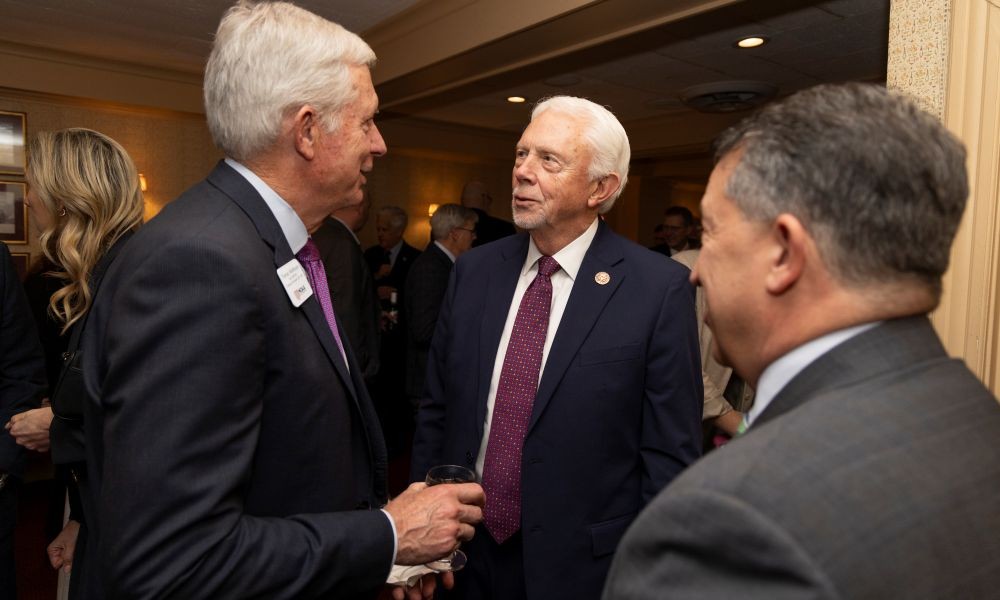
Rep. Jack Bergman (R-Mich.), center, speaks with MOAA Board Chairman Gen. Thomas D. Waldhauser, USMC (Ret), left, and MOAA President and CEO Lt. Gen. Brian T. Kelly, USAF (Ret), right, during a Jan. 14 MOAA reception in Washington, D.C. Bergman, a retired Marine Corps lieutenant general, recently cosponsored the MOAA-backed Duty Status Reform Act.
Governing Unaccredited Representatives Defrauding (GUARD) VA Benefits Act (H.R. 1732)
What it does: Reinstates criminal penalties for unaccredited claim representatives who charge unauthorized fees while assisting veterans with filing a claim for VA disability compensation benefits.
Who it supports: Veterans and retirees.
MOAA’s take: Veterans deserve trusted, ethical, and accountable support when filing disability claims – support that protects their privacy, respects their service, and preserves their earned compensation. The goal is not to limit veterans’ ability to seek help, but to guarantee that when they do, the assistance comes from accredited professionals bound by high ethical and professional standards … and that our veterans will not be forced to surrender a portion of the benefits they earned in service to the nation.
How you can help: Keep following MOAA advocacy news. A call to action is coming soon.
Military CARE Act (H.R. 6796)
What it does: Requires the Pentagon to establish a digital system designed to improve access to care at military treatment facilities (MTFs) by providing beneficiaries with a standardized platform to report barriers to MTF care and creating a data record that does not exist today to give Defense Health Agency leadership and Congress the insights needed to address systemic access challenges.
Who it supports: All TRICARE beneficiaries, but especially military families.
MOAA’s take: We advocated aggressively for this priority in 2025 as part of our spring Advocacy in Action campaign. Military families must have a more effective option for reporting access problems — an option that also increases transparency to beneficiary challenges and leads to greater accountability and oversight of the MHS.
How you can help: Click here and send a letter to your lawmakers now.
[RELATED: Better Access to Your Health Care Benefit: A Look at the Military CARE Act]
Veteran Caregiver Reeducation, Reemployment, and Retirement Act (H.R. 2148 | S. 879)
What it does: Expands health care coverage and career transition support for caregivers, and would require a study designed to provide caregivers with a path toward financial security in retirement.
Who it supports: Millions of caregivers.
MOAA’s take: “Just as our veterans answered the call to serve our nation, their caregivers also answered the call to step up and serve them,” said Lt. Gen. Brian T. Kelly, USAF (Ret), MOAA’s president and CEO. “These dedicated individuals put their own futures on hold — sacrificing financial security, career advancement, and personal well-being — to fulfill the nation's promise to take care of our veterans and provide the care veterans deserve.
How you can help: Click here and send a letter to your lawmakers now.
When MOAA Speaks, Congress Listens
Learn more about MOAA’s key advocacy issues, and contact your elected officials using our messaging platform.