
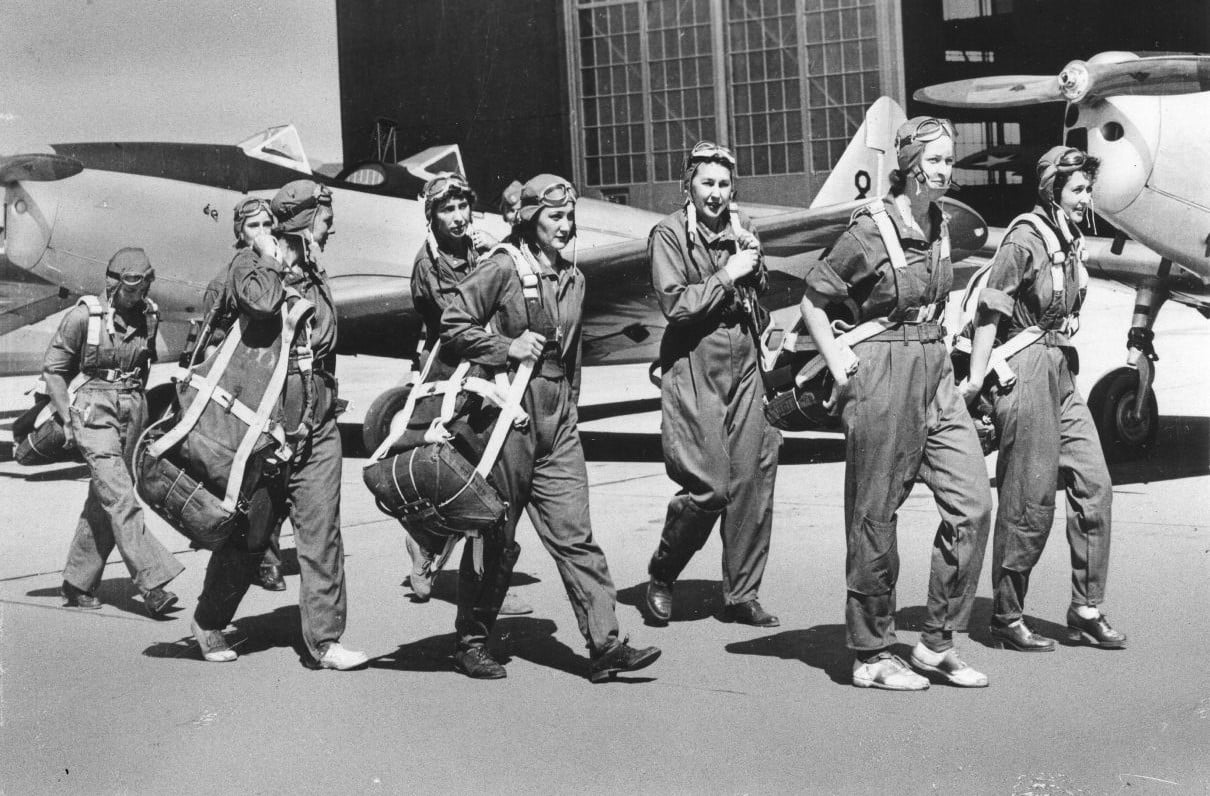
(This article by Lt. Col. Patrick J. Chaisson, USA (Ret), originally appeared in the July 2026 issue of Military Officer, a magazine available to all MOAA Premium and Life members who can log in to access our digital version and archive. Basic members can save on a membership upgrade and access the magazine.)
Instructor pilot Cornelia Fort saw it first: a drab-colored military aircraft headed straight for the small trainer she was flying.
“I jerked the controls away from my student,” she recalled, “and jammed the throttle wide open to pull above the oncoming plane. He passed so close under us that our celluloid windows rattled violently.”
Fort, a 22-year-old civilian flight instructor based in Hawaii, glanced at the off ending warplane as it banked away.
“The painted red balls on the tops of the wings,” she noticed, “shone brightly in the sun.”
She and her student had nearly collided with a Japanese A6M2 Zero fighter.
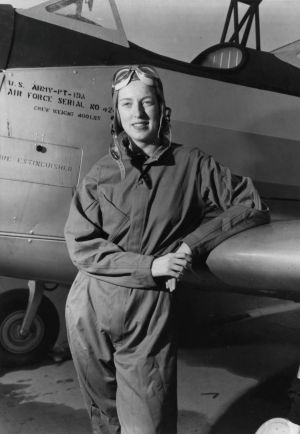 That morning, Dec. 7, 1941, Fort (pictured right) watched in horror as Japanese aircraft attacked Pearl Harbor and other military targets across Oahu, Hawaii. She observed the black smoke rising from shattered battleships and realized the U.S. was now at war.
Fort desperately wanted to serve, yet society’s strict gender barriers prevented her from joining the armed forces as a pilot.
For the time being, she could only wait for military policies to catch up with her ambition.
Standing Up WAFS
Fort was born Feb. 5, 1919, in Nashville, Tenn. The daughter of a wealthy physician, she displayed both a keen intelligence and a rebellious streak. Against her mother’s wishes, Fort took flying lessons and soloed in April 1940.
She earned her private pilot’s license in June, and nine months later, she became Tennessee’s first female flight instructor. Fort later certified in multi-engine aircraft and seaplanes. Prior to America’s entry into World War II, she gave flying lessons as part of the government’s Civilian Pilot Training Program.
After returning from her harrowing experience over Hawaii, Fort continued to instruct novice aviators. “I was happiest in the sky,” she told friends, but she yearned to serve her country in a more meaningful way.
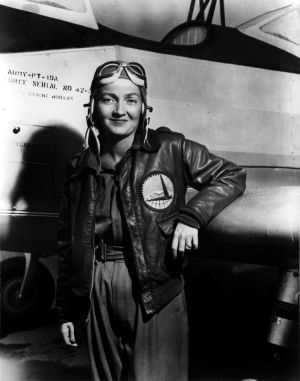 Others felt the same. Nancy Love, pictured, a pilot and businesswoman from Boston, offered to organize a group of highly qualified female aviators for flying duty with the U.S. Army Air Forces (USAAF).
Love proposed that women could ferry newly manufactured aircraft from the factory to flight-training bases, thus freeing male pilots for combat duty.
Love’s plan was rejected. But with aviation production now in high gear, there was a six-week backlog of warplanes awaiting delivery. Desperate for pilots, USAAF officials reconsidered their earlier decision.
In September 1942, some of the nation’s most accomplished female aviators received a telegram inviting them to join an organization called the Women’s Auxiliary Ferrying Squadron (WAFS).
[AIR FORCE MUSEUM: WAFS]
Fort received her telegram Sept. 5. One day later, she arrived at New Castle Army Air Field in Delaware — the second volunteer to report for duty.
The Work Begins
That October, the 28 female pilots based at the airfield began ferrying light aircraft from factories across the Northeast region to training bases located mostly in the South. It was hard, dangerous work; even experienced aviators feared flying in ice, fog, and high winds.
Yet they persevered. As word spread of their excellent delivery record, the women took on additional responsibilities. In February 1943, Fort joined a WAFS detachment stationed in Long Beach, Calif. There, she began piloting the Vultee BT-13A Valiant, a high-performance trainer.
Flying alongside male aviators, Fort and her fellow WAFS members regularly ferried BT-13As from the factory in Los Angeles to air bases throughout the Southwest. On March 21, she served as part of a seven-ship mission to Dallas when disaster struck.
Another pilot accidentally clipped Fort’s BT-13A, tearing away the left wingtip and sending her plane into an irrecoverable spin. Fort, 24 years old at the time, didn’t survive the impact.
That August, the WAFS merged with another organization, dubbed the Women’s Flying Training Detachment, to form the Women Airforce Service Pilots (WASP). From 1942 to 1944, the combined group proved their value in the skies over America on a daily basis.
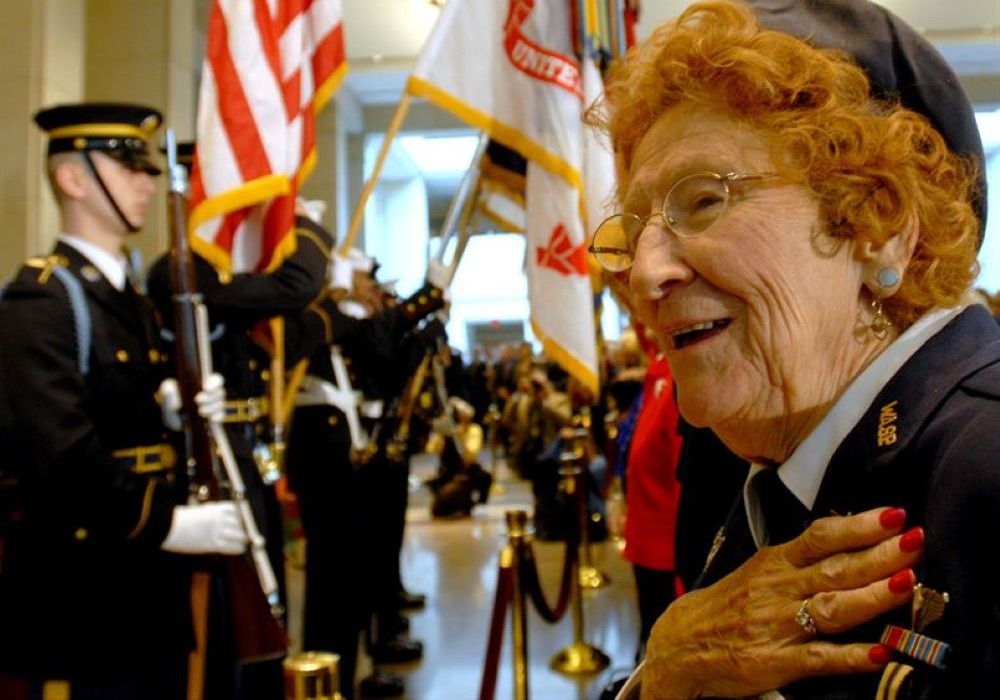
Betty Strohfus, who served with the Women Airforce Service Pilots, attends a 2010 ceremony at the Capitol. (Photo by Staff Sgt. J.G. Buzanowski/Air Force)
Meghan Anderson, a curator at the National Museum of the United States Air Force, summed up their contribution in a recent conversation with Military Officer.
“The WAFS were among the first to fly nearly every aircraft in the USAAF inventory,” Anderson noted, “establishing themselves as qualified military pilots.”
Anderson added that “the WAFS — and later WASP — proved that women could fl y the ‘Army way’ as pilots, instructors, engineers, and more, making [it] clear that their potential in the military was immensely underutilized.”
In fact, so unused and unappreciated were these pioneering aviators that it took Congress until 1977 to grant them full veteran status. President Jimmy Carter signed the law.
The first of 38 American female pilots to die on active duty during World War II, Fort was laid to rest in Nashville. Her headstone fittingly reads: “Killed in the Service of Her Country.”
Lt. Col. Patrick J. Chaisson, USA (Ret), is a writer and historian in Scotia, N.Y.
Military Officer Magazine
Discover more interesting stories in MOAA’s award-winning magazine.