(This article originally appeared in the November 2026 issue of Military Officer magazine.)
In his 1981 inaugural address, President Ronald Reagan spoke of terrorist threats but expressed confidence in America’s fighting force. It wasn’t our weaponry or our advanced technology that gave us the real edge, he said. It was our people.
“Above all, we must realize that no arsenal or no weapon in the arsenals of the world is so formidable as the will and moral courage of free men and women,” Reagan said.
This idea — that our warriors are what distinguishes us from our enemies — persists today.
In 2019, then-Army Chief of Staff Gen. James McConville noted our people “are our greatest strength and our most important weapon system.”
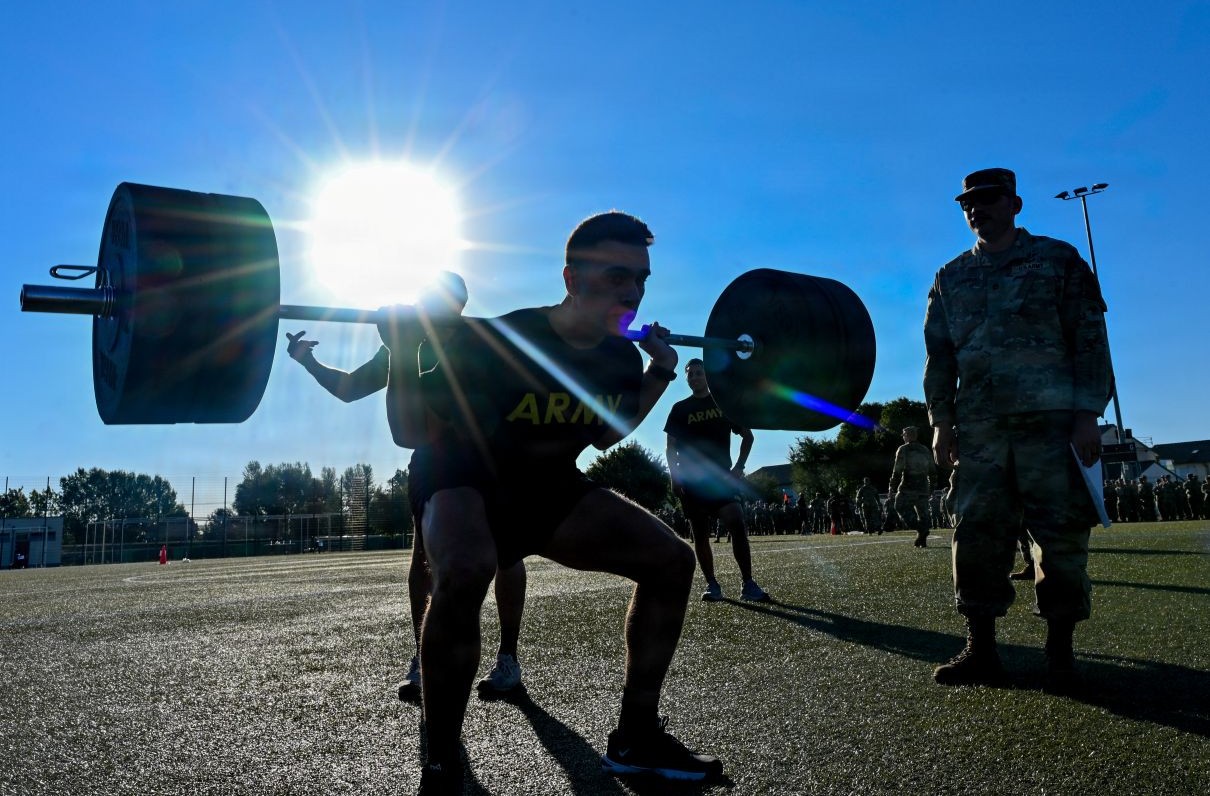
Today, leaders across the Pentagon are focused on not only physical training but also mental rigor for holistic human performance on the battlefield.
[FIT TO FIGHT: How the Services Are Meeting the New Fitness Mandate]
This approach involves much more than traditional physical training; it’s about the overall health and mindset of our warriors, covering all aspects of well-being and working toward peak performance.
MOAA is proud to be at the tip of the spear on this issue, with experts from across the spectrum of human performance set to join us in February for TotalForce+. Our conference motto is “People Outrank Everything,” and we will host panels on best practices, look at how the services are maximizing the potential of their servicemembers, and find lessons from the programs that can be adapted to everyday life.
[REGISTER TODAY: TotalForce+]
Above all, we want to provide a venue for solutions, helping others in the wider uniformed service and veteran community find success.
At MOAA, we support every step of a servicemember’s life, even after the uniform is put away. Just because the weapon system may have retired, it doesn’t mean we can forget about our health.
Many of us struggle with remaining fit after service. We’re no longer required to meet certain fitness standards, and workouts are no longer a mandatory part of our daily duties.
It’s tempting to look for quick fixes, but as you’ll find in this article by Lt. Col. Nick Barringer, USA (Ret), a back-to-basics approach can be your best bet. We are grateful to have experts like Nick, who can support our membership with tips and support.
At MOAA headquarters, we practice what we preach and find ways to boost physical and mental resilience. Staff members make good use of our exercise room, and every year we form a team to train together and run alongside MOAA members at the Army Ten-Miler. For mental resilience, we offer yearlong leadership training open to all staff.
[HEALTHY LIVING: Muscle Loss Can Jeopardize Health After Service]
Finally, I know our membership is full of hard-chargers who are keeping physically fit and mentally tough. I know because I’ve seen you out in the field.
We’d love to hear your fitness routines or tips to stay sharp. Please send your thoughts in an email to our Military Officer team. We might feature you in a future issue.
Support MOAA Charities
Donate to help address emerging needs among currently serving and former uniformed servicemembers, retirees, and their families.