

(This material also appears in the August 2026 issue of Military Officer magazine.)
MOAA board members serve staggered six-year terms, with one-third of the seats up for election every two years. The board has the authority to set its size between 12 and 36 directors and has established 24 directors as its current target. As a result, MOAA members will vote to fill eight vacancies during this cycle.
This year, a Board Nominating Committee composed of members from the seven uniformed services currently on the board, who are neither on MOAA’s board of directors nor staff, has nominated eight candidates for your consideration.
The candidates’ photographs and brief biographies appear below.
The board also recommends approval of MOAA’s 2026-2028 resolutions (five in total) — intended to serve as MOAA’s guiding principles for the next two years — as well as one proposed bylaw amendment.
2026 Voting Instructions
To participate:
- On Aug. 1, a message was be sent to every member whose account contained a valid email address as of July 15. It contained a unique link that will take you to the ballot. Do not share it with anyone. Once you submit your vote, the link will become inactive.
- Contact MOAA’s Member Service Center at (800) 234-MOAA (6622) if you do not receive an email to vote. MOAA will make every effort to provide a ballot.
- Access the ballot to find voting instructions and information about the 2026 board candidates, the 2026-2028 resolutions, and the proposed bylaw amendment.
Voting on Board Candidates
Here, you will find biographical information and photos of the eight candidates for your consideration. For each candidate — and to submit your ballot — you must cast one of the following votes: approve, disapprove, abstain from voting, or provide a write-in candidate.
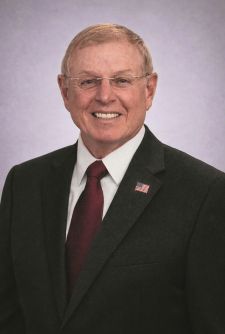 COL. STEPHEN J. BOND, USA (RET): Bond holds a master’s degree in history from the University of Kansas and a bachelor’s degree in history from the University of Utah. His military education includes the Army Command and General Staff College and the Army War College. After retiring from the Army, he worked for one of the largest aerospace and defense companies in the U.S. as a director of business development. From February 2008 to March 2009, he served in a U.S. government Senior Executive Service/flag/general officer position as the director of the Intelligence Transition Team and senior U.S. intelligence advisor to the Iraqi ministries of Defense and Interior as well as the country’s counterterrorism force while assigned to Multi-National Security Transition Command- Iraq, Multi-National Force-Iraq, during Operation Iraqi Freedom in what was known as the “Surge.” He is the chairman of the board of directors for the American Security Council Foundation. He currently serves as immediate past president and senior advisor for MOAA’s Florida Council of Chapters.
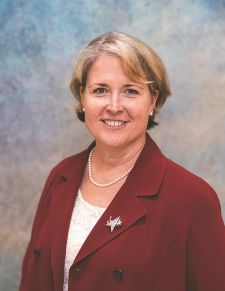 LT. GEN. DEANNA M. BURT, USSF (RET): Burt earned her commission in 1991 as a distinguished graduate of the Air Force ROTC program at Embry-Riddle Aeronautical University. She is also a distinguished graduate and former instructor of the U.S. Air Force Weapons School and a graduate of the School of Advanced Air and Space Studies. She is a career space operations officer with numerous satellite operations and staff positions in U.S. Air Force Space Command and U.S. European Command. In 2021, Burt transferred to the U.S. Space Force, where she served a dual-hat role as U.S. Space Command’s commander of Combined Force Space Component Command and vice commander of the Space Force’s Space Operations Command. She culminated her career as the deputy chief of space operations for operations, cyber, and nuclear from 2022 to 2025. She was the first female major general and second female general officer in the Space Force.
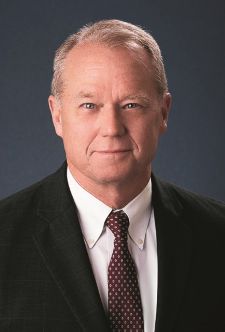 GEN. MARK D. KELLY, USAF (RET): Kelly entered the Air Force in 1986, receiving his commission from the Air Force ROTC program at Southwest Texas State University. He is a graduate of the U.S. Air Force Fighter Weapons School, the National War College, and the Harvard Kennedy School of Executive Education. Kelly earned his pilot wings at Euro-NATO Joint Jet Pilot Training at Sheppard AFB, Texas, and is a command pilot with more than 6,000 flying hours, including over 800 combat hours in fighter aircraft. He completed his 38-year Air Force career as the commander of Air Combat Command at Joint Base Langley- Eustis, Va. Prior to that assignment, Kelly served as deputy chief of staff for operations with Headquarters, U.S. Air Force at the Pentagon. He has also commanded two numbered air forces (12AF and 9AF), an air expeditionary wing in Afghanistan, two fighter wings, and a fighter squadron.
 LT. COL. TARA LEWELING, USAF (RET): Leweling is a two-time graduate of the Naval Postgraduate School in Monterey, Calif., where she earned a doctorate in information sciences and a master’s degree in systems engineering. She also holds a master’s degree in international relations from Troy University and a bachelor’s degree in mathematics and history from the University of Michigan. She has more than 30 years of leadership in national security, governance, risk, strategic communications, and global affairs. A 22-year Air Force veteran, she served at the White House as acting senior director for European affairs and director for NATO and Western Europe on the National Security Council, where she advised the president on policy toward 49 countries and three international organizations. She previously served as senior policy advisor to the U.S. ambassador to NATO in Brussels, as speechwriter to the secretary of the Air Force, and in multiple operational and command assignments. Following her military service, Leweling held senior executive roles at JPMorgan Chase, Allstate, and USAA, where she advised large institutions on strategy, stakeholder engagement, and complex risk. Her experience in defense strategy, interagency coordination, alliance management, and the policy, operational, and economic dimensions of national security is closely aligned with the mission of the Governor’s Military Council, on which she currently serves. She also serves on the board of The Green Engineer; chairs the governance committee of a national nonprofit; is NACD Directorship certified; has participated in Stanford Directors’ College; and is the founder of Sage 71.
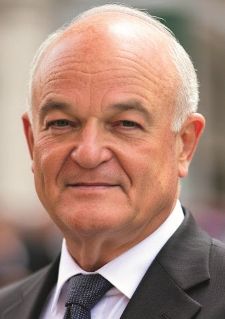 LT. GEN. JACK L. RIVES, USAF (RET): Rives received his commission through the Air Force ROTC program in 1974. He completed his legal education at the University of Georgia School of Law in Athens before entering active duty in 1977. He has served as a wing staff judge advocate; deputy legal counsel to the chairman of the Joint Chiefs of Staff; commandant of the Air Force Judge Advocate General’s School; the first chief of the Air Force Executive Issues Team; the staff judge advocate at Headquarters, Air Combat Command; and the deputy judge advocate general. In July 2008, he became the first judge advocate general in any service to serve in the grade of lieutenant general. From 2010 to 2023, Rives served as the executive director and chief operating officer of the American Bar Association. He next served as the president of Rocket Legal Professional Services, overseeing its legal services initiatives and artificial intelligence strategy and solutions for Rocket Lawyer Inc. He currently serves as a consultant and executive coach and writes on legal technology issues. He is a member of the State Bar of Georgia and the American Law Institute, and he served on the board of trustees of the Air Force Aid Society. He currently serves on several for-profit and nonprofits boards.
 COL. JENNIFER E. SHAAR, USMC (RET): Shaar graduated from the U.S. Naval Academy and was commissioned a second lieutenant in the Marine Corps where she served for more than 30 years. She earned a Master of Science in management from the Naval Postgraduate School; a Master of Arts in strategic studies from the Army War College; and a Master of Science in finance at Georgetown University. She served as a financial management officer in numerous operational and support commands throughout her career. Her leadership assignments included headquarters and service battalion commander at Marine Corps Recruit Depot San Diego; commander of Region-1 (Eastern Europe and Eurasia) within the Marine Corps Embassy Security Group; and service company commander supporting U.S. Marine Corps Forces, Atlantic. She deployed as a civil military affairs officer in support of Operation Iraqi Freedom with 1st Marine Division and served as a congressional appropriations liaison representing the Marine Corps on Capitol Hill. Additionally, she completed multiple headquarters tours within Headquarters, Marine Corps, the Department of the Navy, and the Pentagon.
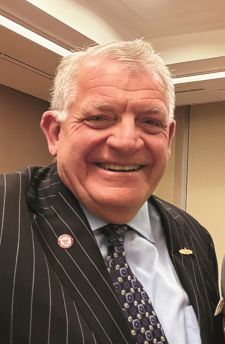 CMDR. LINCOLN S. SMITH, USNR (RET):
Smith graduated from Regent University in Virginia Beach, Va., with a Master of Arts in government affairs. He holds a certificate in digital media management from Georgetown University. He is a graduate of the College of Naval Command and Staff at the U.S. Naval War College in Newport, R.I. He also holds a Master of Arts in journalism and public relations from Ohio State University. Smith is a prominent military affairs advocate, public relations professional, and accredited communications expert based in Virginia. Key highlights of his career and advocacy include serving as current president of MOAA’s Public Affairs and Communication Professional Virtual Chapter and a past president of MOAA’s Virginia Council of Chapters. Smith was awarded MOAA’s Chairman’s Award for his communications leadership and his work in establishing bipartisan relationships to support veteran legislative priorities. He is an active broadcast interviewer and podcast host, frequently covering military readiness, defense, and veteran legislation.
 JEANNIE STRATIS, SURVIVING SPOUSE: Stratis brings more than 35 years of professional-level volunteer leadership and management of military family organizations. An Army brat, whose father served for 31 years, and a military wife for 28 years, Stratis grew up outside of Fort Ord, Calif., and married Col. John Stratis, USA (Ret), beginning a lifelong adventure and service to the U.S. military. She has served as surviving spouse liaison for MOAA’s Sun City Center (Fla.) Chapter since 2022. She is also a member of MOAA’s Surviving Spouses Virtual Chapter. Stratis was chosen as a recipient of MOAA’s 2024 Surviving Spouse Liaison Excellence Award. She is currently a consultant with Blue Star Families and works with the Vinik Sports Group.
Voting on Resolutions
MOAA’s resolutions are proposed biennially by a Resolutions Committee appointed by the board chairman and offered by ballot to voting members. Input for the 2026-2028 resolutions was solicited from MOAA’s 350,000-plus members during the first quarter of 2026 via the MOAA website, The MOAA Newsletter, and Military Officer magazine. Once approved by the board, the resolutions are presented to MOAA’s membership for voting.
MOAA’s overarching goals are captured in its resolutions, which reflect the views of the entire membership. The resolutions guide MOAA’s activities for the next two years, symbolize what MOAA stands for, cover issues that impact our members, and articulate MOAA’s main priorities.
In 2026, the board of directors kept resolutions tied to MOAA’s core mission and business priorities of advocacy, membership, council and chapter participation, and philanthropy.
Maintaining this focus and delivering a consistent message are essential to preserving our effectiveness and credibility on Capitol Hill and across the administration. A clear sense of purpose, sustained focus, and a dedicated membership base are critical to MOAA’s continued advocacy on behalf of members of all eight uniformed services, their families, and survivors.
For each resolution, you must cast one of the following votes: approve, disapprove, or abstain from voting.
RESOLUTION NO. 1 — PEOPLE FIRST
Whereas, providing for the common defense, as described in the U.S. Constitution, requires a combat-ready armed force, trained and capable, for immediate action to deter and, if necessary, decisively defeat threats to our homeland or allies vital to our national interests and security; and
Whereas, MOAA’s mission is, “To preserve and protect earned benefits for our uniformed services, veterans, their families, and surviving spouses through advocacy, leadership, education, and service;” therefore be it:
Resolved, MOAA will direct its efforts with intentions to:
- Ensure our nation keeps its promises to those who have served in any of the eight uniformed services; and
- Advocate for earned pay and allowances including retiree pay, cost-of-living adjustments, concurrent receipt, disability compensation, survivor benefits, Social Security and Medicare, burial, and other promised benefits, earned through years of service and sacrifice; and
- Advocate to protect the uniformed services and veterans’ health care benefit and support an affordable, high-quality, and comprehensive health care benefit that serves all eligible beneficiaries; and
- Convey the importance of those promises as essential to building trust with our nation’s public and influencers who are instrumental in shaping positive narratives to sustain our ability to recruit the nation’s best; and
- Work on behalf of servicemembers of all ranks and their families and survivors regarding any matters under congressional, executive, or judicial branch consideration involving service-earned benefits.
RESOLUTION NO. 2 — NATIONAL DEFENSE AND FISCAL CHALLENGES
Whereas, the total force is burdened by budgetary and other constraints to meet mission requirements, significantly impacting the quality of life of servicemembers from all components and their families, with serious implications for recruitment, retention, and readiness; therefore, be it:
Resolved, MOAA will advocate for the uniformed services necessary for the defense of our country; be it further
Resolved, MOAA will continue to meet with Congress and the executive branch to advocate for their support on issues impacting the all-volunteer force — past, present, and future — and to ensure successful transition back to civilian life; be it further Resolved, MOAA will continue to advocate for full and timely appropriations to fund those departments responsible for all eight of our uniformed services to avoid costly continuing resolutions and government shutdowns to ensure an effective national defense and eliminate the stress and hardships placed on uniformed servicemembers and families when appropriations lapse.
RESOLUTION NO. 3 — MEMBERSHIP
Whereas, MOAA, as a membership-based association, must recruit, serve, and retain members to be effective now and in the future; and
Resolved, MOAA will continue to work diligently to grow membership, thereby enhancing the association’s influence among legislators, executive leaders, and civilian organizations; and be it further
Resolved, MOAA will demonstrate the relevance of membership by providing all members the products and services that best meet their individual needs at all life stages, thereby resulting in greater lifetime value for the member and the organization.
RESOLUTION NO. 4 — AFFILIATED COUNCIL AND CHAPTER SYSTEM
Whereas, MOAA relies on grassroots volunteers to reinforce our national advocacy efforts through the affiliated council and chapter system; and
Resolved, MOAA will continue to encourage national MOAA members to join their local chapter or a virtual chapter and become a part of the collective efforts dedicated to advancing the association’s legislative advocacy agenda; be it further
Resolved, MOAA will encourage and support the efforts of our local and virtual chapters to grow membership in the national association and at the chapter level and serve the military and veteran community in impactful ways through advocacy, leadership, education, and service.
RESOLUTION NO. 5 — PHILANTHROPY
Whereas, MOAA acknowledges the importance of philanthropy in supporting servicemembers and veterans and their families and survivors beyond advocacy efforts; and
Whereas, MOAA supports MOAA Charities in its efforts to provide mission driven programs and meaningful support that strengthen families across the entire uniformed services and veteran community, regardless of rank or branch of service; and
Whereas, MOAA recognizes the critical role of MOAA Charities in providing trusted support when it matters most; and
Resolved, MOAA reaffirms its commitment to supporting and promoting the philanthropic work of MOAA Charities; and be it further
Resolved, MOAA will actively engage with its members, partners, and the public to raise awareness and resources for MOAA Charities, recognizing the profound impact it has; and be it further
Resolved, MOAA Charities will explore innovative ways to expand the reach, effectiveness, and impact of its philanthropic efforts, ensuring these efforts continue to make a meaningful difference in the lives of those who have served and sacrificed for our nation.
Proposed MOAA Bylaw Amendment
In 2024, MOAA’s membership authorized the board of directors to establish the size of the board between 12 and 36 seats, depending on the needs of the organization. The board has since established a board size of 24 members.
The fixed service-representation percentages in the bylaws proved increasingly difficult to maintain when the board was reduced in size by one-third, the U.S. Space Force was added as an eighth branch of the uniformed services requiring representation, and the board conducted a broader assessment of the timing and specific skill sets needed on the board. MOAA cannot maintain its commitment to have a board reflective of its membership, including geographic and surviving spouse representation, while also meeting current service percentage obligations and the rounding requirement.
RATIONALE
To address these issues, at the 2025 MOAA summer board meeting, the Governance Committee presented a motion to redefine the board’s composition parameters. The proposed changes are intended to ensure all services are appropriately represented, prevent any single service from disproportionately dominating board membership, and provide MOAA with greater flexibility to identify and select the expertise needed to function effectively as a modern corporate board. At the same time, the changes preserve proportional service representation.
The proposed amendment will appear on the 2026 ballot for membership approval and for which you must cast one of the following votes: approve, disapprove, or abstain from voting.
CURRENT BYLAWS, ARTICLE VIII — BOARD OF DIRECTORS, ELECTION, ETC.
SECTION 1: (a) The board shall consist of no fewer than 12 and no more than 36 directors, as determined by the board, and be composed of individuals who are members of the association. The board will determine service representation for each of the services in accordance with the following percentage representation on the board: Army, Navy, and Air Force, no fewer than 20% each; Marine Corps, no fewer than 8%; Coast Guard, no fewer than 5%; NOAA and USPHS, no fewer than 1% each. Fractions will be rounded up to the next whole number. The remaining members will be at-large without regard to service affiliation.
(b) Normally the terms of 12 directors will expire at the convening of a meeting of the board of directors scheduled in conjunction with the annual meeting of the membership occurring in even-numbered years.
PROPOSED AMENDMENT TO ARTICLE VIII — BOARD OF DIRECTORS, ELECTION, ETC. (CHANGES IN ITALICS)
SECTION 1: (a) The board shall consist of no fewer than 12 and no more than 36 directors, as determined by the board, and be composed of individuals who are members of the association. Irrespective of the number of directors as determined by the board, there shall be no fewer than two members from the Army, Navy, and Air Force and no fewer than one member from each of the remaining five uniformed services. Additionally, there shall be not more than one-third of the board selected from any single uniformed service as determined by the board.
(b) Normally the terms of the directors will expire at the convening of a meeting of the board of directors scheduled in conjunction with the annual meeting of the membership occurring in even-numbered years.
Support MOAA Charities
Donate to help address emerging needs among currently serving and former uniformed servicemembers, retirees, and their families.