
Black mold saturates your walls and bedding. Your entire family is sick, and you feel helpless and trapped.
This is a nightmare scenario our military families continue to face at an alarming rate in privatized military housing.
The Military Occupancy Living Defense (MOLD) Act, introduced Jan. 15 in the House (H.R. 7188) and Senate (S. 3654), would create enforceable safety standards for privatized housing and require inspections and reporting to prevent hazardous living conditions. It would also hold private companies accountable when they put families at risk.
[TAKE ACTION: Send a Letter to Congress in Support of the MOLD Act]
Lead sponsors are Sens. Richard Blumenthal (D-Conn.) and Tim Sheehy (R-Mont.), along with Reps. Jimmy Panetta (D-Calif.), Gus Bilirakis (R-Fla), and James Moylan (R.-Guam). Original cosponsors also include Sens. Joni Ernst (R-Iowa) and Mazie Hirono (D-Hawaii).
“Accountability is essential when neglect and inadequate maintenance result in hazardous military housing conditions,” said MOAA President and CEO Lt. Gen. Brian T. Kelly, USAF (Ret). “Servicemembers and their families should not have to sacrifice their health or well-being due to substandard housing.”
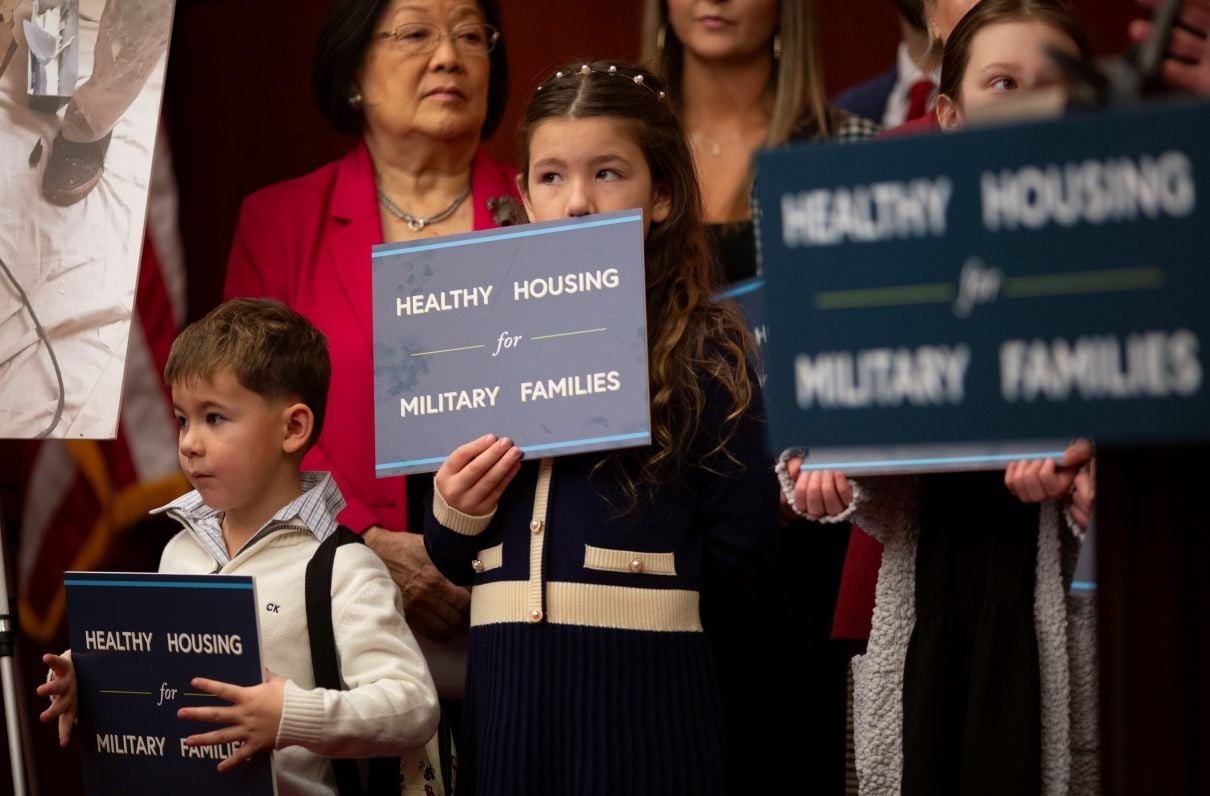
MOAA joined lawmakers and advocates at a Jan. 15 press conference in support of the legislation. Military families – with their young children holding signs and flanking the podium – shared devastating firsthand accounts.
“Our home was contaminated with toxic mold,” said Erica Thompson, a military spouse whose family was stationed at Maxwell Air Force Base, Ala. “We lost our family dog, we lost most of our belongings, and our children lost their health. As a result of that exposure, all five of our children are now medically disqualified to serve in the military.”
Her children’s diagnoses included brain inflammation, asthma, postural orthostatic tachycardia syndrome (POTS), and pediatric cataracts. Thompson, now working as a volunteer advocate, has met many families across the country suffering from toxic exposures in their military homes.
“These are not isolated incidents,” she said. “This is a systemic failure.”
[RELATED: DoD Trying to Head Off Problems With Household Goods Moves]
About 700,000 currently serving and family members are affected by hazardous conditions in their military-provided housing, Blumenthal’s office reports.
If approved, the MOLD Act would establish:
- Standardized requirements for acceptable humidity levels.
- Third-party inspections upon tenant turnover and complaints.
- A 24/7 complaint hotline and website for hazard reporting.
- Penalties for noncompliance, to include withholding bonuses to landlords and refunds of a tenant’s Basic Allowance for Housing.
- A dedicated Pentagon oversight office.
“This bipartisan, bicameral reform deserves quick passage so servicemembers and their families have a safe place to call home,” Blumenthal said.
Moylan said the problem has been permitted to fester “too long.”
“The MOLD Act finally establishes enforceable standards, independent inspections, and real accountability for contractors who fail our servicemembers,” he said.
When MOAA Speaks, Congress Listens
Learn more about MOAA’s key advocacy issues, and contact your elected officials using our messaging platform.