
A unique chance to pass omnibus legislation that would provide long-sought support to tens of millions of veterans, caregivers, and survivors is too important to miss, and the end result far outweighs concerns with how the bill is funded.
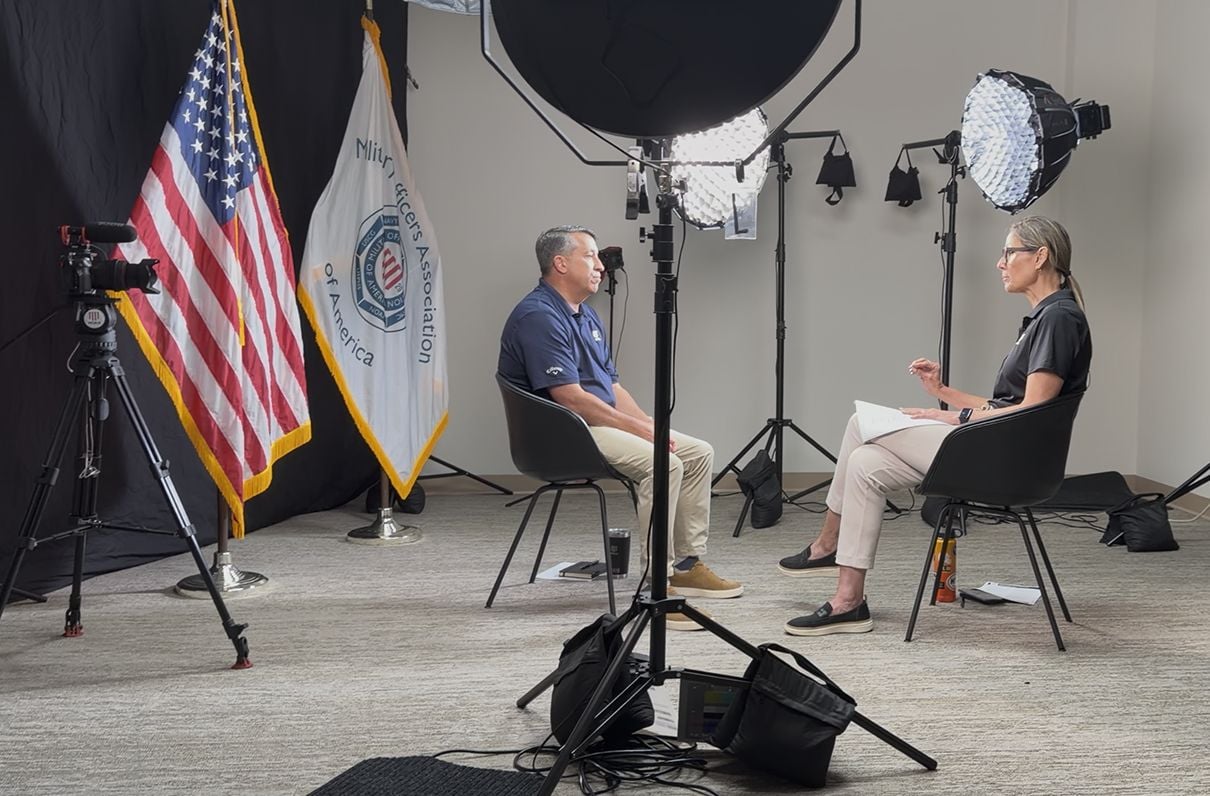
That’s the message delivered by MOAA President and CEO Lt. Gen. Brian T. Kelly, USAF (Ret), in a recent video on the Take Care of America’s Veterans Act (TCAVA). In a wide-ranging discussion with Maj. Gen. April Vogel, USAF (Ret), MOAA’s vice president of Government Relations, Kelly outlined the benefits of the bill, its funding mechanism, and some points of contention among stakeholders.
[TAKE ACTION: Ask Your Lawmakers to Support the Take Care of America’s Veterans Act]
Multiple high-level MOAA priorities are among more than 60 pieces of legislation wrapped into the bill, to include:
- The Major Richard Star Act, which would end an unjust pay offset faced by tens of thousands of combat-injured military retirees who lose a dollar of earned retirement pay for every dollar of VA disability compensation.
- The Veteran Caregiver Reeducation, Reemployment, and Retirement (3R) Act, a top MOAA priority which would assist caregivers in returning to the workforce and planning for their financial future.
- The Love Lives On Act, which would allow surviving spouses to retain critical benefits regardless of remarriage.
- Twenty more pieces of legislation MOAA has supported as standalone bills, to include increased survivor benefits, expanded veteran health care benefits and services, improved claims processing, and much more.
“Each individual bill on its own has never made it across the finish line, despite its support,” Kelly said. “So when MOAA looked at that … at the end, after all of our analysis, we said, ‘How do you not support this? How do you not get behind the amount of goodness we can do for the veteran community?’”
Pay-For Concerns
Funds for the bill will come from lawmakers codifying a change to the VA disability rating schedule affecting future sleep apnea and tinnitus claims – a change that’s been in the works for more than a decade. Passing the bill now allows lawmakers to use these funds within the veteran community, Kelly said, instead of them returning to the Treasury, where “we don’t have any idea where they’re going to be used.”
Calling the changes “inevitable,” Kelly still made clear that the funding setup must not set a precedent for future veterans legislation.
“If it was only one or two of these 60 pieces of legislation, MOAA would never have said, ‘Yes, let’s make a change and let’s allow this pay-for to happen,’” Kelly said. “But we’re not talking about one or two things. We’re talking about 60 things that are lumped together.”
A ‘False Argument’
Kelly took issue with the stance that such changes to the disability schedule amounted to taking benefits away from future veterans. Setting aside the fact that the changes are already in process, and that future veterans would still be able to seek treatment from the VA for sleep apnea and tinnitus, Kelly highlighted what TCAVA would mean for those currently in harm’s way – those who may be forced into early retirement would benefit from Star Act reforms, survivors of these servicemembers would see meaningful increases to their benefits, and millions of others would benefit from the array of TCAVA improvements.
“This idea that you’re closing the door to future veterans, I think, is a false argument,” he said. “The argument should be that you’re making opportunity for future veterans to get things they currently wouldn’t have, and their families and survivors to get things they currently wouldn’t have. But if you do nothing, if all you do is fight the TCAVA bill and you have inaction, they don’t get anything. I guarantee you they don’t get anything.”
Vogel pointed out that the benefits extend beyond veterans and survivors: Thanks to the 3R Act, future caregivers “will have the opportunity to not only care for their spouse or their family member, but they know, long-term, there will be opportunities to get back into the workforce, to look at their own retirements. These are things that don’t exist for today’s veterans.”
[RELATED: MOAA Takes Pragmatic Approach to Supporting Landmark Veterans Bill]
Kelly and Vogel encouraged MOAA members and others to act now and show their support for the bill as members of the 119th Congress consider critical legislation before the midterm election.
“If we don’t take advantage of it now, we’re going to look back at this opportunity later and see it as a missed opportunity,” Kelly said.
When MOAA Speaks, Congress Listens
Learn more about MOAA’s key advocacy issues, and contact your elected officials using our messaging platform.