
This article by Linda F. Hersey originally appeared on Stripes.com. Stars and Stripes serves the U.S. military community by providing editorially independent news and information around the world.
WASHINGTON — A new study examining the lasting effects of exposure to military burn pits found soot and dust embedded in the lungs of post-9/11 veterans with restricted breathing and inflamed airways.
The veterans, who were all diagnosed with lung disease, had retained carbon materials in their airways at levels similar to tobacco smokers diagnosed with respiratory bronchiolitis, according to the findings.
The study, published in Scientific Reports, found that veterans with a history of exposure to military burn pits had three times the level of carbon particles in their lungs compared to healthy individuals.
The findings offer direct evidence linking burn pit smoke exposure to lasting changes in the lungs of post-9/11 veterans, the authors said.
High levels of carbon particles were “significantly associated with reported burn pit smoke exposure,” according to the study.
[MOAA/DAV REPORT: Ending the Wait for Toxic-Exposed Veterans]
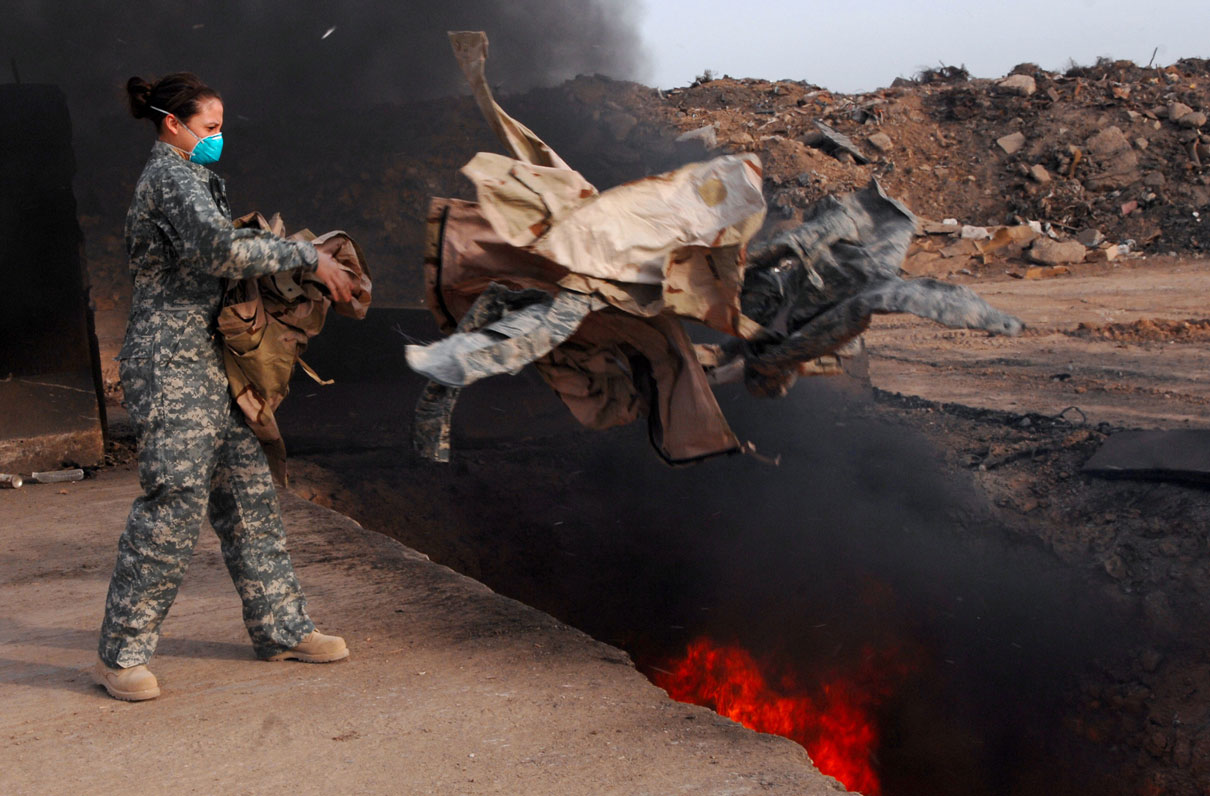
Millions of veterans were exposed to toxic smoke from burn pits during deployments to Iraq, Afghanistan and other regions, according to the Department of Veterans Affairs.
Open burn pits of up to 10 acres were used to incinerate large volumes of waste, including plastics, chemicals, medical supplies, batteries, tires and unexploded munitions, among other hazardous items.
The research, published in December, is among only a few studies that have sought to quantify particulate matter from burn pits in the lung tissue of veterans, according to the authors.
Lung tissue samples were taken from 24 veterans with lung disease for the study, conducted by National Jewish Health, a nonprofit hospital that specializes in studying and treating respiratory conditions.
The samples were compared to lung tissue from healthy individuals and tobacco smokers.
[RELATED: VA Awards Disability Benefits Using Criteria From 80 Years Ago, Federal Watchdog Finds]
“This study provides objective, tissue-based evidence that burn pit smoke exposure leaves a measurable impact in the lungs that may contribute to disease development,” said Cecile Rose, a pulmonologist and one of the study’s authors.
The participants had a median of three deployments totaling 29 months, on average.
Participants all had chronic breathing problems and were diagnosed with deployment-related lung diseases, including bronchiolitis and emphysema, according to the study.
All of the study participants were evaluated at the Center for Deployment-Related Lung Disease at National Jewish Health, in Denver.
Participants underwent surgical lung biopsies for clinical reasons and consented to providing samples, according to the study.
[RELATED: New VA Survey Targets Toxic Exposures, Other Hazards of Service]
Although airborne pollution from military burn pits has been well-documented, demonstrating a connection to lung disease has been a challenge for scientists when other factors were considered, according to the study.
The Department of Defense has shut down most burn pits and is planning to close the remainder, according to the VA.
Get Help Navigating VA Benefits
Questions about VA benefits? Start here. PREMIUM and LIFE Members have direct access to our webinar archive with to-the-point information on everything from claims and appeals to concurrent receipt to home loans and more.