
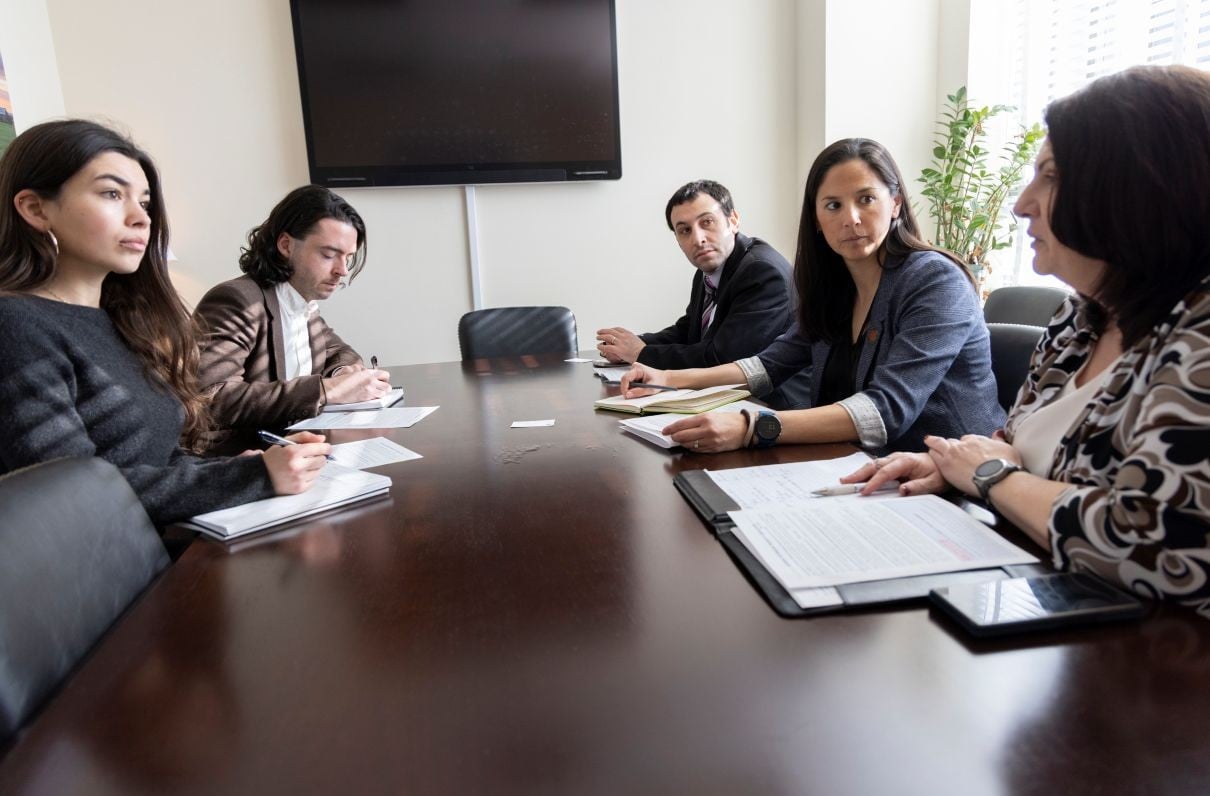
MOAA joined a cohort of military and veterans service organizations on Jan. 13 on Capitol Hill to advocate for bills that would bolster veteran and military health care providers’ understanding of menopause, strengthen mental health support for veterans, and address concerns related to military sexual trauma (MST).
[TAKE ACTION: Ask Your Lawmakers to Enhance Support for Women Veterans]
Women veterans are more likely to experience early menopause due to service-related stress and toxic exposures, and the VA notes exposure to burn pits may negatively impact ovarian function.
“What we’ve learned through research is that menopause impacts women who served in the military, both with an earlier onset — so the symptoms come on much earlier than you would expect — as well as much more severe symptoms,” said Maureen Elias, a deputy director with Wounded Warrior Project.
The symptoms of menopause, which include hot flashes and mood changes, affect readiness, retention, mental health, and long-term well-being.
“Menopause is something that impacts everyone, not just women. There are the people that live with us that have to deal with it as well,” Elias said. “And so making sure that there is good, robust, solid research around how to treat, how to recognize, and how to help women live with these symptoms is going to make the world better for everyone.”
Preventing Repeated Trauma
MOAA and its partners met with lawmakers from both parties on both the House and Senate Veterans’ Affairs committees to discuss how MST survivors are often retraumatized during exams and through delays in claims processing.
MST affects 6.8% of women and 1.3% of men on active duty, according to an FY 2024 Pentagon report.
[READ THE REPORT: PDF Download]
That same fiscal year, the VA received more than 57,000 MST-related claims — up 18% from the previous year.
“We want to make sure that those men and women who have survived military sexual trauma feel comfortable engaging in the VA and having the appointments that are necessary,” Elias said.
The MOAA-backed legislation would enhance training for all VA employees and contractors handling MST-related claims; expand veteran services and improve infrastructure in support of suicide-prevention programs; and make clearer the paths for MST survivors to provide evidence, choose their preferred medical professional for exams, and reach claims decisions.
“Servicemembers and veterans deserve timely, evidence-based care and a benefits system that works for them, not against them,” said Maj. Gen. April Vogel, USAF (Ret), vice president of Government Relations for MOAA. “This legislation addresses long-standing gaps that directly affect readiness and retention. We urge Congress to move these bipartisan reforms forward and ensure our servicemembers and veterans receive the care, dignity, and support they earned.”
Take Action
You can support some of these efforts and more by writing to your lawmakers using MOAA’s Legislative Action Center. Some of the MOAA-backed bills related to the early-onset menopause and MST issues:
- Servicewomen and Women Veterans Menopause Research Act (H.R. 2717 | S. 1320)
- Improving Menopause Care for Veterans Act (H.R. 219)
- Building Resources and Access for Veterans’ Mental Health Engagement (BRAVE) Act (H.R. 6024 | S. 609)
- Improving VA Training for Military Sexual Trauma Claims Act (H.R. 2201)
- Servicemembers and Veterans Empowerment and Support Act (H.R. 2576 | S. 1245)
Get Help Navigating VA Benefits
Questions about VA benefits? Start here. PREMIUM and LIFE Members have direct access to our webinar archive with to-the-point information on everything from claims and appeals to concurrent receipt to home loans and more.