
This article by Patricia Kime originally appeared on Military Times, the nation's largest independent newsroom dedicated to covering the military and veteran community. It was last updated March 5.
House and Senate members, along with prominent veterans’ organizations, hope 2026 will be the year Congress passes legislation to give 54,000 wounded veterans their military retirement pay and Veterans Affairs disability compensation — without one offsetting the other.
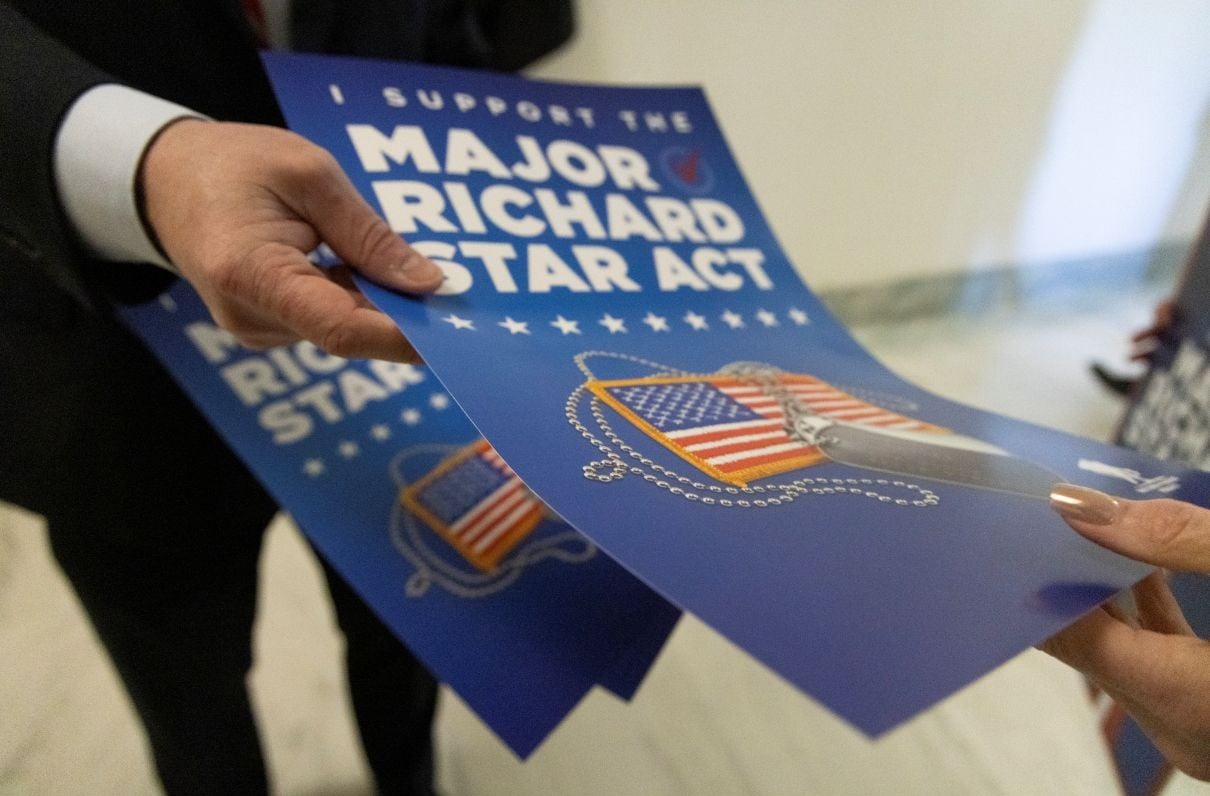
In the past two weeks, veterans groups, including Disabled American Veterans and Veterans of Foreign Wars, lobbied lawmakers for passage of the Major Richard Star Act, a bill that would allow medically retired U.S. military personnel to receive both their full retirement pay and VA disability compensation.
While the legislation has been a major focus for advocates since 2020, concerns about the estimated 10-year, $9.75 billion cost have stymied its passage.
[TAKE ACTION: Ask Your Lawmakers to Support Combat-Injured Veterans]
Sen. Jerry Moran, R-Kan., the chairman of the Senate Veterans Affairs Committee, and Sen. Richard Blumenthal, D-Conn., the committee’s ranking Democrat, took to the Senate floor Tuesday to support the bill, with Blumenthal calling for the chamber to accelerate its passage by bypassing the committee process.
“I’m heartbroken for a nation that can afford to spend tens of billions of dollars, as we are doing right now in a conflict far away, putting Americans’ lives in harm’s way, when we are failing to match [service members’] bravery with our own,” Blumenthal said. “Let’s agree to a vote.”
Moran, a cosponsor of the bill, pledged to find a path forward for the legislation, which must be considered by the Senate Armed Services Committee before receiving a vote in the chamber.
“I want to make certain that combat-injured veterans receive their full benefits. They have upheld their oath; they have fulfilled their duties. The question before us is whether we will fulfill ours,” Moran said.
[MOAA SITREP: The Major Richard Star Act]
Currently, the legislation has bipartisan support of 77 senators and 316 representatives. The House version is cosponsored by Rep. Gus Bilirakis, R-Fla.
Despite the significant support, however, the bill has failed in both Democrat- and Republican- controlled Congresses.
Advocates hoped last year they had found a way to pay for the bill by using savings from terminated government contracts or by eliminating wasteful spending.
[MARCH 31 MOAA WEBINAR: Concurrent Receipt Programs: All You Need to Know (and More) About CRDP and CRSC]
This year, VFW Commander-in-Chief Carol Whitmore argued the money should come from the federal Military Retirement Fund, which finances military retired pay and has more than $1.7 trillion in assets.
“The explanation most often given is cost — specifically, the requirement to identify a budgetary offset as though correcting an injustice for disabled retirees must come at the expense of another defense or veterans priority. That framing is misplaced,” Whitmore said in a statement during a joint hearing Tuesday of the House and Senate veterans affairs committees. “Ending the concurrent receipt offset does not require DOD to trade readiness, delay procurement, or sacrifice national security investments.”
During Senate floor remarks Tuesday, however, Sen. Ron Johnson, R-Wisc., said the legislation would affect military readiness, adding that the original estimate of $9.75 billion was now $70 billion.
The legislation was named for Army Reserve Maj. Richard Star, who died in 2021 from lung cancer after being exposed to burn pits in Iraq and Afghanistan.
[RELATED: Study Finds Soot and Dust From Burn Pits Embedded in the Lungs of Ailing Veterans]
Since 2004, veterans who receive military retirement for serving 20 years or more, as well as VA disability benefits, receive both benefits in full if they have a disability rating of at least 50%.
But those veterans who retired early from the service because of military injuries are subject to dollar-for-dollar offsets in their military disability and VA disability benefits, sometimes amounting to thousands of dollars in lost income.
If the bill were to become law, veterans eligible for coverage would have to be medically retired, able to qualify for combat-related special compensation and have a combat-related disability of at least 10%.
Richard Fetro, national president of the Fleet Reserve Association, said Tuesday during the hearing that passage of the Richard Star Act would restore faith among veterans who suffered debilitating injuries as a result of their service.
“Regarding double dipping, that claim ignores reality. Military retirement pay compensates for years of service already rendered. VA disability compensation exists because veterans were wounded during service. Providing both benefits honors service and sacrifice,” Fetro said.
Other articles by Military Times:
The US Air Force just used its oldest bomber to attack Iran
Air Force revises physical fitness program, score charts to boost airmen health
Hegseth replaces director of schools for military children
When MOAA Speaks, Congress Listens
Learn more about MOAA’s key advocacy issues, and contact your elected officials using our messaging platform.