
By MOAA Staff
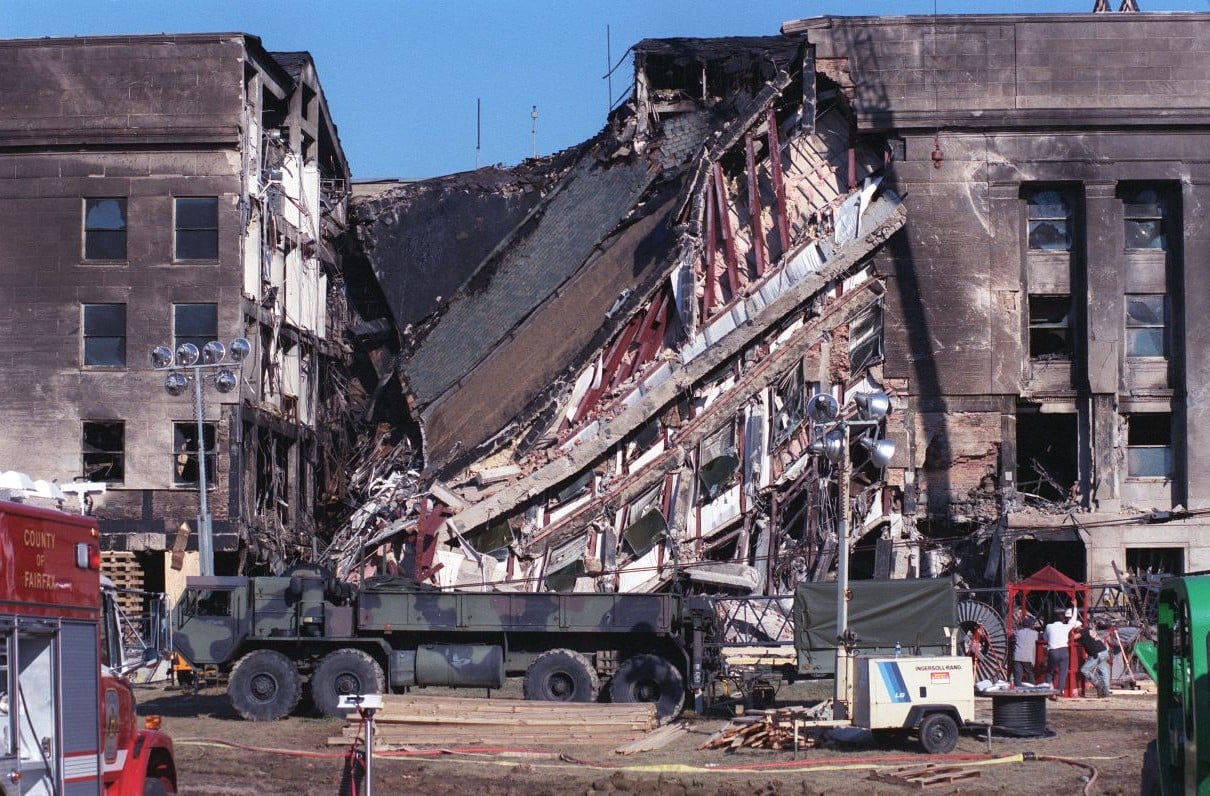
MOAA recently endorsed bipartisan legislation that would expand benefits to veterans who served at the Pentagon in the days after the Sept. 11 attacks and suffer from a range of toxic exposure-related illnesses.
The Susan E. Lukas 9/11 Servicemember Fairness Act (H.R. 5339) extends the presumption of service connection to several conditions for those who served at the Pentagon Reservation from Sept. 11, 2001, to Nov. 19 of that year.
Conditions include asthma, chronic obstructive pulmonary disease (COPD), tracheomalacia, and any other type of cardiovascular disease, respiratory disease, skin disease, or cancer. The bill also allows Pentagon leaders to identify other diseases for service connection if they are linked to specific hazardous materials found at the Pentagon after the attack.
[RELATED: Sept. 11 Through the Eyes of National Guard Officers Who Were There]
Four Virginia lawmakers serve as original cosponsors of the legislation: Democratic Reps. Suhas Subramanyam, Don Beyer, and Bobby Scott, and Republican Rep. Rob Wittman.
“These servicemembers spent countless hours at their posts, putting the mission before themselves in the early hours of our post-9/11 reality,” said Jen Goodale, MOAA’s director of Government Relations for Veteran and Retired Affairs. “Our nation has an obligation to honor that service by ensuring they receive the benefits and care their sacrifices have earned.”
The bill bears the name of Lt. Col. Susan Lukas, USAF (Ret), who was serving at the Pentagon during the attack and returned to work the next day. She was diagnosed with several toxic exposure-connected conditions in later years, she told USA Today, including tracheomalacia, which can lead to a collapsed airway.
More than 3,000 individuals may have been exposed to toxic substances at the Pentagon in the aftermath of the attacks, according to the Reserve Organization of America (ROA), a longtime supporter of the legislation. The bill would provide protections to these individuals in line with those offered by the Sergeant First Class Heath Robinson Honoring Our Promise to Address Comprehensive Toxics (PACT) Act of 2022 to those who served near burn pits or other areas linked to toxins.
“These heroic men and women deserve the same benefits under the PACT Act that Congress has provided to other servicemembers, and I am proud to introduce this bill to close the gap in coverage,” Subramanyam said in a press release announcing the bill’s 2025 introduction.
When MOAA Speaks, Congress Listens
Learn more about MOAA’s key advocacy issues, and contact your elected officials using our messaging platform.