
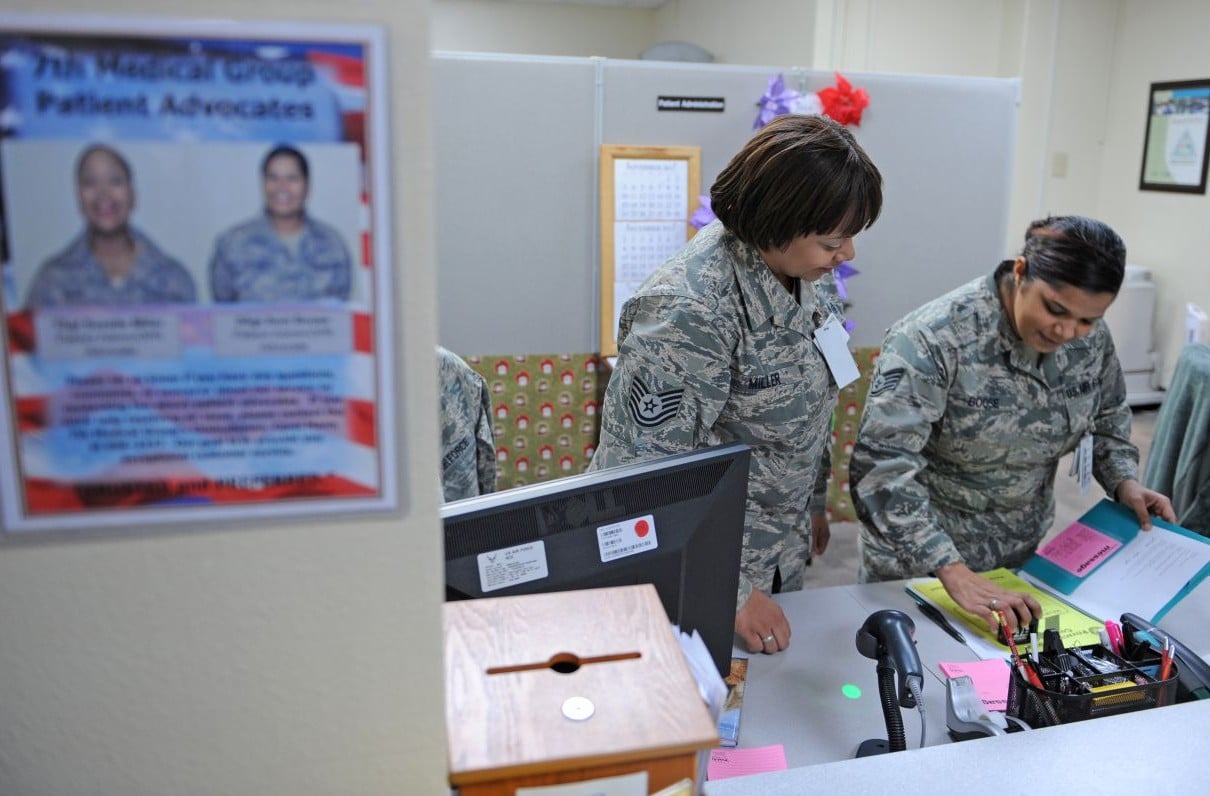
Patient advocates have a new method to track and manage feedback across the military health system (MHS).
The Patient Advocate Assistance Reporting Tool (PAART) is a standardized system to manage feedback reported to patient advocates. It replaces inconsistent legacy methods and gives patient advocates a new platform to collect, track, and resolve patient concerns.
Patient advocates are representatives who help patients with concerns or questions about services at military hospitals and clinics. The patient advocate office may be called Patient Relations or Customer Service at some military treatment facilities (MTFs).
"It's standardized and consistent," said Cmdr. Gabrielle Crane, USN, chief of the patient experience branch at the Defense Health Agency (DHA), in a Jan. 23 article regarding the launch. "The old process was fragmented within each MTF, and patient advocates had differing processes for how they managed feedback. The new system is exciting because now it will be streamlined and provide transparency enterprise-wide."
MOAA appreciates that PAART will improve consistency in data collection from patient advocates, but it is only a partial solution. We continue to urge Congress to expand digital problem reporting down to the patient level to ensure unfiltered patient feedback on access-to-care challenges.
[TAKE ACTION: Ask Your Lawmakers to Address MTF Access Problems]
Last year, MOAA’s efforts led to the introduction of the Military Care Access, Reporting, and Evaluation (CARE) Act (H.R. 6796), a bill that requires the Pentagon to provide a system that:
- Establishes a standardized, user-friendly digital platform for beneficiaries to file and track complaints.
- Requires real-time transmission of complaints to patient advocates for resolution.
- Mandates quarterly aggregation of data to DHA and annual reports to Congress.
- Creates transparency into systemic access issues such as specialty care delays, pediatric appointment shortages, and administrative burdens.
The Military CARE Act’s patient-level digital reporting platform will complement patient advocate data collected by PAART. Working together, the systems will provide insights across the MHS to ensure data-driven access-to-care improvements at military hospitals and clinics.
Please send a message to your lawmakers urging them to support the Military CARE Act. Grassroots advocacy will build cosponsors for the standalone bill and generate awareness and support as MOAA seeks to have the text of the legislation included in the FY 2027 National Defense Authorization Act.
When MOAA Speaks, Congress Listens
Learn more about MOAA’s key advocacy issues, and contact your elected officials using our messaging platform.