
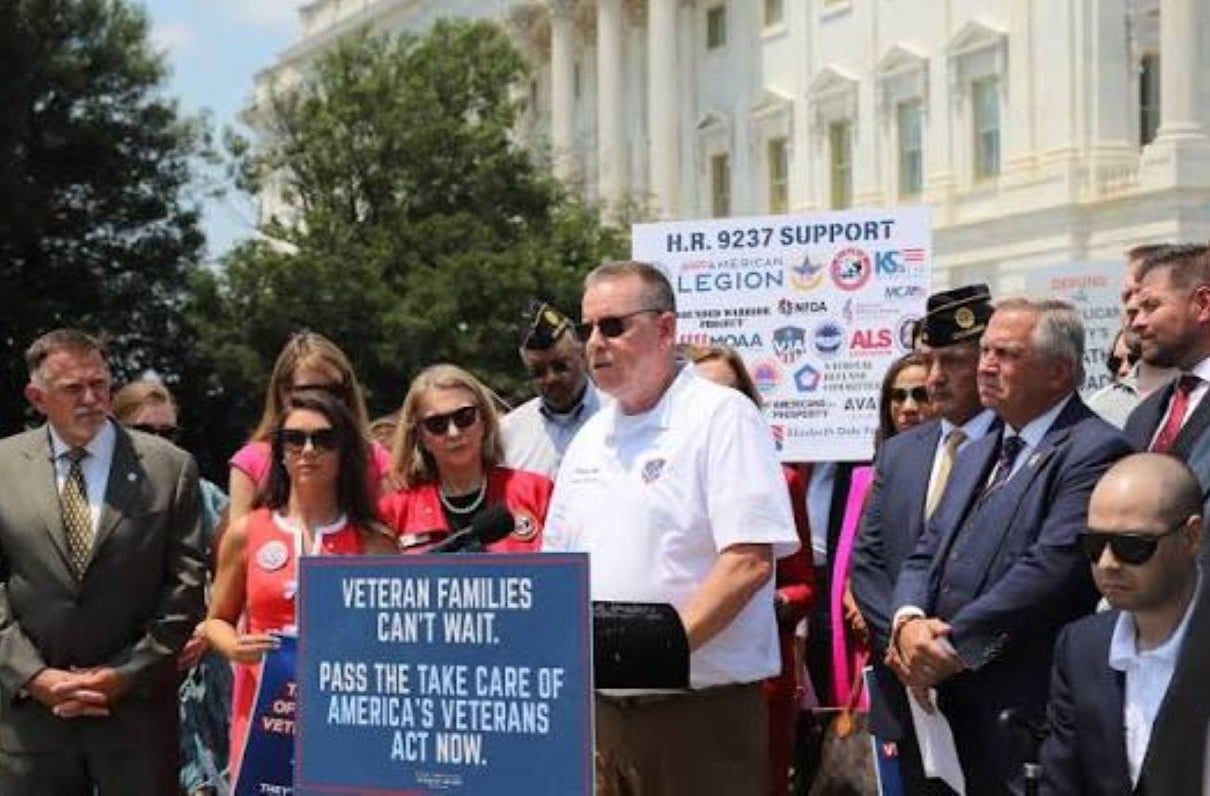
House leadership postponed consideration of the Take Care of America’s Veterans Act (TCAVA) on July 16 after pulling the bill (H.R. 9237) from the floor before a final vote. While the legislation now faces additional hurdles, MOAA and our advocacy partners continue to work with lawmakers in both the House and Senate to advance the bill’s key provisions before the end of the 119th Congress.
[TAKE ACTION: Urge Your Lawmakers to Cosponsor the Take Care of America’s Veterans Act]
The legislation would secure several long-standing MOAA priorities, including relief for combat-injured retirees, expanded support for military caregivers, and protections for surviving spouses. As discussions continue, MOAA remains engaged with members of Congress and Capitol Hill staffers to address questions about the bill and correct several misconceptions.
Disability Rating Changes
Much of the recent debate has centered on language that would codify VA’s proposed changes to disability ratings for sleep apnea and tinnitus. MOAA’s position has been driven by one key consideration: VA officials testified before Congress that these changes would be implemented before the end of the fiscal year. Subsequent reporting that the proposed changes are under review with no effort to rescind the rule, combined with the recent publication of a final date for rule implementation, indicate the VA plans to move forward with the revised rating schedule.
These actions are consistent with MOAA’s view that if the changes are moving forward, Congress should pass TCAVA to ensure the resulting savings remain within the veteran community instead of reverting to the Treasury. Those savings would help fund several long-overdue priorities for veterans, their families, caregivers, and survivors.
[RELATED: Veterans Omnibus Bill Represents ‘Unique But Fleeting Opportunity’]
No piece of legislation is perfect. Years of advocacy experience have taught us that overwhelming bipartisan support alone is not always enough to move important veterans legislation across the finish line.
Consider just two of the 60-plus bills that make up TCAVA: The Major Richard Star Act has more than 300 House cosponsors, and the Love Lives On Act has nearly 180 – first and second, respectively, among military-related legislation. Both bills have had broad bipartisan, bicameral backing in multiple Congresses. And despite this significant support, both bills have stalled … alongside other critical veterans legislation.
Time for Action Is Now
TCAVA presents a rare opportunity to advance many priorities supported not only by Congress but by our community – veterans, caregivers, and survivors, along with military and veterans service organizations (MSOs/VSOs). This community has waited long enough.
MOAA will continue working with congressional leaders, committee staff, coalition partners, and the administration to advance these priorities. We remain committed to ensuring combat-injured veterans, caregivers, surviving spouses, and military families receive the support they have earned.
This is a pivotal moment for the veteran community. We urge every MOAA advocate to use the Legislative Action Center today to ask your lawmakers to support this bill and help turn decades of advocacy into lasting benefits for those who have sacrificed so much.
When MOAA Speaks, Congress Listens
Learn more about MOAA’s key advocacy issues, and contact your elected officials using our messaging platform.