
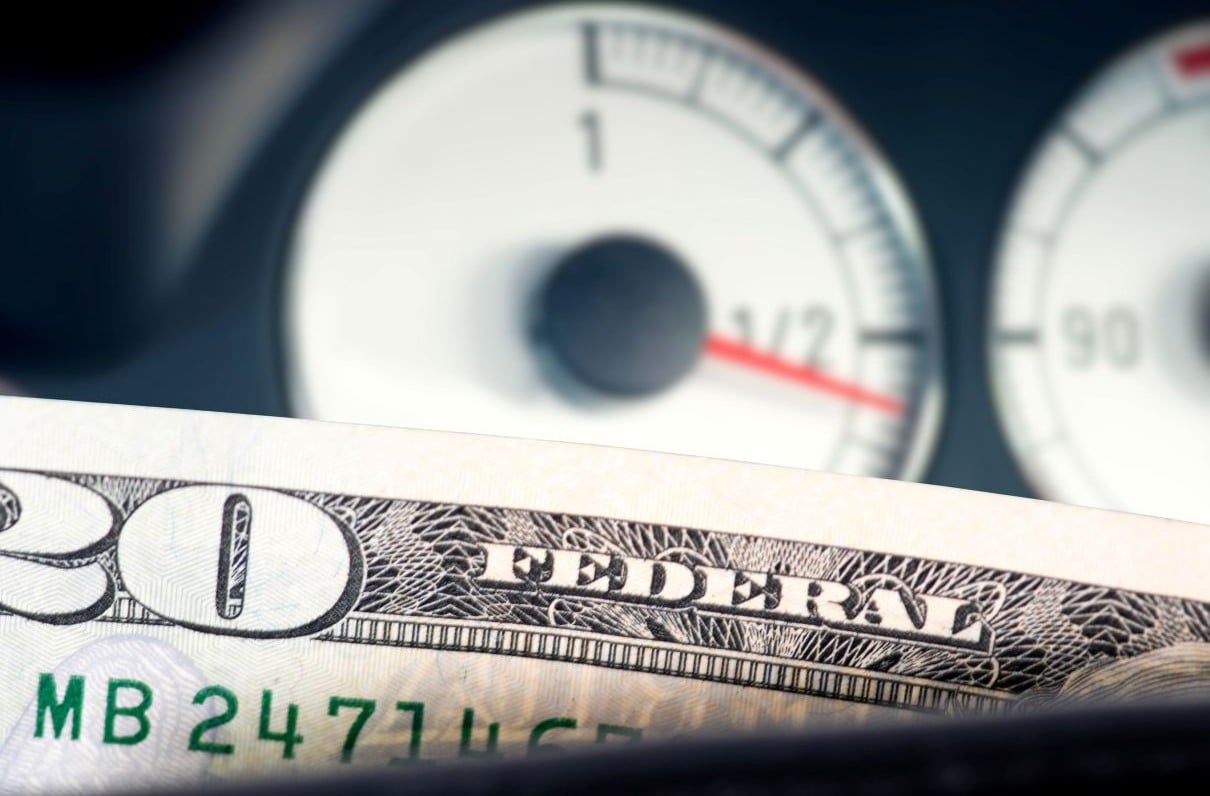
For veterans who travel long distances for medical appointments, access to earned care starts well before they reach the clinic. Transportation costs can strain a household budget, especially for veterans on a fixed income or those whose treatment requires repeated visits.
Yet VA’s mileage reimbursement rate has remained stuck at 41.5 cents per mile since 2008. Nearly 18 years without an increase has allowed inflation to steadily erode the benefit’s purchasing power. Veterans must cover today’s transportation costs with a reimbursement rate built for a different economy.
The bipartisan, bicameral Driver Reimbursement Increase for Veteran Equity (DRIVE) Act, led in the House by Rep. Julia Brownley (D-Calif.) and in the Senate by Sen. Peter Welch (D-Vt.), would address that gap.
The legislation would require VA’s mileage reimbursement rate to be at least equal to the General Services Administration (GSA) rate for federal employees using personal vehicles on official business when no government vehicle is available – 76 cents per mile as of July 1, 2026. It also would require mileage reimbursements to be paid within 90 days after a request is properly submitted.
[RELATED: Court Ruling Exposes VA’s Limited Power to Stop Predatory Claims Companies]
The disparity is substantial. For an eligible 100-mile round trip, the difference between the GSA rate and the VA rate is $34.50 before any applicable VA deductible. For veterans making several trips each month, that shortfall adds up quickly.
MOAA Life member H. James Hulton III, a former Air Force captain who served during the Vietnam War era, captured that concern in a recent letter he addressed to the VA secretary: “A reimbursement rate that has not kept pace with fuel and vehicle costs effectively asks veterans to subsidize their own health care travel out of pocket — the opposite of what this benefit was designed to do. For a veteran on a fixed income, the difference between 41.5 cents and 76 cents a mile, multiplied over dozens of appointments a year, is not a rounding error. It is real money that determines whether a veteran can afford to keep the appointment at all.”
[RELATED: Army May Revisit Arlington National Cemetery Eligibility Rule]
Keeping a vehicle ready for regular medical travel carries costs beyond gasoline. A rate that remains unchanged through years of inflation shifts more of that burden onto veterans and their families. The impact can be especially significant for rural veterans and those who need frequent specialty care.
The VA secretary can adjust the mileage rate without new legislation, but the DRIVE Act would establish a stronger standard by linking it to the GSA reimbursement rate, helping the benefit keep pace as that benchmark changes.
Congress and the VA share an opportunity to strengthen access to care by addressing the cost of reaching it. The DRIVE Act offers a bipartisan path toward a more responsive travel benefit and timely payments. Veterans’ earned health care should remain within reach, including the miles between home and the appointment.
When MOAA Speaks, Congress Listens
Learn more about MOAA’s key advocacy issues, and contact your elected officials using our messaging platform.