
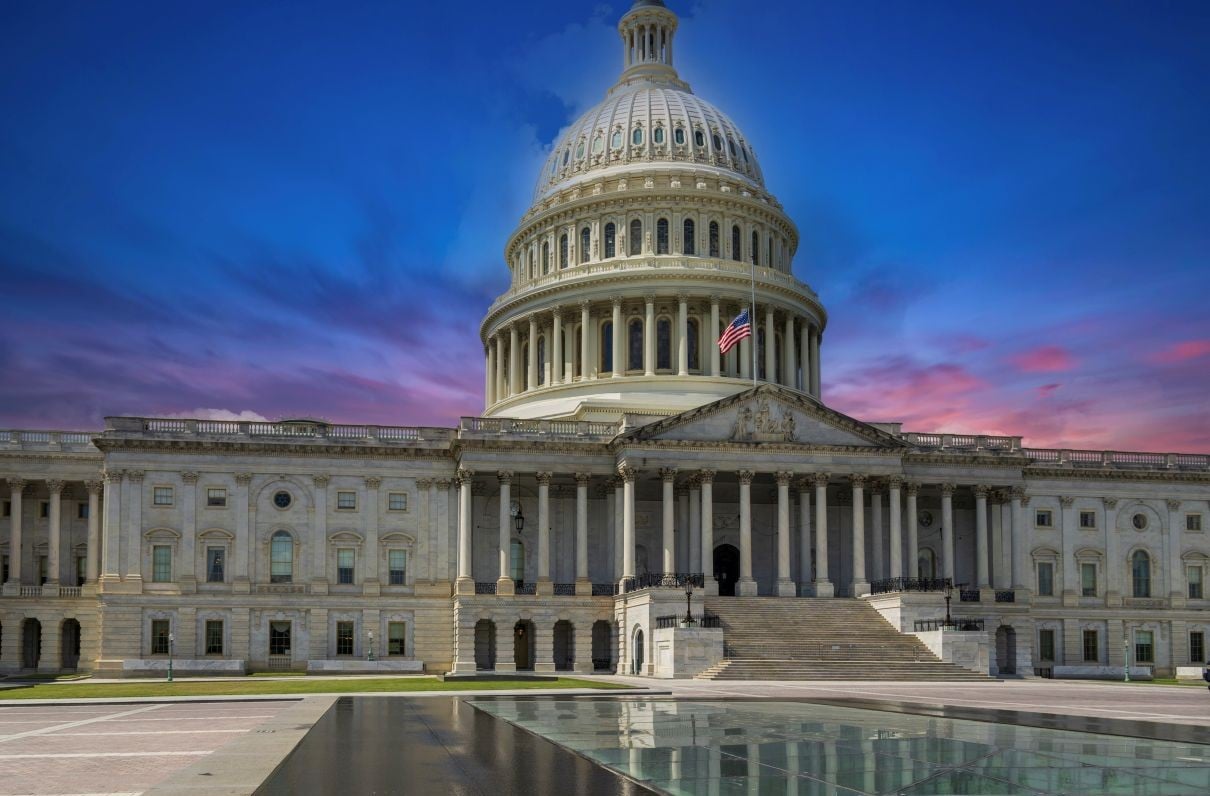
After a super-sized Independence Day celebration (and recess), Congress returns to Washington next week to face a packed agenda of must-pass authorizations and appropriations, critical veteran and military family-related legislation, and individual priorities of lawmakers – all needing resolution before the end of the 119th Congress.
Here’s a look at three of MOAA’s key priorities for the waning days of the fiscal year and the legislative session. Get updates on these bills and others by registering at our Legislative Action Center.
The NDAA: Where Does It Stand?
Congress has passed a National Defense Authorization Act (NDAA) every year since 1961, a streak that’s held through recessions, shutdowns, and periods of deep political division. The NDAA remains one of the few pieces of legislation that reliably becomes law regardless of the climate in Washington.
Next week, both chambers move their versions forward. Before taking up its draft, the House first must adopt the rule that will structure floor debate and determine which amendments receive a vote. The Senate is working in parallel, taking up its own version and its own amendments as floor consideration begins.
[MORE NDAA NEWS: Senate Markup | NDAA and TRICARE | Preventing Health Care Facility Closures]
The Budget: Can It Be Passed on Time?
Unlike the unbreaking continuity of the NDAA, the last time all 12 regular appropriations bills were passed on time was for FY 1997. In the years since, Congress has repeatedly leaned on continuing resolutions to keep the government funded past the deadline and on occasion has been unable to agree even on that stopgap, resulting in a shutdown. That history is the backdrop for this year's appropriations fight.
With less than 90 days before the fiscal year ends, Congress faces the same question it faces every year: whether spending bills get finished on time, get pushed past the deadline under a continuing resolution, or stall out entirely and trigger a lapse in funding.
Critical Veterans Legislation: How Do We Get It Signed Into Law?
The Take Care of America’s Veterans Act (TCAVA) adds another item to an already crowded congressional calendar. This comprehensive veterans package would advance more than 20 standalone MOAA-supported bills, bringing reforms the association has championed in this Congress and previous sessions on behalf of servicemembers, veterans, caregivers, survivors, and their families.
That scope is exactly why the bill will need careful negotiation among lawmakers and stakeholders to move forward – negotiation that must happen as Congress finishes the NDAA and its budgetary duties.
If either of those priorities slips into the last quarter of the year, the veteran omnibus bill will have only a small window to advance as it competes with other legislation seeking passage before the end of the 119th Congress.
[READ MORE: MOAA Takes Pragmatic Approach to Supporting Landmark Veterans Bill | Comprehensive Veterans Package Includes Several Top MOAA Priorities]
How Does This All Fit Together?
These three items are only the tip of MOAA’s much broader advocacy agenda. Beyond the NDAA, appropriations, and TCAVA, the association is engaging on a long list of other bills and priorities working their way through the 119th Congress before the session ends. Whether Congress can reach the finish line will be contingent on congressional leadership and both chambers working together.
For 250 years, the Fourth of July has marked not only our nation’s founding, but celebrated the enduring responsibility and stewardship of self-governance. All citizens share in that responsibility, and as for Congress, its members bear the duty to fund the government, protect our nation’s uniformed services, and safeguard the republic that generations before us built.
When MOAA Speaks, Congress Listens
Learn more about MOAA’s key advocacy issues, and contact your elected officials using our messaging platform.