When officials talk about readiness, it’s often framed in terms of weapons systems and equipment, according to JoAnne Bass, the former 19th chief master sergeant of the Air Force.
Instead, she said, the focus should be on people.
Speaking on the main stage at MOAA’s inaugural TotalForce+ conference alongside senior enlisted leaders, Bass challenged them to change the narrative.
David Isom, the senior enlisted advisor to the chairman of the Joint Chiefs of Staff, agreed, citing U.S. Special Operations Command’s No. 1 truth: “Humans are more important than hardware.”
“We have to take care of the warfighter,” he said, noting the importance of transparent communication with military families so they are reassured the force will support its personnel.
[RELATED: Celebrating a ‘Phenomenal’ Launch to TotalForce+]
Added Master Chief Petty Officer of the Navy John Berryman: “You recruit the sailor, you retain the family, and so I think we have some work to do there.”
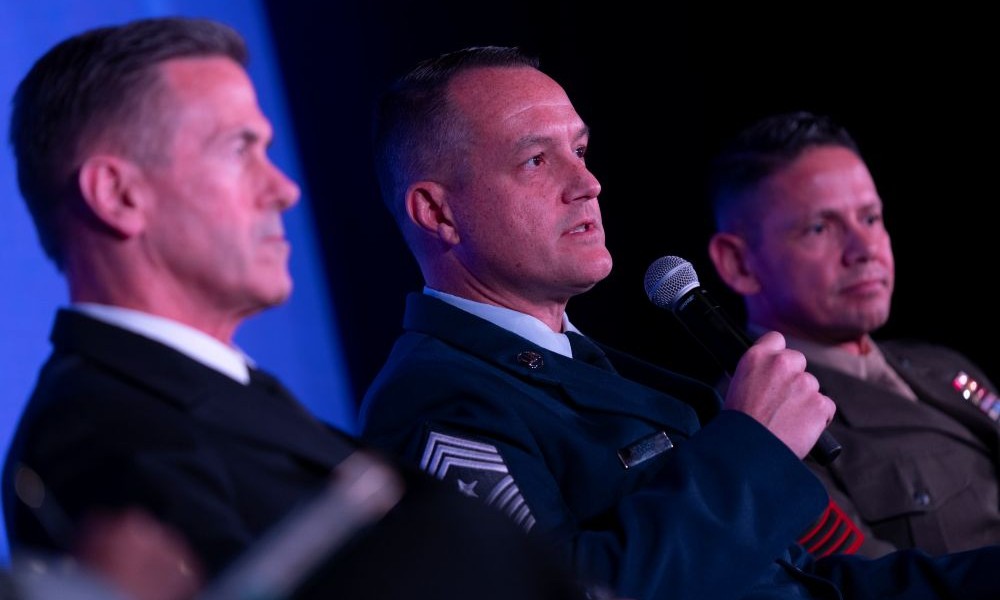
Chief Master Sgt. Joshua Moore, command chief master sergeant of the Air National Guard, speaks during a senior enlisted panel at TotalForce+. (Photo by Sean Shanahan/for MOAA)
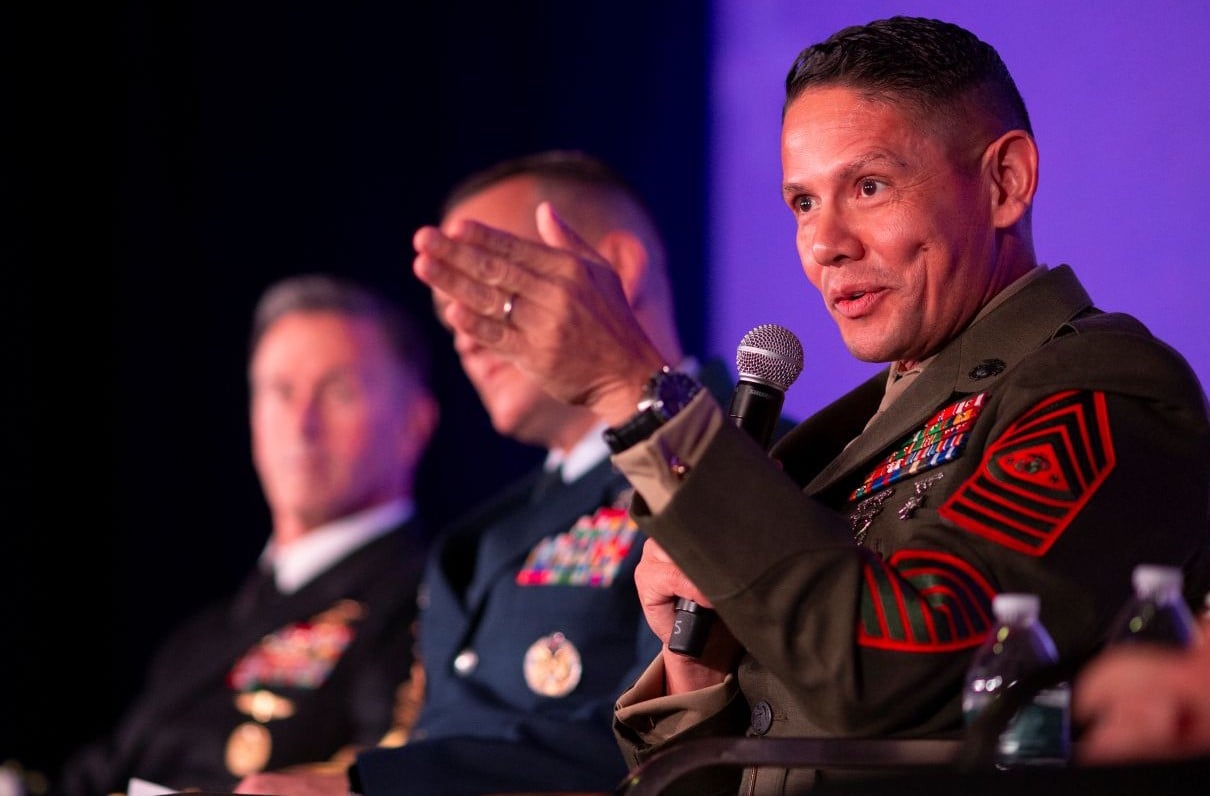
Indeed, the Pentagon last month announced the creation of a barracks task force aimed at improving living conditions for servicemembers — something similar to what Sgt. Maj. of the Marine Corps Carlos Ruiz has been working on.
“I think we’re doing well in turning the corner here and investing heavily on infrastructure,” Ruiz said during the panel. “We’re not looking to provide a quality of life with the Marines and their families just to have nice things. It is [about] infrastructure because this is where you will fight from. It’s about warfighting. It’s about a young Marine getting a good night’s sleep so they can fix the engine of an F-35 the next morning, or they have to go and get after a live-fire range.
“It’s the way that we must develop the next generation of warfighters, and I’m unapologetic about it.”
‘The 21st Century Family’
Moving military families also impacts retention, Ruiz added.
If a military spouse’s career is growing quickly or if a child is about to graduate from high school, he explained, “moving the servicemember just to move them — because that’s just what we do, because that’s just what we’ve always done — may not be a good idea.”
The servicemember must trust leadership enough to share their specific situation if such practices are to end, Ruiz added.
“I think the trust that needs to be developed — we’re still working on that,” he said. “Tell me what’s going on: Are you divorced? Are you now moving your kids across the country, and now maybe I should move you closer to your spouse so you can share in that custody?”
[RELATED: Top Enlisted Marine Talks Barracks Improvements With MOAA]
“What’s the 21st century family look like, and can we adjust fast enough to it?” he wondered.
And although Ruiz said this approach is currently unaffordable, he expressed hope “we’ll get there and get the systems going to match the force better.”
Resources for Currently Serving Officers
MOAA can help you succeed in your military career and beyond.