Editor’s Note: Kevin Schmiegel’s story is a powerful example of how purpose-driven leadership can turn personal hardship into community impact. At TotalForce+, we honor stories like his not just for their individual inspiration, but because they reflect the larger truth: People power the mission. His insights on the concept of “military thriving” challenge us to go beyond acknowledgement toward systems that reward strength, foster belonging, and invest in performance across both the military and civilian sectors. As TotalForce+ brings together public, private, nonprofit, and academic voices, stories like his help illuminate the path from resilience to readiness.
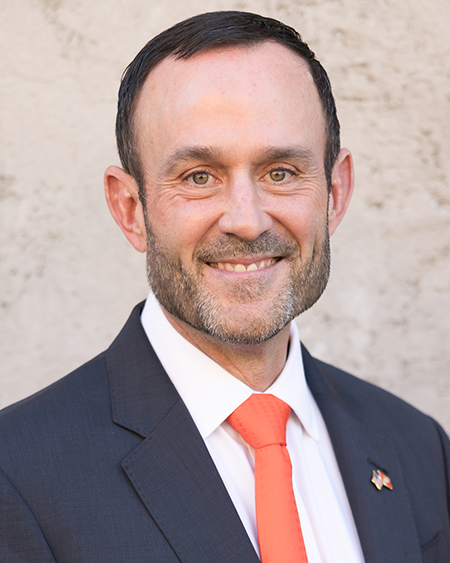 Kevin Schmiegel needed a change.
After retiring from the Marine Corps as a lieutenant colonel following 20 years of service, he founded and led Hiring Our Heroes, a U.S.-based veteran employment-focused nonprofit. After leaving the organization to take care of his own health and well-being, he lost his sense of purpose and felt disconnected from the military community. Despite landing a job several months later with good pay and an impressive title, he spiraled into depression — until he found purpose again.
That’s when Schmiegel returned to nonprofit work, during which he led two other national military nonprofits that impacted more than 3 million servicemembers, veterans, and their families over the course of a decade. In both reconnecting with veterans and giving back to those who served the nation, he was thriving again. This eventually led to Schmiegel co-founding ZeroMils, a service-disabled veteran-owned small business with a mission to create “military thriving” cultures and communities that go beyond being “military friendly” and bring change to the “broken veteran” narrative.
Schmiegel will speak at MOAA’s inaugural people-focused conference, TotalForce+, which runs Oct. 28-29 in National Harbor, Md. He talked to MOAA about what energized him to participate in the conference and what motivates him to continue working for something greater than himself. This interview was edited for length and clarity.
Q. What inspired you to participate in Total Force+?
A. It’s really about leadership. MOAA has an incredible track record. But what really inspired me is getting to know Lt. Gen. Brian Kelly, [USAF (Ret), president and CEO of MOAA], and understanding what his vision is and how it aligns with the mission, vision, and values of ZeroMils.
Q. What is the concept of “military thriving”?
A. “Military thriving” was born in response to growing trends in the public, private, and nonprofit sectors that ZeroMils didn’t believe in. The company was founded in response to those trends. We saw people talking about our community in ways that didn’t resonate with us, that didn’t reflect the true spirit, strength, courage, and resilience of a community that, despite its challenges, is thriving.
Veteran unemployment is the lowest it’s been in two decades. Yet we’re still talking about [veterans] as if we’re doing them a favor by giving them a job and being friendly. The truth is, we should be focused more on building cultures that help them thrive in the workplace and in society; that will drastically improve retention rates and other measures that matter.
The vast majority of us are thriving — thriving as small business owners, thriving as employees, thriving as civic assets that volunteer and give back to the community at greater rates than civilians. So why are we still accepting a mindset that only focuses on the challenges instead of the opportunities? Why are we focused on the trials instead of the triumphs? Why are we focused on the struggles instead of the strengths?
“Military thriving” is the answer to that, and we need to go beyond “military friendly.” We need to change the narrative that all veterans and their families are broken.
I faced my own challenges. And yes, I was barely surviving, but now I’m thriving again because I found what every veteran needs to thrive: It’s not just meaningful employment in transition; we need to find a sense of purpose through continued service. We need to be part of a connected community. We need to take care of our health — physically, mentally, spiritually, emotionally.
Q. Why is it important that academia, industry, and nonprofits come together at TotalForce+?
A. Look at the skills gap. There’s incredible demand in the workforce. If you look at the talent pool represented by veterans, military spouses, and their families, there’s a unique opportunity to address that with a supply that has proved itself time and again.
So it’s very simple: If you want to solve a systemic issue in this country, the public, private, and nonprofit sectors must collaborate.
When we look at servicemembers and military spouses, veterans and veteran spouses, caregivers, and families of the fallen looking for work, we need to flip the script a little bit and recognize the skills gap. This is a war for talent, and our solution set involves not only attracting that talent, but keeping it.
So how do you bring an entire community together? Companies need to change their cultures. What are you doing to get them to serve in the industries that are most important to your region? You need to go beyond “military friendly.”
Governors, mayors, city councils — they want the same thing that companies want: to bring in revenue from veterans and their family members. They want us to run our small businesses in their states and cities. They want us to be employed there so we pay our taxes. So we, as veterans and military spouses, have to flip the script in our minds, too. We decide who we work for. We own our pathways to success after we leave the military.
Q. What advice do you have for those looking to transition out of the military?
A. When I transitioned out of the Marine Corps, my transition was seamless. I got a great job at the U.S. Chamber of Commerce, then I founded and led its Hiring Our Heroes program. But when I left that work, I lacked purpose. I lost connection with my community and my tribe. I wasn’t taking care of my health, and I was depressed.
What I would say to every servicemember, military spouse, or veteran is, don’t settle. If an employer says they’re “military friendly,” I would ask them: “What does that mean? What are you doing to help me grow, succeed, serve, and thrive?”
And ask yourself: What brings me joy? What am I good at? What does my community need from me? If you ask yourself those three questions, you’re not going to settle.
Upcoming MOAA Transition and Career Events
- April 29 Career Transition Tools Workshop: The 30-Second Commercial
- May 15: MOAA’s Hybrid Executive Career Transition Accelerator
- July MOAA Online Event Series: Finding Your Dream Job (Starts July 7)