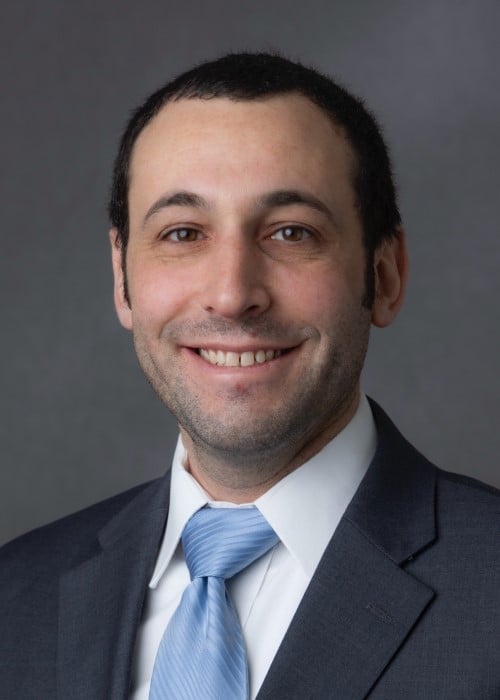
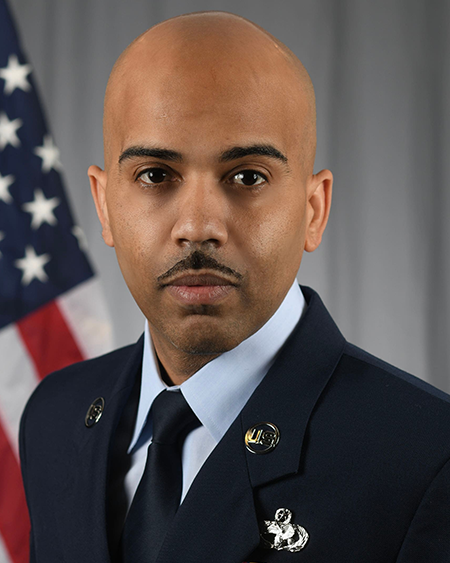
 Chief Master Sgt. Israel Nuñez is passionate about his job.
As both senior enlisted advisor to the chief of the Air Force Reserve and the command chief master sergeant of Air Force Reserve Command, Nuñez provides direction to the enlisted force and helps ensure their welfare, operational readiness, and warfighting capability.
Ahead of MOAA’s TotalForce+ conference, Nuñez sat down with MOAA to discuss how his childhood in New York City helped instill that passion, then covered a range of topics from quality-of-life programs to military transition to the Air Force’s use of artificial intelligence.
His panel at TotalForce+, which runs Oct. 28-29 in National Harbor, Md., will include other senior enlisted leaders as they highlight successful, scalable strategies to improve force readiness and retention.
“Quality of life, force development, retention, spouse employment: Those are not unique issues to one grade, to one rank, to one status. They apply to every single component, to every single servicemember, regardless of grade,” Nuñez said. “If you’re an enlisted member, help MOAA identify and understand those challenges.”
This interview was edited for length and clarity.
Q. Your family migrated from Puerto Rico to New York, and you have previously shared a bit about those “humble beginnings.” How has that experience informed your approach to leadership?
A. For me, it’s about having a blue-collar work ethic and sense of community. New York is all about a sense of community. My dad was a factory worker, my mom worked at the John F. Kennedy International Airport, and they told me: “Hey, I don’t care what you do in life — I don’t care if you’re a waiter, sanitation worker — just be the very best at it.” And so I brought that work ethic into the military, with that sense of community.
The TotalForce+ conference is a big part of that. We need community partners, we need industry leaders, we need servicemembers to all come together within that community and help us address challenges.
[AIR FORCE RESERVE COMMAND: Senior Enlisted Advisor Inducted Into Puerto Rican Veterans Hall of Fame]
Q. What drove you to participate in TotalForce+, and what message will you bring to attendees?
A. Most important are the quality-of-life issues. We perform better when some of these quality-of-life issues are addressed, and I’m hoping to relay not only challenges but successes — whether that’s for our family members, for our veterans, for our servicemembers — and then see how we can collectively partner to help address and find solutions to those issues.
Child care is a huge issue. If we can help address the access to and quality of child care for our servicemembers, it would be great. Our servicemembers perform better and more effective when those issues are taken care of. When they know their families are being taken care of, they perform at peak level.
Another is making sure spouse unemployment is addressed. If our spouses can have healthy, meaningful employment, it’ll help ease the minds of our servicemembers by making sure they can pay their bills and handle some of the other issues they may have.
Our servicemembers need to be 100% ready at home in order to be 100% mission-ready. If they know their families are taken care of, if they know their spouse has employment, if they know they have quality child care, then they’ll be able to give 100% to the mission.
[TAKE ACTION: Ask Your Lawmakers to Support Military Spouse Employment]
Q. You once described child care as a “whole-nation issue.” What are you seeing across our country and on bases that is working?
A. At the Department of War, we have made sure there is competitive pay for our child care workers, which has increased the number of child care workers on facilities.
We also make sure our facilities are up to par. Putting our resources into our child care facilities is important so that way families feel secure that those facilities are healthy and provide a safe environment for our children to thrive.
It’s a retention issue. You have to have workers and provide them with competitive pay in order to be able to support family members.
[SPEAKER SPOTLIGHT: Military Family Advisory Network CEO Shannon Razsadin]
Q. At TotalForce+, you’ll join a panel of senior enlisted leaders discussing strategies to improve force readiness and retention. What will be your specific focus?
A. I’m hoping to address some of the successes we’ve had in getting after retention and readiness. Those things go hand in hand. We have seen an amazing increase in our retention numbers across the Department of the Air Force. This year, every single one of our service components — active duty, Guard, and Reserve — have met the recruiting goal. That was huge; it’s been a little bit since we’ve done that for all three at the same time.
We have looked hard at focusing our incentive structure: identifying what our airmen want and need, and making sure we’re targeting those things.
But most importantly is providing our airmen with a sense of purpose. Our airmen watch the recruiting commercials. They want to do those challenging things, and so we’re trying to make sure we are giving them that sense of purpose and that warrior ethos so they can have that feeling of being part of a bigger team.
[SPEAKER SPOTLIGHT: Retired Marine Officer Finds a New Mission]
Q. As a leader among the enlisted community, how do you see TotalForce+ benefiting those servicemembers?
A. Quality of life, force development, retention, spouse employment: Those are not unique issues to one grade, to one rank, to one status. They apply to every single component, to every single servicemember, regardless of grade.
If you’re an enlisted member, help MOAA identify and understand those challenges because what you help do is advocate and protect and preserve some of those benefits, and there are trickle-down effects to that. And so this is not “us vs. them,” but rather making sure our community is taken care of as a whole.
Q. The conference will involve panels about transitioning from the military to civilian life. What advice do you have for those going through that change?
A. Don’t wait until the last minute. Make sure you prepare. There are programs like the SkillBridge transition assistance program that are available as early as 12 months prior to your separation date that’ll help you transition. Make sure you understand how your skills translate to the civilian workforce so you can be more competitive on Day 1.
[RELATED: Transition and Career Resources From MOAA]
Q. As artificial intelligence rapidly evolves, how do you see the technology enhancing the readiness and performance of your airmen?
A. Most importantly, it helps with efficiency. For example, in the Air Force, we’re trying to spend less time doing administrative work and actually focus more on the readiness and the warfighting.
We’ve established this program called NIPRGPT, which helps reduce the time spent on administrative tasks. If we’re working on a project, we can help get the data summarized using AI and NIPRGPT, which lets us dedicate more time to the actual analysis of that data and developing a course of action.
Q. There’s an impressive focus on physical health in the military, but stigma still remains when it comes to mental health. How can the government and industry work together to remove that stigma, while ensuring the military community has the proper support?
A. What’s important is developing holistic health teams. You can’t have one without the other. We have seen successes, for example, in the Space Force; our partner service developed Guardian Resilience Teams made up of strength and conditioning coaches, physical therapists, and mental health providers all working on one team and trying to address every single facet.
In this way, a servicemember could go see a strength and conditioning coach, and that coach can identify some mental health issues and help drive that servicemember to another team member in the mental health realm. Building that network of teams, instead of just having one individual mental health provider, is going to help reduce stigma.
Resources for Currently Serving Officers
MOAA can help you succeed in your military career and beyond.