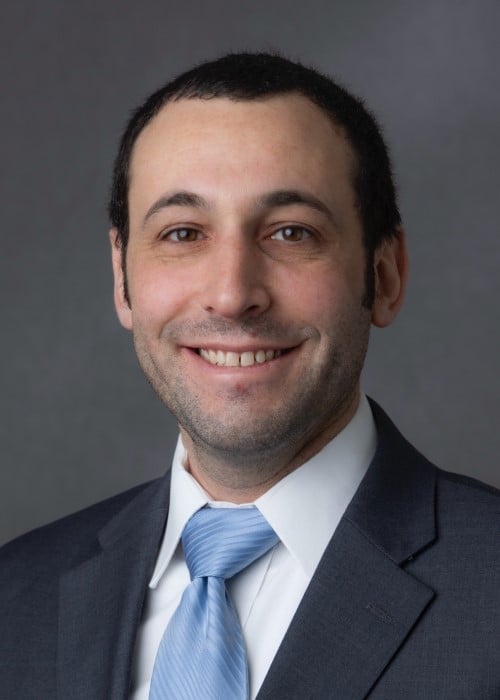

 For Shannon Razsadin, CEO of the Military Family Advisory Network, there are three core ways to improve the lives of military families:
- Perform scientific research to understand challenges the community faces.
- Design agile, scalable, and collaborative solutions based on that data.
- Strengthen the ecosystem by leveraging existing resources.
Razsadin, who is the spouse of a recently retired servicemember, is leading several learning labs at TotalForce+, MOAA’s people-focused conference taking place Oct. 28-29 at National Harbor, Md.
She recently spoke to MOAA about collecting and following the data to find solutions to problems faced by military families, including food insecurity and financial struggles. This interview was edited for length and clarity.
Q. What excites you about TotalForce+?
A. We’re bringing together people from different backgrounds and different organizations to have meaningful conversations about what the community is facing. As we look at how warfighting has modernized, we have to look at family support from the same perspective.
There is no situation where we cannot be adaptable, agile, and responsive to what families are telling us they need. I’m looking forward to sharing what the data are showing us, hearing from other people, and having conversations during the panels.
Q. What challenges are you eager for TotalForce+ to tackle?
A. When we explored the issue of food insecurity and launched food distribution events, we realized we were treating a symptom. We needed to dig deeper and figure out what’s happening in military families’ lives that’s bringing them to the point of being at risk of food insecurity.
Our team interviewed more than 300 families experiencing food insecurity and found there were four core factors: military spouse unemployment, a growing family, unexpected hits to budgets, and recent PCS moves.
When we dug deeper into our research, we found that 51% of military families who had moved in the last 24 months were not “food secure”. When we looked at the landscape, there was not a whole lot of support out there specifically to help people through the move and some of the vulnerabilities that exist around that, and so we recently launched a program.
We started at Fort Hood. We now also have it at Camp Lejeune and Fort Bliss. It’s designed to provide families with all the things they have to replace every time they move — laundry detergent, shower curtains, things that take from your budget that, in some cases, would otherwise go toward nutritious food for you and your family.
We also screen participants for food insecurity and have partnered with Instacart to get them three months of groceries delivered to their homes. It’s a dignified solution that provides choice to military families.
When we were hosting large-scale food distribution events, they were great, but the culture of pride and resilience can be a barrier for military families. This approach allows people to embrace the fact that PCS moves can be hard regardless of one’s means, and that if you need a little extra support, we’re going to provide that for you. We’re excited to continue scaling that program, and I look forward to talking more about that at TotalForce+.
[SPEAKER SPOTLIGHT: Comedy Troupe Finds Humor in Tough Topics]
Q. How does access to food impact readiness?
A. There is no element of well-being that is not connected to other elements of well-being. If you’re struggling financially, that’s going to impact your relationships, that’s going to impact your mental health. If you’re struggling finding doctor appointments, that’s going to impact your continuity of care, that’s going to impact stress levels. All of these things that have sometimes been looked at in silos — they’re all connected, and we’ve seen that through research.
For example, if someone’s well-being score is low, we dig deeper. They may be having a hard time getting enough healthy food for their family. They’ve also moved recently and are experiencing high rates of loneliness. These things are all connected. For the Military Family Advisory Network, it’s about making sure we’re not taking a siloed approach to these solutions and how the community develops the solutions.
As you think about readiness, also consider retention and the propensity to recommend military service — they are inextricably linked to the military family’s well-being. Data shows people who have a lower rate of well-being have a lower likelihood of staying in the military, and they also have a lower likelihood of recommending military service to someone they love. The best mechanism for retaining the all-volunteer force is to make sure military families are thriving.
[RELATED: Act NOW to Help Move the Military Spouse Hiring Act Forward]
Q. What’s the Military Family Advisory Network’s next big project?
A. It’s the survey launch [later this year]. With the transience of military life, it can get harder and harder to be plugged into the resources that exist. We’re waiting to see what military families tell us, and that’s where we’ll go. It’s really important for us that we let the data lead the way in everything we do.

Resources for Currently Serving Officers
MOAA can help you succeed in your military career and beyond.