Fast-moving developments in artificial intelligence not only power productivity in the workforce, they can also help veterans and transitioning servicemembers take their next professional steps.
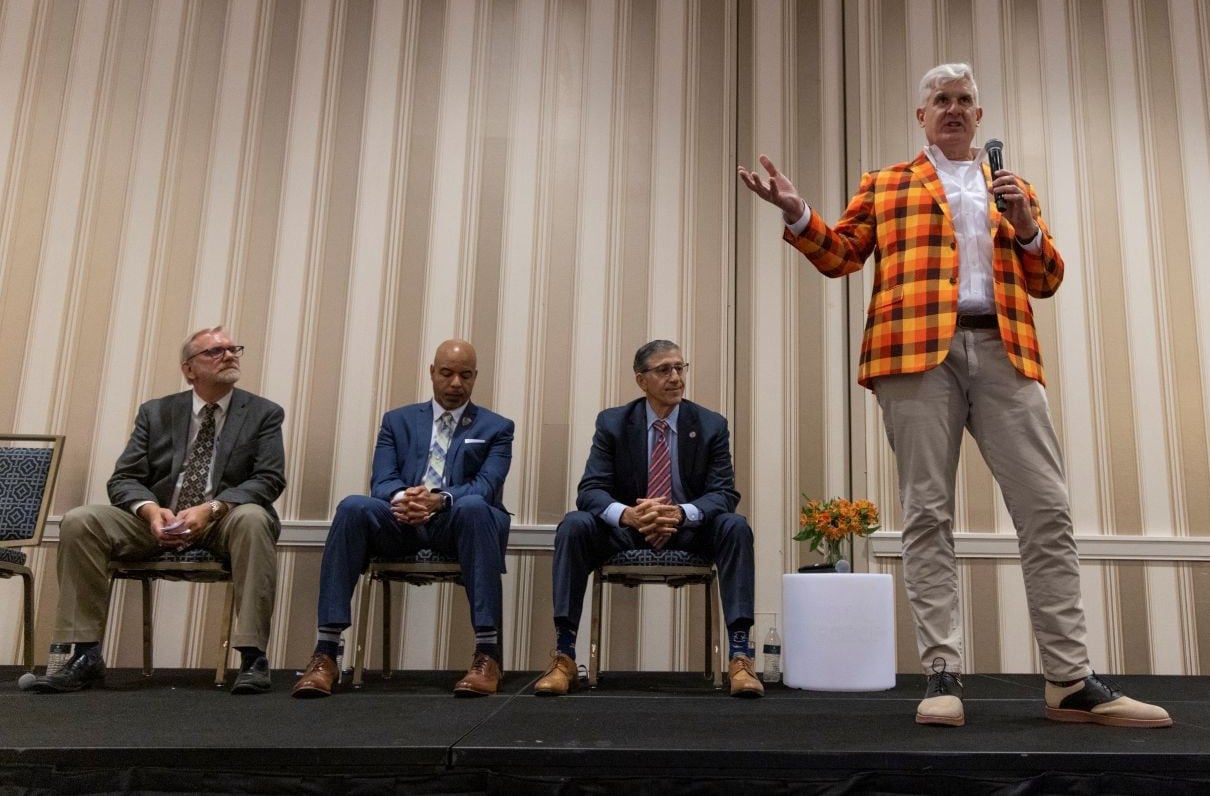
The rise of AI was the focus of an Oct. 29 panel discussion during a “brunch and learn” event at TotalForce+. Made possible by MOAA Charities, it was one of a number of AI-focused sessions at the people-focused conference held in National Harbor, Md.
Speakers included Keith “KC” Castille, CEO and co-founder at C2H LLC; Stephen Hudson, founder and CEO at AI Ready Veteran Inc.; Pete Canalichio, CEO at ThriveAlive.Ai; and Beau Higgins, vice president for Business Development at Oplign — all of whom are veterans and have developed AI tools to assist the military and veterans’ community with the career-transition process. The event was moderated by Elizabeth O'Brien, senior vice president of Programs and Events at Hiring Our Heroes, part of the U.S. Chamber of Commerce.
[RELATED: MOAA’s Job Board, in Partnership With Oplign]
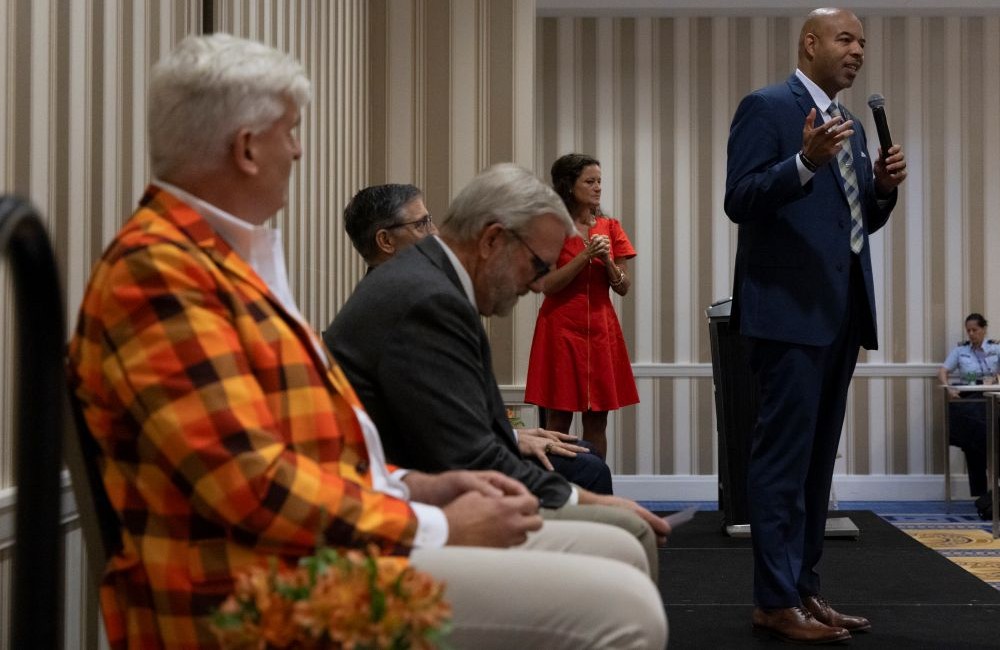
Keith "KC" Castille, CEO and co-founder at C2H LLC, speaks during a "brunch and learn" event on artificial intelligence at MOAA's TotalForce+ conference Oct. 29 in National Harbor, Md. Castille served more than 28 years in the Air Force, retiring as a command master sergeant.
The speakers shared personal challenges with their own transitions.
“I retired in 2024,” said Castille. “I struggled. I lost my belonging. We’ve all had phones stop ringing when we hang up that uniform. I wasn’t OK.”
[RELATED: TotalForce+ 2025]
Hudson said his résumé “went into a black hole” when he was applying for jobs.
“The system didn’t know how to translate my military experiences,” he said.
The tools they’ve created aim to make this process easier, whether helping you develop a résumé that translates your skills, target a job sector, or determine your next purpose or mission.
[RELATED: More Transition and Career Advice From MOAA]
“[My company’s tool asks you] exploratory questions,” said Canalichio. “We want to know you. … to provide you your purpose, vision, mission, and values. It becomes your North Star.”
However, while they all say AI is valuable, they also caution that it is just a tool, and the personal component of career transition is still crucial.
“[These tools will] help you close the gap and get you across the finish line, but if you’re going to be successful, you have to have that personal connection,” said Higgins. “The networking connection is critical. Spend the time networking, or you’re going to be not working.”
Upcoming MOAA Transition and Career Events
- April 29 Career Transition Tools Workshop: The 30-Second Commercial
- May 15: MOAA’s Hybrid Executive Career Transition Accelerator
- July MOAA Online Event Series: Finding Your Dream Job (Starts July 7)