
This article by Linda F. Hersey originally appeared on Stripes.com. Stars and Stripes serves the U.S. military community by providing editorially independent news and information around the world.
WASHINGTON — Vietnam War veterans exposed to Agent Orange have a higher risk of developing a rare blood cancer that develops slowly over decades, according to a new study that for the first time links myelodysplastic syndrome to widespread use of the herbicide.
Researchers say the breakthrough could help veterans with the syndrome access benefits and services from the Department of Veterans Affairs.
Without medical evidence that affirms a connection between Agent Orange and MDS, patients with the syndrome have struggled to qualify for service-connected benefits, said Dr. Michael Sekeres, chief of hematology at Sylvester Comprehensive Cancer Center at the University of Miami. Researchers at Sylvester conducted the eight-year study.
[MOAA/DAV REPORT: Ending the Wait for Toxic-Exposed Veterans]
About 20,000 new cases of MDS are identified in the U.S. each year. Patients typically are over age 70 at diagnosis.
“I see veterans who develop these conditions and need expensive medical care, but I can’t write a letter that establishes causality because, before this study, we hadn’t clearly linked Agent Orange to MDS,” Sekeres said.
An estimated 2.6 million service members likely were exposed to Agent Orange, according to researchers who disclosed their findings at the annual convention of the American Society of Hematology, which is being held this week in Florida.
Myelodysplastic syndrome, known as MDS, is a group of rare blood cancers that develop when a person’s DNA is damaged. The disease progresses from a series of genetic mutations in blood stem cells, according to researchers.
Individuals exposed to Agent Orange tend to develop MDS earlier, according to the study’s findings. They also are more likely to have aggressive forms of MDS that advance to acute myeloid leukemia, which is cancer of the blood and bone marrow.
[RELATED: Texas Researcher Narrows Path to Finding Root Cause of Gulf War Illness]
“Many veterans and doctors have long questioned whether Agent Orange exposure during the Vietnam War contributed to cases of MDS. The chemical is linked to several cancers, but a link to MDS was unclear. This created real barriers for exposed veterans with MDS who are seeking care and disability benefits,” the Sylvester Comprehensive Cancer Center said this week.
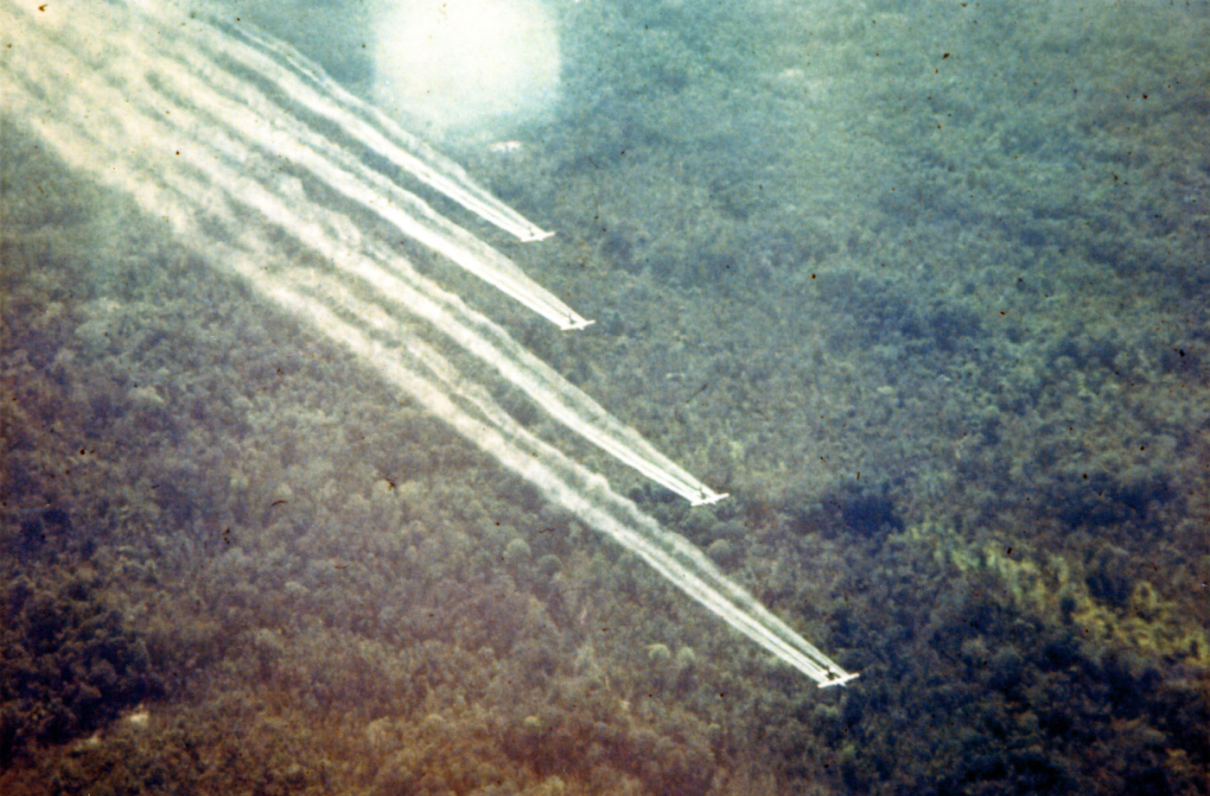
The U.S. military sprayed Agent Orange to clear jungles and destroy enemy food crops. The defoliant was widely used at military installations, along roads and to clear paths to install communication lines.
Between 1962 and 1971, the U.S. military spread more than 19 million gallons of herbicide over forests in Vietnam, Cambodia and Laos.
“Though Agent Orange was not the only herbicide used, it was the most prevalent. Exposure to the chemicals from these operations has resulted in serious and ongoing health issues for Vietnam War veterans,” according to Disabled American Veterans, a national advocacy group.
[MORE FROM MOAA: Vietnam Unchronicled]
Agent Orange was banned in 1971, and inventories were destroyed as scientists learned about the dangerous health effects of exposure. Troops who served in Vietnam or in waterways throughout the country between 1962 and 1975 are eligible for certain VA benefits for illnesses connected to Agent Orange exposure.
Exposure to the herbicide has been linked to non-Hodgkin lymphoma, multiple myeloma, leukemia, prostate cancer, Parkinson’s disease, ischemic heart disease, diabetes and birth defects that include spina bifida.
Get Help Navigating VA Benefits
Questions about VA benefits? Start here. PREMIUM and LIFE Members have direct access to our webinar archive with to-the-point information on everything from claims and appeals to concurrent receipt to home loans and more.